• Fri frakt över 249 kr
  • •
  • Snabba leveranser
  • •
  • Billiga böcker
Kundservice

Du är på sajten för privatpersoner.

Företag, bibliotek eller offentlig verksamhet?

Du handlar på classic.bokus.com, där alla dina funktioner finns intakta.
Till classic.bokus.com
Bokus logotyp. Gå till startsidan.
  • Erbjudanden
  • Nyheter
  • Student
  • Topplistor
  • Barn & ungdom
  • Bokus Play
  • E-böcker
  • Pocketböcker
  • Spel & pussel

10% rabatt på allt med kod: NYSTART10 →

Sidfot

Mina sidor

    Hjälp

    • Kundservice
    • Vanliga frågor och svar
    • Frakt och leverans
    • Retur vid ångerrätt
    • Reklamera vara
    • Betalning
    • Köpvillkor
    • Allmänna villkor
    • Information om webbplatsens tillgänglighet

    Om Bokus

    • Om oss
    • Pressrum
    • För studenter
    • För företag
    • För bibliotek och offentlig verksamhet
    • För leverantörer
    • Hållbarhet

    Populärt

    • Aktuella erbjudanden
    • Presentkort
    • Studentlitteratur
    • Nya böcker
    • Topplistor
    • Signerade böcker
    • Engelska böcker

    Inspiration

    • Boktips
    • BookTok
    • Populära bokserier
    • Barnbokskaraktärer
    • Populära författare
    Logotyp för Bokus
    Följ oss på Facebook (extern länk)Följ oss på Instagram (extern länk)Följ oss på YouTube (extern länk)Följ oss på TikTok (extern länk)
    bokus @ CookiesAnpassa cookiesIntegritetspolicyKöpvillkor
    Till Citymail hemsida (extern länk)Till Budbee hemsida (extern länk)Till Postnord hemsida (extern länk)Till Schenker hemsida (extern länk)Till Early Bird hemsida (extern länk)Till Walleys hemsida (extern länk)
    1. Samhälle och politik
    2. Samhälle och kultur
    3. Kultur och medier
    4. Referensverk och tvärvetenskap

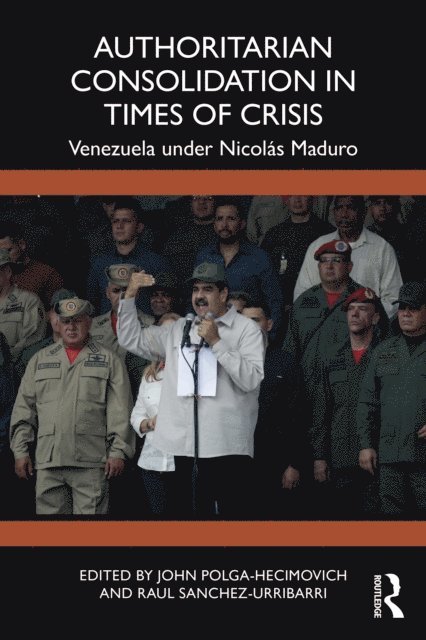
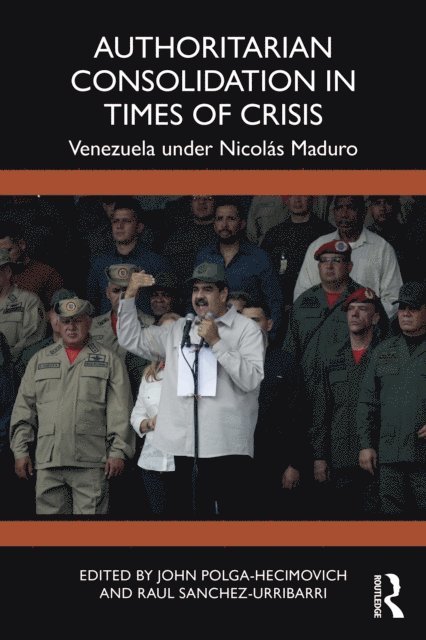
    Authoritarian Consolidation in Times of Crisis

    Venezuela under Nicolás Maduro

    AvJohn Polga-Hecimovich,Raul Sanchez Urribarri

    Häftad, Engelska, 2025

    624 kr

    Beställningsvara. Skickas inom 10-15 vardagar. Fri frakt över 249 kr.

    Beskrivning

    Bringing together experts from across the social sciences, this volume examines the consolidation of authoritarianism in Venezuela under the government of Nicolás Maduro. Taking a comparative perspective, it explains how authoritarians can remain ensconced in power amidst profound economic crisis, widespread social discontent, low approval ratings, and international policies aimed at their removal. Moreover, it seeks to understand the mechanisms and dynamics with which Maduro has consolidated an authoritarian regime in Venezuela. To this end, the editors differentiate the concept of authoritarian consolidation from the more studied processes of democratic erosion and democratic backsliding.The book’s contributors explore in detail the country’s process of autocratization under Maduro at the national and international levels, identifying and explaining the role of diverse actors and institutions in Venezuela’s political regime, and their respective contributions to safeguarding and stabilizing the Maduro administration. By offering a systematic examination of the mechanisms by which regime change was fostered under Maduro’s rule, this volume directly engages with scholarly research on regime transitions and democratic collapse; democratic breakdown and the consolidation of authoritarian rule; and comparative institutional work on Venezuelan politics. The book is relevant to scholars and students of Venezuela, as well as anyone interested in the pressing question of regime crisis survival and authoritarian consolidation.

    Produktinformation

    • Utgivningsdatum:2025-03-30
    • Mått:152 x 229 x 21 mm
    • Vikt:640 g
    • Format:Häftad
    • Språk:Engelska
    • Antal sidor:332
    • Förlag:Taylor & Francis Ltd
    • ISBN:9781032601656

    Utforska kategorier

    • Referensverk och tvärvetenskap inom Samhälle och politik
    • Statsskick: demokrati inom Samhälle och politik
    • Filosofiska discipliner inom Filosofi och religion

    Mer om författaren

    John Polga-Hecimovich is an Associate Professor of Political Science at the United States Naval Academy, where he is also the Co-director of the Forum for Latin American Studies. His academic research focuses on the effects of political institutions on democratic stability, policymaking, and governance, with a focus on Latin America. He has a Ph.D. in Political Science from the University of Pittsburgh and an M.A. in Latin American Studies from the Universidad Andina Simón Bolívar, Ecuador. Outside of the classroom, he has given briefings to the U.S. State Department, the Defense Intelligence Agency, and U.S. Southern Command on issues related to Latin American politics, and he has served as electoral systems expert for the Organization of American States (OAS).Raul Sanchez-Urribarri is an Associate Dean (Academic and International Partnerships) at the School of Humanities and Social Sciences, and Associate Professor of Crime, Justice and Legal Studies at the Department of Social Inquiry, La Trobe University, in Melbourne, Australia. He holds a Ph.D. in Political Science from the University of South Carolina, an LL.M. from Cambridge University, and a Law degree from Universidad Católica Andres Bello, Venezuela. His research focuses on constitutionalism, judicial politics, and the rule of law in comparative perspective, with an emphasis on contexts of democratic deterioration and Venezuela in particular. He is a co-editor of Judicial Activism in Comparative Perspective (Peter Lang) and Informality and Courts (Edinburgh University Press).

    Recensioner i media

    This is the best CT scan of autocratic rule in Venezuela. Aware that autocracy in the 21st century is sustained by a multitude of pillars, the editors have enlisted the very best scholars in the field to write about each component behind Maduro’s dictatorship. Rather than trying to explain it all, chapters focus on one or two pillars. The result is what amounts to a brilliant handbook on autocratic rule, broken down by all its internal and external dimensions – a tour de force for all students interested in autocracy.Javier Corrales, Dwight W. Morrow 1895 Professor of Political Science, Amherst CollegeThis edited volume provides the most complete, multidimensional and fascinating account on how Chavismo under Maduro, during these last twelve years, has fully transformed Venezuela into a hegemonic authoritarian regime that has been able to entrench itself despite very strong international and domestic pressures. A must read.Michael Penfold, Global Fellow, Wilson CenterFor students of 21st century authoritarianism, this book reveals the complex, multiple and sometimes reckless strategies and tactics developed by one of the most resistant dictatorships in the world today. The Nicolás Maduro regime in Venezuela is one of the most fascinating cases of political survival. In these pages, an excellent group of scholars uses diverse perspectives to analyze how and why this authoritarianism has endured. This is an avant-garde book that is a must-read for those interested in this topic.Margarita López Maya, Ex-President of the Latin American Studies Association, Universidad Central de VenezuelaAuthoritarian Consolidation in Times of Crisis is a terrific book, making an important contribution to our understanding of authoritarian consolidation in the 21st century. The authors explain the very puzzling case of Nicolas Maduro's ability to survive an economic and humanitarian crisis, an unstable coalition of allies, and strong international and domestic opposition. The collection analyzes fourteen keys to the explanation, from domestic actors like opposition parties, courts, and military, to international factors including the growing authoritarian axis of supporters, the role of emigration and the Venezuelan diaspora. The book wrestles with the concept of authoritarian consolidation, ill-defined in the literature, but also has important lessons for policymakers. Highly recommended for students, scholars and anyone concerned with challenging autocrats today.Jennifer McCoy, Regent’s Professor of Political Science, Georgia State UniversityA welcome, in‑depth analysis of Maduro’s authoritarian reign.Deborah Norden, ReVista: Harvard Review of Latin America

    Innehållsförteckning

    • Preface. 1. Introduction: Venezuela’s Political Crisis and the Concept of Authoritarian Consolidation Part I. Domestic Factors 2. Coup-Proofing the Venezuelan Military: Maduro’s Innovations in the Face of Adversity 3. Control Tools: Elections, Maduro’s Authoritarianism, and Regime Survival 4. Authoritarian Capitalism in Venezuela: The Political Economy of Maduro’s Disorderly Liberalization 5. One Step Forward, Two Steps Back: The Venezuelan Opposition under Maduro 6. Venezuela’s (Un)Rule of Law under Nicolás Maduro 7. The Control of the Information Environment as a Pillar of Authoritarian Consolidation in Venezuela 8. Criminal Governance in the Post-Chávez Revolution in Times of Questioned Legitimacy 9. Can Decentralization Contribute to Authoritarian Consolidation?: Venezuela under Chávez and Maduro Part II. International Factors 10. The Nexus of Power: Autocratic International Cooperation and the Consolidation of Authoritarianism in Venezuela 11. The Maduro Doctrine: Foreign Policy Strategy and Regime Survival in Contemporary Venezuela 12. Circular Talks: Political Dialogue, Foreign Facilitation, and Authoritarian Learning in Venezuela 13. U.S. Foreign Policy, the Opposition, and the Maduro Government: Venezuela’s Authoritarian Slide in Ten Episodes 14. Exit, Voice, Loyalty, and Hunger: The Instrumentalization of Emigration Under Nicolás Maduro 15. The Venezuelan Diaspora and Maduro’s Authoritarian Consolidation Part III Critical Reflections 16. Evaluating Authoritarian Consolidation in Venezuela