• Fri frakt över 249 kr
  • •
  • Snabba leveranser
  • •
  • Billiga böcker
Kundservice

Du är på sajten för privatpersoner.

Företag, bibliotek eller offentlig verksamhet?

Du handlar på classic.bokus.com, där alla dina funktioner finns intakta.
Till classic.bokus.com
Bokus logotyp. Gå till startsidan.
  • Erbjudanden
  • Nyheter
  • Student
  • Topplistor
  • Barn & ungdom
  • Bokus Play
  • E-böcker
  • Pocketböcker
  • Spel & pussel

10% rabatt på allt med kod: NYSTART10 →

Sidfot

Mina sidor

    Hjälp

    • Kundservice
    • Vanliga frågor och svar
    • Frakt och leverans
    • Retur vid ångerrätt
    • Reklamera vara
    • Betalning
    • Köpvillkor
    • Allmänna villkor
    • Information om webbplatsens tillgänglighet

    Om Bokus

    • Om oss
    • Pressrum
    • För studenter
    • För företag
    • För bibliotek och offentlig verksamhet
    • För leverantörer
    • Hållbarhet

    Populärt

    • Aktuella erbjudanden
    • Presentkort
    • Studentlitteratur
    • Nya böcker
    • Topplistor
    • Signerade böcker
    • Engelska böcker

    Inspiration

    • Boktips
    • BookTok
    • Populära bokserier
    • Barnbokskaraktärer
    • Populära författare
    Logotyp för Bokus
    Följ oss på Facebook (extern länk)Följ oss på Instagram (extern länk)Följ oss på YouTube (extern länk)Följ oss på TikTok (extern länk)
    bokus @ CookiesAnpassa cookiesIntegritetspolicyKöpvillkor
    Till Citymail hemsida (extern länk)Till Budbee hemsida (extern länk)Till Postnord hemsida (extern länk)Till Schenker hemsida (extern länk)Till Early Bird hemsida (extern länk)Till Walleys hemsida (extern länk)
    1. Samhälle och politik
    2. Samhälle och kultur
    3. Kultur och medier
    4. Medievetenskap

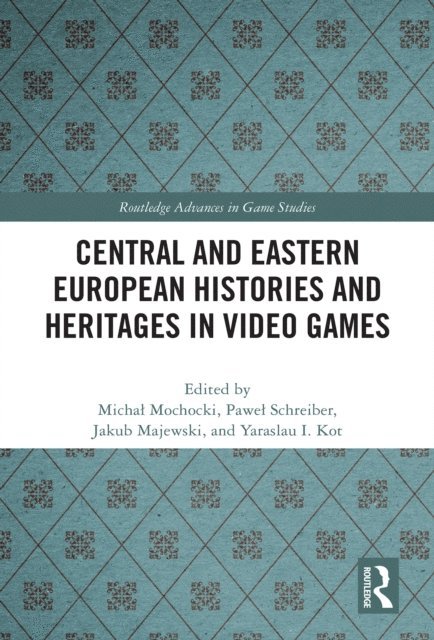
    Central and Eastern European Histories and Heritages in Video Games

    AvMichał Mochocki,Paweł Schreiber

    Häftad, Engelska, 2026

    Del i serien Routledge Advances in Game Studies

    701 kr

    Beställningsvara. Skickas inom 10-15 vardagar. Fri frakt över 249 kr.

    Beskrivning

    This book explores the representations of Central and Eastern European histories in digital games.Focusing on games that examine a range of national histories and heritages from across Central and Eastern Europe, the volume looks beyond the diversity of the local histories depicted in games, and the audience reception of these histories, to show a diversity of approaches which can be used in examining historical games – from postcolonialism to identity politics to heritage studies. The book includes chapters on Serbia, Poland, Ukraine, Russia, Belarus, Hungary, Estonia, Slovakia, Czechia, Finland, and (a Western guest with regional connections) Luxembourg. Through the lens of video games, the authors address how nations struggle with the legacies of war, colonialism, and religious strife that have been a part of nation-building - but also how victimized cultures can survive, resist, and sometimes prevail.Appealing primarily to scholars in the fields of game studies, heritage studies, postcolonial criticism, and media studies, this book will be particularly useful for the subfields of historical game studies and postcolonial game studies.

    Produktinformation

    • Utgivningsdatum:2026-05-21
    • Mått:156 x 234 x 13 mm
    • Vikt:460 g
    • Format:Häftad
    • Språk:Engelska
    • Serie:Routledge Advances in Game Studies
    • Antal sidor:236
    • Förlag:Taylor & Francis Ltd
    • ISBN:9781032609683

    Utforska kategorier

    • Medievetenskap inom Samhälle och politik
    • Europas historia inom Historia och arkeologi

    Mer om författaren

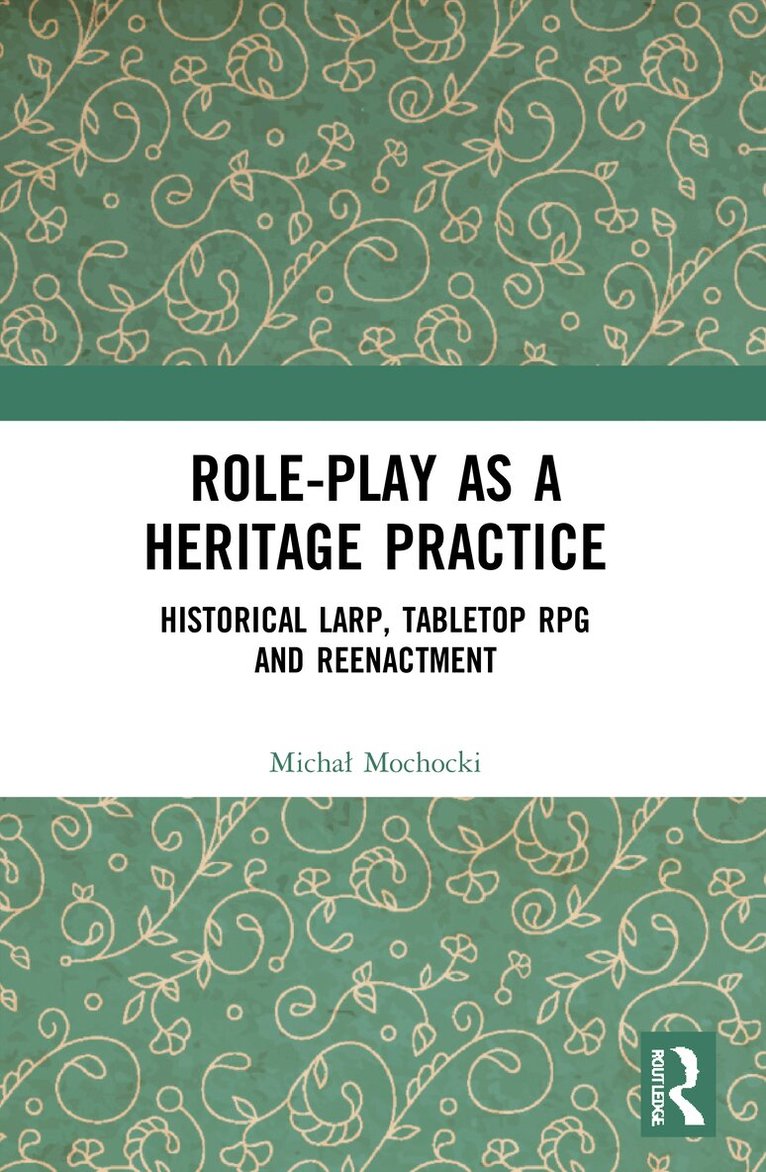
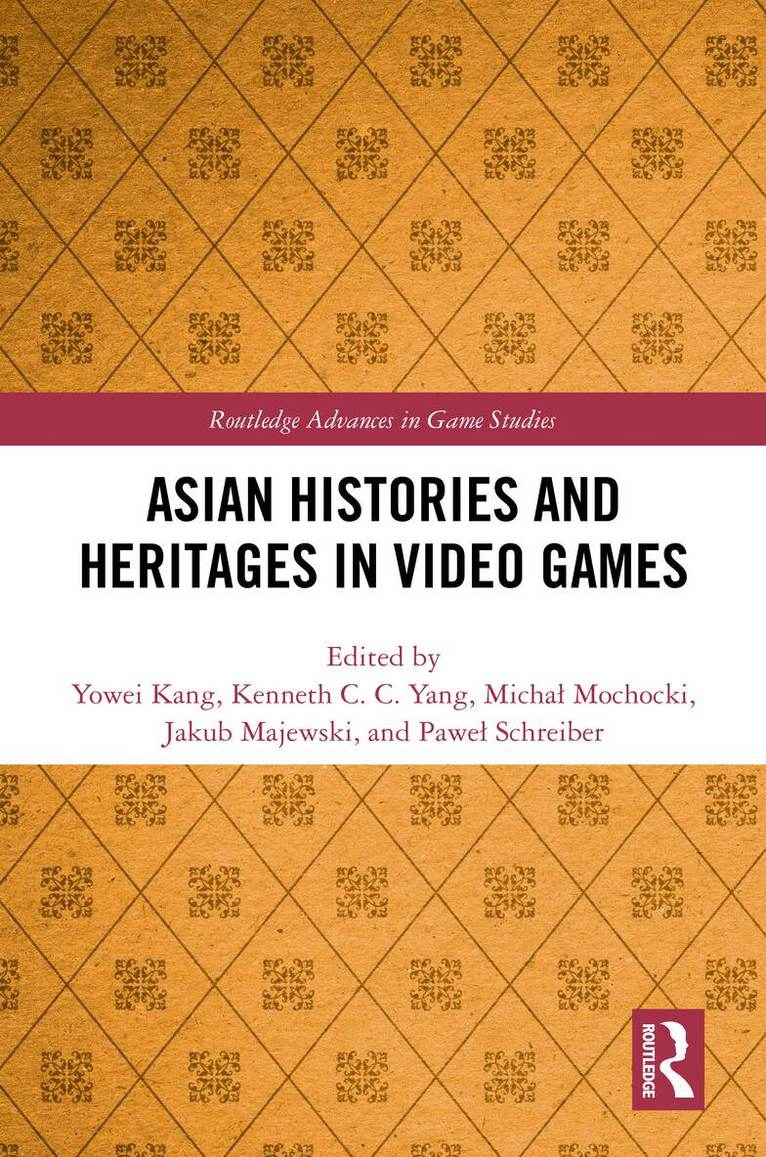
    Michał Mochocki (PhD, Dr. habil.) works as an associate professor at the Faculty of History, University of Gdansk, Poland, and is the executive editor of the European Historical Game Studies journal. His primary research interests are historical role-playing games, which he examines from the angles of transmedia narratology and heritage studies. He has published a monograph Role-play as a Heritage Practice (Routledge, 2021), edited a special issue of Games and Culture (“Games with History and Heritage”, 17/2022) and a book Heritage, Memory and Identity in Postcolonial Board Games (Routledge, 2024), and co-edited a sibling volume Asian Histories and Heritages in Video Games (Routledge, forthcoming).Paweł Schreiber (PhD) works as an assistant professor at the Faculty of Literature at the Kazimierz Wielki University in Bydgoszcz, Poland. His main research interests include post-war British historical drama, interactive fiction, and video game narrative, with particular emphasis on the relationship between narrative and space. Apart from his academic interests, he has also done work in theatre criticism and game writing, and has curated several international festivals devoted to video games and digital culture in general.Jakub Majewski (PhD) holds the position of assistant professor in the Department of Game Studies and Digital Culture at the Kazimierz Wielki University in Bydgoszcz, Poland, where he teaches a range of subjects across game design, game writing, and game studies. His specific research interests are game narrative, worldbuilding and open-world role-playing games, history, culture, and cultural heritage in games, as well as the history of games as a medium. Outside of academia, he has over 20 years of experience in game development, working across many genres and platforms. He has published a range of articles and book chapters, and recently has co-edited the book Gaming and Gamers in Times of Pandemic (Bloomsbury, 2024).Yaraslau I. Kot (PhD, MPsych, LLM) has been a game designer and narrative designer since 1996. He is also a lecturer of Game Development Project at Tallinn University, of Storytelling and Story Design and Game Design at the University of Lower Silesia, SALT Fellow at the University of Gdansk, co-founder of EduHaven, and chair of BelGameDev. He is an associate editor of the European Historical Game Studies journal, an Academic Board member of Homo Ludens journal, and a peer reviewer of Simulation and Gaming.

    Innehållsförteckning

    • 1. An Introduction to CEE HGS: Central and Eastern European Historical Game Studies2. From Vampires to Partisans: Serbian Cultural Heritage in Video Games [Serbia]3. The Heritage of Polish-Lithuanian Commonwealth in Polish Video Games [Poland]4. Unearthing the Past: Historical Heritage of Post-USSR Ukraine in S.T.A.L.K.E.R.: Shadow of Chernobyl[Ukraine]5. A Devious Archive: The Affective Historicity and Paratextual Russian Folkloristics of Black Book [Russia]6. Realism in World of Tanks: From a World War II Simulator to a Celebrity Tombola [Belarus]7. Hungeon Crawling: Reinventing the Hungarian Fairy Tale Tradition in Operencia: The Stolen Sun [Hungary]8. “Sunrise, Parabellum.” The Crisis of State and the Individual in Disco Elysium [Estonia]9. The Communist Tycoon: Simulating the Command Economy in Workers & Resources: Soviet Republic [Slovakia]10. Czech and Slovak cultural heritage in video games. Case studies: Kingdom Come Deliverance, Hrot, and Felvidek [Czechia]11. “Realistic but Humorous”: Finnish Army Simulator as a First-person Video Game on Finnish National Service [Finland]12. Luxembourg 1867: Gaming Communities, Co-production, and Engagement with theImagined Past [Luxembourg]