• Fri frakt över 249 kr
  • •
  • Snabba leveranser
  • •
  • Billiga böcker
Kundservice

Du är på sajten för privatpersoner.

Företag, bibliotek eller offentlig verksamhet?

Du handlar på classic.bokus.com, där alla dina funktioner finns intakta.
Till classic.bokus.com
Bokus logotyp. Gå till startsidan.
  • Erbjudanden
  • Nyheter
  • Student
  • Topplistor
  • Barn & ungdom
  • Bokus Play
  • E-böcker
  • Pocketböcker
  • Spel & pussel

10% rabatt på allt med kod: NYSTART10 →

Sidfot

Mina sidor

    Hjälp

    • Kundservice
    • Vanliga frågor och svar
    • Frakt och leverans
    • Retur vid ångerrätt
    • Reklamera vara
    • Betalning
    • Köpvillkor
    • Allmänna villkor
    • Information om webbplatsens tillgänglighet

    Om Bokus

    • Om oss
    • Pressrum
    • För studenter
    • För företag
    • För bibliotek och offentlig verksamhet
    • För leverantörer
    • Hållbarhet

    Populärt

    • Aktuella erbjudanden
    • Presentkort
    • Studentlitteratur
    • Nya böcker
    • Topplistor
    • Signerade böcker
    • Engelska böcker

    Inspiration

    • Boktips
    • BookTok
    • Populära bokserier
    • Barnbokskaraktärer
    • Populära författare
    Logotyp för Bokus
    Följ oss på Facebook (extern länk)Följ oss på Instagram (extern länk)Följ oss på YouTube (extern länk)Följ oss på TikTok (extern länk)
    bokus @ CookiesAnpassa cookiesIntegritetspolicyKöpvillkor
    Till Citymail hemsida (extern länk)Till Budbee hemsida (extern länk)Till Postnord hemsida (extern länk)Till Schenker hemsida (extern länk)Till Early Bird hemsida (extern länk)Till Walleys hemsida (extern länk)
    1. Samhälle och politik
    2. Politik och statsskick
    3. Statsskick och politiska processer
    4. Statsskick: demokrati

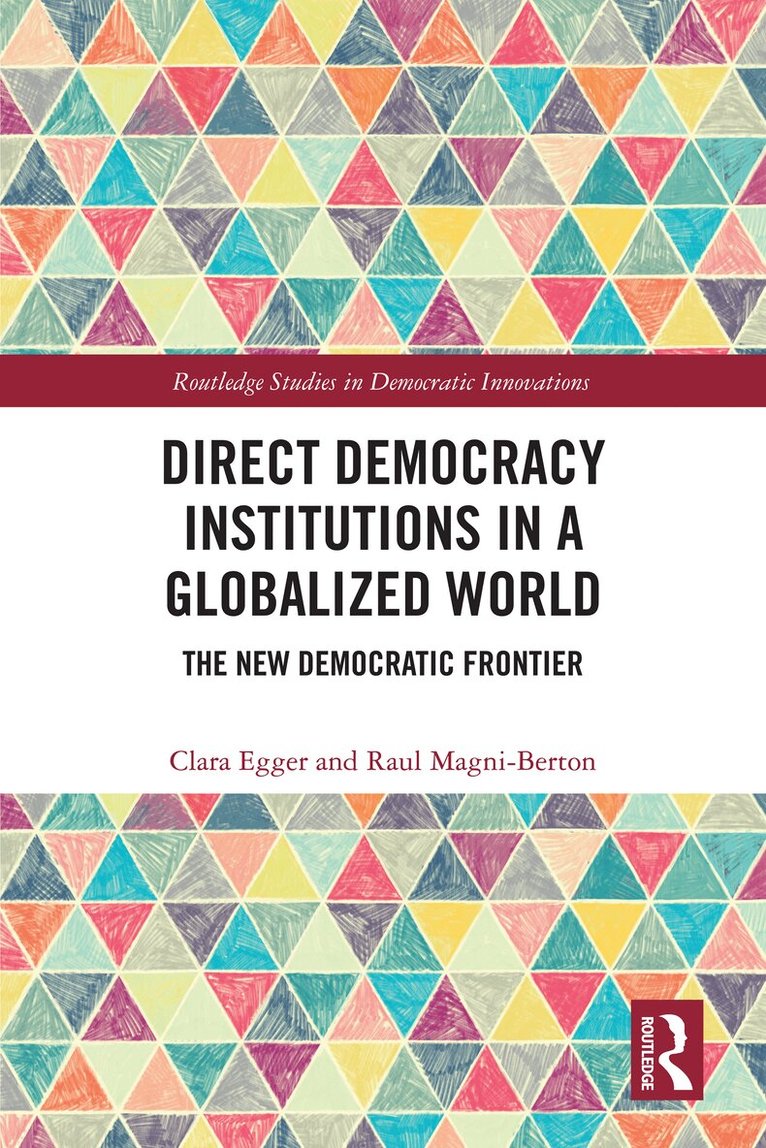
    Direct Democracy Institutions in a Globalized World

    The New Democratic Frontier

    AvClara Egger,Raul Magni-Berton

    Inbunden, Engelska, 2026

    Del i serien Routledge Studies in Democratic Innovations

    2 421 kr

    Beställningsvara. Skickas inom 10-15 vardagar. Fri frakt över 249 kr.

    Beskrivning

    This book challenges the idea that representative democracy is the pinnacle of political development.The authors argue that when citizens can directly initiate and veto constitutional changes, democracy enters a new phase – direct democracy – as a distinct political system. Using original data and comparisons across six countries and 15 U.S. states, the book shows that direct democracies foster legitimacy, stability and engagement. Combining historical, institutional and empirical insights, the book reframes democracy’s future and offers a timely guide for expanding citizen power in the 21st century.This book is of key interest to scholars and students of democratic regimes, reform and democratization and, more broadly, comparative politics.

    Produktinformation

    • Utgivningsdatum:2026-04-07
    • Mått:156 x 234 x 13 mm
    • Vikt:510 g
    • Format:Inbunden
    • Språk:Engelska
    • Serie:Routledge Studies in Democratic Innovations
    • Antal sidor:176
    • Förlag:Taylor & Francis Ltd
    • ISBN:9781032784878

    Utforska kategorier

    • Statsskick: demokrati inom Samhälle och politik
    • Politisk aktivism inom Samhälle och politik
    • Statsvetenskap och politisk teori inom Samhälle och politik

    Mer om författaren

    Clara Egger is Assistant Professor of Global Governance at the Erasmus School of Social and Behavioural Sciences, Erasmus University Rotterdam, The Netherlands.Raul Magni-Berton is Professor of Political Science at AnthropoLab-Ethics, Catholic University of Lille, France.

    Innehållsförteckning

    • Introduction - Direct democracy: The new democratic frontier 1. What is direct democracy?: Philosophical and theoretical foundations 2. Direct democracy around the world 3. Direct democracy institutions and their practices over the ages 4. Key issues put to the ballot 5. The effects of direct democracy on civic engagement: Educated by initiative 6. How direct democracy shapes domestic policies 7. The impact of direct democracy on international cooperation: A death sentence for multilateralism? 8. Who supports direct democracy? 9. Transforming contemporary representative regimes into direct democracies. Conclusion