• Fri frakt över 249 kr
  • •
  • Snabba leveranser
  • •
  • Billiga böcker
Kundservice

Du är på sajten för privatpersoner.

Företag, bibliotek eller offentlig verksamhet?

Du handlar på classic.bokus.com, där alla dina funktioner finns intakta.
Till classic.bokus.com
Bokus logotyp. Gå till startsidan.
  • Erbjudanden
  • Nyheter
  • Student
  • Topplistor
  • Barn & ungdom
  • Bokus Play
  • E-böcker
  • Pocketböcker
  • Spel & pussel

10% studentrabatt med kod TERM26

Sidfot

Mina sidor

    Hjälp

    • Kundservice
    • Vanliga frågor och svar
    • Frakt och leverans
    • Retur vid ångerrätt
    • Reklamera vara
    • Betalning
    • Köpvillkor
    • Allmänna villkor
    • Information om webbplatsens tillgänglighet

    Om Bokus

    • Om oss
    • Pressrum
    • För studenter
    • För företag
    • För bibliotek och offentlig verksamhet
    • För leverantörer
    • Hållbarhet

    Populärt

    • Aktuella erbjudanden
    • Presentkort
    • Studentlitteratur
    • Nya böcker
    • Topplistor
    • Signerade böcker
    • Engelska böcker

    Inspiration

    • Boktips
    • BookTok
    • Populära bokserier
    • Barnbokskaraktärer
    • Populära författare
    Logotyp för Bokus
    Följ oss på Facebook (extern länk)Följ oss på Instagram (extern länk)Följ oss på YouTube (extern länk)Följ oss på TikTok (extern länk)
    bokus @ CookiesAnpassa cookiesIntegritetspolicyKöpvillkor
    Till Citymail hemsida (extern länk)Till Budbee hemsida (extern länk)Till Postnord hemsida (extern länk)Till Schenker hemsida (extern länk)Till Early Bird hemsida (extern länk)Till Walleys hemsida (extern länk)
    1. Samhälle och politik
    2. Politik och statsskick
    3. Statsskick och politiska processer
    4. Statsskick: demokrati

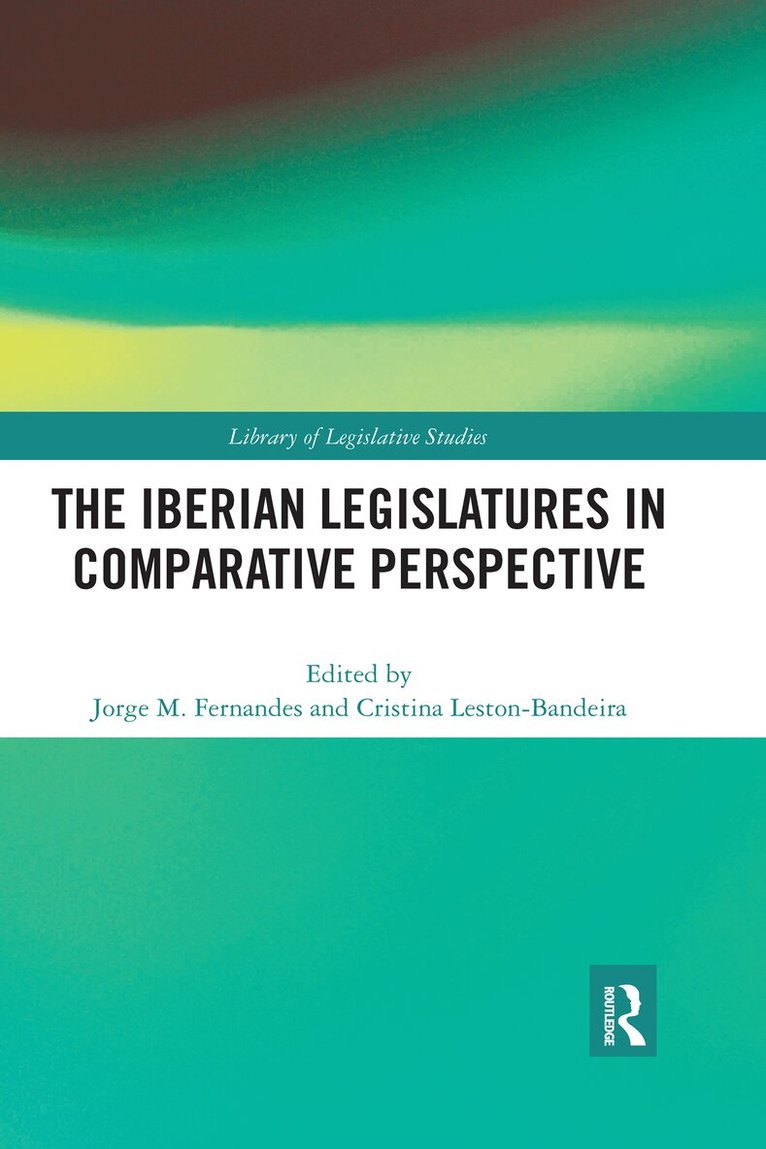
    Democracy at the Crossroads – Challenges for Governance and Representation: Essays in Honour of Thomas Saalfeld for Governance and Representation

    Essays in Honour of Thomas Saalfeld

    AvJorge M. Fernandes,Javier Martínez-Cantó

    Inbunden, Engelska, 2026

    Del i serien West European Politics

    2 434 kr

    Beställningsvara. Skickas inom 10-15 vardagar. Fri frakt över 249 kr.

    Beskrivning

    This book examines the complex challenges confronting modern democratic systems. Amid rising political fragmentation, polarisation, societal diversity, democratic backsliding, technological advances, economic stagnation, and environmental crises, it explores the nuances of democratic governance and how representative institutions can strengthen their resilience. It provides new insights into traditional models of democratic delegation through a series of studies on how legislative bodies function and interact with the executive, especially during government formation. Later chapters focus on minority representation, analysing conditions that promote political inclusion for women, migrants, and LGBT individuals, particularly in legislative institutions. The final section discusses the radical right’s growth and addresses how political systems confront environmental issues, connecting themes of representation and sustainability. This book honours Thomas Saalfeld, a prominent scholar in legislative politics, government formation, and minority representation. This volume is highly relevant for scholars and students interested in comparative politics, political representation, legislative behaviour, and European politics more broadly.

    Produktinformation

    • Utgivningsdatum:2026-03-25
    • Mått:156 x 234 x 37 mm
    • Vikt:1 430 g
    • Format:Inbunden
    • Språk:Engelska
    • Serie:West European Politics
    • Antal sidor:660
    • Förlag:Taylor & Francis Ltd
    • ISBN:9781032950327

    Utforska kategorier

    • Statsskick: demokrati inom Samhälle och politik
    • Politiska partier inom Samhälle och politik
    • Filosofiska discipliner inom Filosofi och religion

    Mer om författaren

    Jorge M. Fernandes is a Ramon y Cajal Fellow at the Institute of Public Goods and Policies, CSIC, Madrid. He holds a PhD in Social and Political Sciences from the European University Institute (2013). After graduation, Jorge moved to Bamberg, where he worked under the unabridged mentorship of Thomas Saalfeld. In 2017, Jorge took a position as Research Fellow at the Institute of Social Sciences, University of Lisbon. His research interests include representation, electoral systems, political parties, legislatures, and coalitions. His work has appeared in journals such as Journal of Politics, British Journal of Political Science, Comparative Political Studies, European Journal of Political Research, Journal of European Public Policy, and Legislative Studies Quarterly, among many others. He is the co-editor of The Politics of Legislative Debates (Oxford University Press, 2021) and The Oxford Handbook of Portuguese Politics (Oxford University Press, 2023). He has held visiting positions at UC San Diego, Center for European Studies, Harvard University, and Robert Schuman Centre (EUI). From 2025, Jorge is the PI of the ERC Consolidator Grant "SEE: Representation in Proportional Electoral Systems. Javier Martínez-Cantó is a Cesar Nombela Research Fellow at the Institute of Public Goods and Policies, CSIC, Madrid. He holds a doctorate in political science from the University of Bamberg (2021), which he developed under the outstanding supervision of Thomas Saalfeld. He has also worked as a postdoctoral researcher at the University of Konstanz, IBEI, and the University of Salamanca. During the 2023–2024 academic year, Javier was the inaugural Ramon Arences Fellow at Harvard University’s Center for European Studies. His research interests include political parties, legislative behaviour, political representation, political competition, and federalism. His work has appeared in journals such as Comparative Political Studies, Journal of European Public Policy, Legislative Studies Quarterly, Party Politics, among many others. He has held short-term visiting positions at Princeton University (2018) and the University of Vienna (2022).

    Innehållsförteckning

    • Part I: Delegation Models of RepresentationChapter 1. Constitutional Rigidity Matters: A Veto Players Approach?George TsebelisChapter 2. From selection to oversight? Parliament and government relations in France and Norway over more than a century.Olivier RozenbergChapter 3. The European Parliament as a Principal: The evolution of inter-institutional oversight in the European Union.Amie Kreppel and Murad GafarovChapter 4. Legislative Assemblies and Legislative Roles.Kaare Strom and Shane MartinChapter 5. The Confidence Relationship between Parliament and Government.Reuven Y. Hazan and Gaya S. SigaviChapter 6. Elite loyalty, legislative productivity or constituency service: Where lies the reward in intra-party competition in Ghana?Martin AcheampongChapter 7. Parliamentary Norms –a tool of the party group leaders?Stefanie BailerChapter 8. The Renaissance of Roll-Calls Votes in Austria’s Second Republic.Marcelo Jenny and Wolfgang C. MullerChapter 9. Aspects of Artificial Intelligence in Parliamentary Governance.Fotios FitsilisPart II: Government Formation, Duration, and TerminationChapter 10. The Vote of Confidence and Executive Bargaining Power on environmental protection.Petra Schleiter and Georgina EvansChapter 11. Polarization as a challenge to parliamentary governance.Hanna Back and Royce CarrollChapter 12. Portfolio Design in Germany: How coalition governments (re-)shape ministerial jurisdictions and what this tells us about coalition politics.Ulrich Sieberer and David SchmuckChapter 13. Can legislative speech unveil conflict between coalition parties? An empirical illustration based on two examples in the German Bundestag.Henning Bergmann, Lucas Geese, Carsten Schwemmer and Christian KoßChapter 14. It is possible because I have already seen it – How Sub-National Coalitions Affect Voters’ Expectations about Government Compositions on the National Level.Daniel Hohmann and Maria ThurkChapter 15. The electoral consequences of coalition bargaining.Heike Kluver and Svenja KraussChapter 16. Parliamentary Institutions and Portfolio Allocation in Coalition Governments.Bjorn Erik Rasch, Bjorn Mo Forum and Cristina BucurPart III: Minority representationChapter 17. Who wants descriptive representation, and why?Claudia Landwehr and Armin SchaferChapter 18. Career facilitators, springboards and allies: Examining what factors foster the careers of politicians of immigrant ancestry.Laura Morales, Carles Pamies, and Claire Vincent-MoryChapter 19. Out and Loud? LGBT Representation in the Parliamentary Arena.Javier Martinez-Canto, Jorge M. Fernandes and Edgar ChicurelChapter 20. Who likes descriptive representation, why, and with what implications? The Beliefs of Parliamentary Candidates in German Election Campaigns.Thomas ZittelChapter 21. Patterns behind the termination of careers of immigrant-origin MPs in the German Bundestag.Andreas M. Wust and Henning BergmannChapter 22. Deracialised inclusion: from explaining ethnic minorities under-representation to explaining the new descriptive representation.Maria SobolewskaChapter 23. Diverse Candidates – Diverse Positions? Party Line Conformity in Campaign Positions by Female and Immigrant Origin Candidates for the German Bundestag.Lukas Hohendorf, Micaela Grosmann and Julia Schulte-CloosChapter 24. Does protest affect MP roll-call votes in Germany?Danieal BischofPart IV: Democratic AnxietiesChapter 25. Permanent crises, the politics of the Merkel governments and the rise of right-wing populism in Germany.Reimut ZohlnhoferChapter 26. The potential of extremist voters in Germany.Sebastian Jungkunz and Marc HelblingChapter 27. Legislative conflict dimensions on environmental protection.Tamaki Ohmura and David WillumsenChapter 28. Conflicts about the German Energiewende as a threat for democracy?Simon Fink