• Fri frakt över 249 kr
  • •
  • Snabba leveranser
  • •
  • Billiga böcker
Kundservice

Du är på sajten för privatpersoner.

Företag, bibliotek eller offentlig verksamhet?

Du handlar på classic.bokus.com, där alla dina funktioner finns intakta.
Till classic.bokus.com
Bokus logotyp. Gå till startsidan.
  • Erbjudanden
  • Nyheter
  • Student
  • Topplistor
  • Barn & ungdom
  • Bokus Play
  • E-böcker
  • Pocketböcker
  • Spel & pussel

10% studentrabatt med kod TERM26

Sidfot

Mina sidor

    Hjälp

    • Kundservice
    • Vanliga frågor och svar
    • Frakt och leverans
    • Retur vid ångerrätt
    • Reklamera vara
    • Betalning
    • Köpvillkor
    • Allmänna villkor
    • Information om webbplatsens tillgänglighet

    Om Bokus

    • Om oss
    • Pressrum
    • För studenter
    • För företag
    • För bibliotek och offentlig verksamhet
    • För leverantörer
    • Hållbarhet

    Populärt

    • Aktuella erbjudanden
    • Presentkort
    • Studentlitteratur
    • Nya böcker
    • Topplistor
    • Signerade böcker
    • Engelska böcker

    Inspiration

    • Boktips
    • BookTok
    • Populära bokserier
    • Barnbokskaraktärer
    • Populära författare
    Logotyp för Bokus
    Följ oss på Facebook (extern länk)Följ oss på Instagram (extern länk)Följ oss på YouTube (extern länk)Följ oss på TikTok (extern länk)
    bokus @ CookiesAnpassa cookiesIntegritetspolicyKöpvillkor
    Till Citymail hemsida (extern länk)Till Budbee hemsida (extern länk)Till Postnord hemsida (extern länk)Till Schenker hemsida (extern länk)Till Early Bird hemsida (extern länk)Till Walleys hemsida (extern länk)
    1. Samhälle och politik
    2. Samhälle och kultur
    3. Kultur och medier
    4. Referensverk och tvärvetenskap

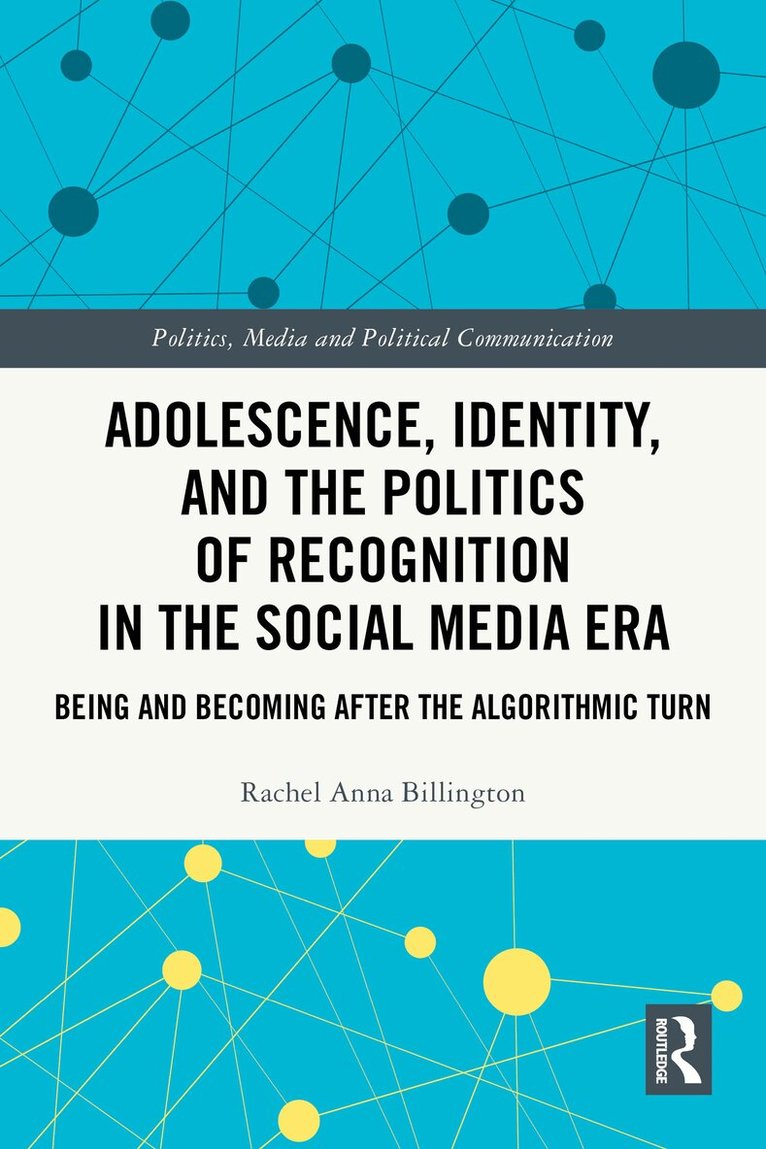
    Adolescence, Identity, and the Politics of Recognition in the Social Media Era

    Being and Becoming After the Algorithmic Turn

    AvRachel Anna Billington

    E-bok
    Engelska, 2026

    Del i serien Politics, Media and Political Communication

    805 kr

    Läs direkt i Bokus Reader – eller ladda ned till din enhet

    Fler format och utgåvor

    E-bok

    805 kr

    Inbunden

    2 434 kr

    Beskrivning

    Adolescence, Identity, and the Politics of Recognition in the Social Media Era explores the political identity formation of adolescents online, with a focus on recognition theory, affect, and lived experiences of belonging and non-belonging.In a socio-political moment characterised by culture wars and epistemic disjunctures, largely facilitated by the algorithmic logics of modern social media technologies, people are increasingly turning their attention to the role of social media in political belief formation, rising populism, and polarisation. Understanding how these dynamics inform the developing political identities of young people coming of age online is, however, under-explored. In response, this book examines how the desire for recognition and belonging drives identity articulation and political affiliation—both online and offline—for teens negotiating identity construction in the digital era. Using interviews and surveys with New Zealand teens, and employing recognition theory, the book discusses findings which demonstrate how the political identities of adolescents are informed by their relationships with others and mediated by the algorithmic logics of social media platforms. The main themes in the book explore how social media adoption has become a rite of passage for young people in Aotearoa New Zealand and around the world, facilitating new sites and pathways for recognition. Additionally, insofar as these sites are governed by algorithmic technologies, they demonstrate potential to both facilitate and inhibit capacities for autonomy, connection, and meaningful recognition of both self and others.Adolescence, Identity, and the Politics of Recognition in the Social Media Era will be of great interest to students and scholars of Politics and Communication Studies, as well as Social Anthropology, Sociology, Youth Studies, and Education.

    Produktinformation

    • Utgivningsdatum:2026-03-23
    • Språk:Engelska
    • Filformat:EPUB
    • Kopieringsskydd:LCP
    • ISBN:9781040658864
    • Förlag:Taylor & Francis Ltd
    • Serie:Politics, Media and Political Communication

    Utforska kategorier

    • Referensverk och tvärvetenskap inom Samhälle och politik
    • Kulturvetenskap inom Samhälle och politik
    • Medievetenskap inom Samhälle och politik

    Mer om författaren

    Rachel Anna Billington (Ngāi Tai ki Tāmaki) is a lecturer in the Media, Film and Communication Programme at the University of Otago, Ōtākou Whakaihu Waka. She lives in Ōtepoti Dunedin with her husband, stepkid(s), chickens, bees, and cat, and likes to use an em dash—despite its reputation.

    Recensioner i media

    “Billington's work contributes a timely exploration of social media as a rite of passage for young people, exploring the ways in which the 'agency' of algorithms and media both enhance and inhibit, aid and distort young peoples' relations and development. Without succumbing to technological determinism, she provides savvy and critical insights into the contradictions and complexities of contemporary mediated lives. Her approach is smart both theoretically and empirically, offering a seamless analysis of her original empirical research through the lens of affect, recognition theory, and epistemic injustice, arguing for scholars to understand social media as a "recognition machine" which in turn requires a focus on technojustice. For Billington, recognition theory provides a means for dissecting both how algorithmic dynamics entrench epistemic injustice, but also promise dialogue and reciprocity. Accessible, incisive, and smart, this book explores these critical and urgent questions with exemplary and impressive breadth, never sacrificing the complexity and nuance required to grasp the fraught and mediated experience of coming of age in the 21st century.”Professor Megan Boler, University of Toronto“Drawing on the perspectives and lived experiences of New Zealand teens, this book thoughtfully engages with the messy but fascinating truth about social media: these platforms simultaneously widen and narrow teens' agency in their quest to develop a sense of self and political identity.”Professor Susannah Stern, University of San Diego

    Innehållsförteckning

    • IntroductionRecognition, adolescence, and (political) identity in the algorithmic eraThe affective politics of digital mediaAdolescent identity development onlineOutline of book1: Recognition theory, social media, and the dialectical momentRecognition and identityHonneth’s frameworkPhenomenologies of misrecognitionMisrecognising the selfIdentity politicsThe dialectical momentCulture wars as struggleFrom polarisation to epistemic disjunctureA fourth order of recognition: EpistemicThe normative potential of (an amended) recognition theoryRecognition as a radical endeavourConclusion2: The hybrid lives of teens onlineHybrid ecologiesTensions, transitions, and identity workDigital affordances for belongingAffective; collective; politicalToxic discursive environmentsAn algorithmically distorted recognition orderConclusion3: Researching recognitionMethodological frameworkPerspectivism and representationStorytelling/storylisteningMeaning-making, interpretation, and hermeneuticsReflexivity and researcher positionalityResearch methodsPhase one: SurveysPhase two: In-depth interviewsAnalysisConclusion4: Affective orientations to the politicalSocial media as recognition machineSocial media adoption as a rite of passageFitting inPerforming belonging and signalling desirable traitsPerforming the self as self-discoveryAffirming versus compensatory online practicesMitigating lonelinessIdentifying with a collectiveRecognising the self in othersConstructions of us and them; ingroup norms and valuesTo be recognised is to be understoodCancel culutre, self-silencing, and the fear of rejectionConclusion5: Digitally mediated identitiesAutonomy-enhancing or autonomy-inhibiting?Information-seeking, interests, hobbiesEnabling and inhibiting connectionAgency and intentionalityAddiction, wasted time, mindless scrollingAn emotional (sc)rollercoasterDepression, anxiety, apathyA question of consent: Unwanted exposure to distressing contentEnvironmental influencesFilter effects and epistemic autonomySymmetrical versus asymmetrical hermeneutic environmentsThe power of dialogueConclusionConclusion: Autonomy, ambiguity, and justice in the algorithmic ageAmbiguities in the liminalPolitical orientationsTechnologies of powerThe normative and transformative potential of recognition theory