Inbunden, Engelska, 2025
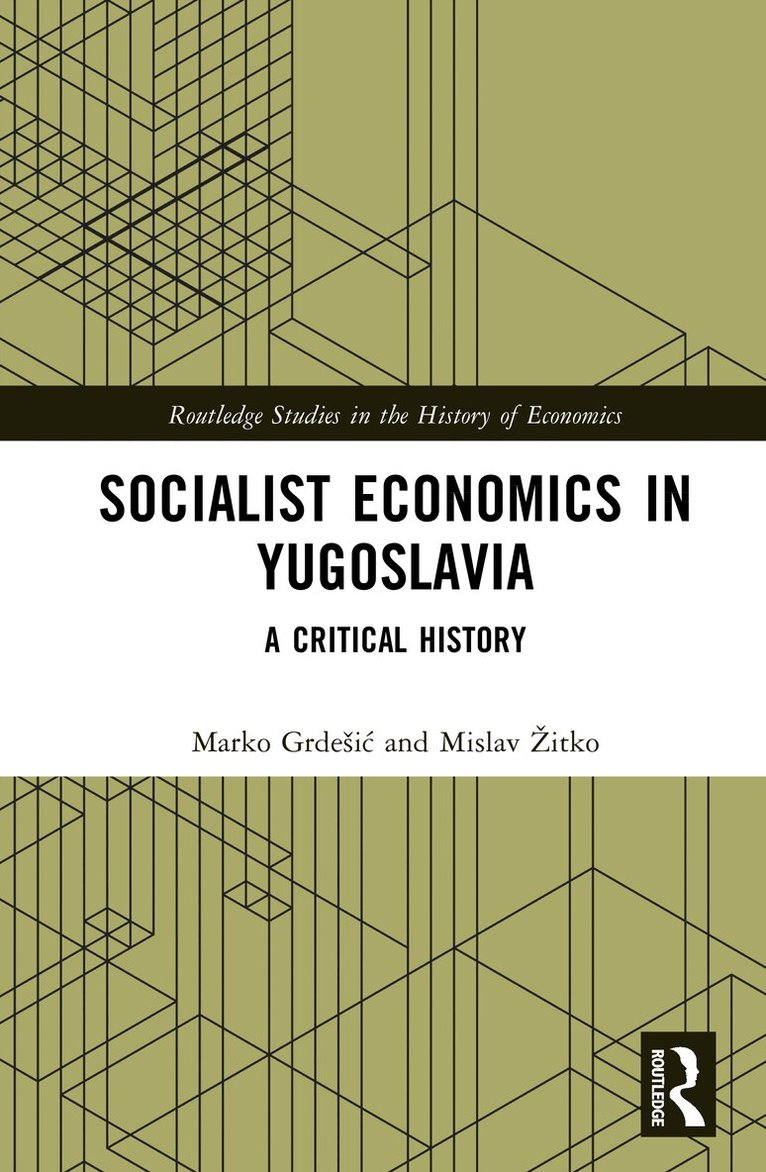
Socialist Economics in Yugoslavia
A Critical History
Av Marko Grdešić, Mislav Žitko
Del i serien Routledge Studies in the History of Economics
2577 kr
Beställningsvara. Skickas inom 10-15 vardagar. Fri frakt över 249 kr.
Beskrivning
Produktinformation
- Utgivningsdatum: 2025-10-31
- Mått: 156 x 234 x 16 mm
- Vikt: 440 g
- Format: Inbunden
- Språk: Engelska
- Serie: Routledge Studies in the History of Economics
- Antal sidor: 186
- Förlag: Taylor & Francis Ltd
- ISBN: 9781041025535
Utforska kategorier
Mer om författaren
Marko Grdešić is Associate Professor, Faculty of Political Sciences, University of Zagreb, Croatia.Mislav Žitko is Assistant Professor, Faculty of Philosophy, University of Zagreb, Croatia.
Recensioner i media
Paul StubbsThe Institute of Economics, ZagrebAuthor of The New International Economic Order: Lives and AfterlivesThis comprehensive, nuanced, in-depth study of the history of the field of professional economics in socialist Yugoslavia takes seriously the relative autonomy of the profession as it emerged after the revolution and consolidated its position subsequently. It explores the deep contradictions of Yugoslavia's supposed exceptionalism in terms of in its socio-economic system and insists on the value of a comparative methodology. It is a path-breaking, inter-disciplinary, study, valuable not only because it revisits an important, if relatively neglected, spatio-temporal conjuncture but also because of the lessons it offers for contemporary emancipatory projects. It will become a point of reference for historical analyses of socialist economics, of great interest and value to students, researchers, and activists alike.---------------------------------------------------------------------------------------------------------------------------Branko MilanovićGraduate Center, City University of New YorkAuthor of Visions of Inequality: From the French Revolution to the End of the Cold WarIn this splendid book, Marko Grdešić and Mislav Žitko trace the intellectual history of the rise and fall of the specifically Yugoslav political economy. It was a unique political economy because the circumstances were unique: companies managed by workers, capital owned by “society”, and goods and services sold under market conditions. Thirty years ago at the apex of neoliberalism that theory seemed unimportant and quaint. But as some forms of labor management, workers’ agency, and shareholder capitalism reemerge, the discussions of Yugoslav political economy may surprisingly become relevant again.
Betyg & recensioner
0 recensioner
Inga recensioner tillgängliga.