• Fri frakt över 249 kr
  • •
  • Snabba leveranser
  • •
  • Billiga böcker
Kundservice

Du är på sajten för privatpersoner.

Företag, bibliotek eller offentlig verksamhet?

Du handlar på classic.bokus.com, där alla dina funktioner finns intakta.
Till classic.bokus.com
Bokus logotyp. Gå till startsidan.
  • Erbjudanden
  • Nyheter
  • Student
  • Topplistor
  • Barn & ungdom
  • Bokus Play
  • E-böcker
  • Pocketböcker
  • Spel & pussel

10% studentrabatt med kod TERM26

Sidfot

Mina sidor

    Hjälp

    • Kundservice
    • Vanliga frågor och svar
    • Frakt och leverans
    • Retur vid ångerrätt
    • Reklamera vara
    • Betalning
    • Köpvillkor
    • Allmänna villkor
    • Information om webbplatsens tillgänglighet

    Om Bokus

    • Om oss
    • Pressrum
    • För studenter
    • För företag
    • För bibliotek och offentlig verksamhet
    • För leverantörer
    • Hållbarhet

    Populärt

    • Aktuella erbjudanden
    • Presentkort
    • Studentlitteratur
    • Nya böcker
    • Topplistor
    • Signerade böcker
    • Engelska böcker

    Inspiration

    • Boktips
    • BookTok
    • Populära bokserier
    • Barnbokskaraktärer
    • Populära författare
    Logotyp för Bokus
    Följ oss på Facebook (extern länk)Följ oss på Instagram (extern länk)Följ oss på YouTube (extern länk)Följ oss på TikTok (extern länk)
    bokus @ CookiesAnpassa cookiesIntegritetspolicyKöpvillkor
    Till Citymail hemsida (extern länk)Till Budbee hemsida (extern länk)Till Postnord hemsida (extern länk)Till Schenker hemsida (extern länk)Till Early Bird hemsida (extern länk)Till Walleys hemsida (extern länk)
    1. Historia och arkeologi
    2. Historia
    3. Europas historia

    Laboratory Revolution and the Creation of the Modern University, 1830-1940

    AvKlaas van Berkel,Ernst Homburg

    Häftad, Engelska, 2025

    Del i serien Studies in the History of Knowledge

    705 kr

    Beställningsvara. Skickas inom 10-15 vardagar. Fri frakt över 249 kr.

    Beskrivning

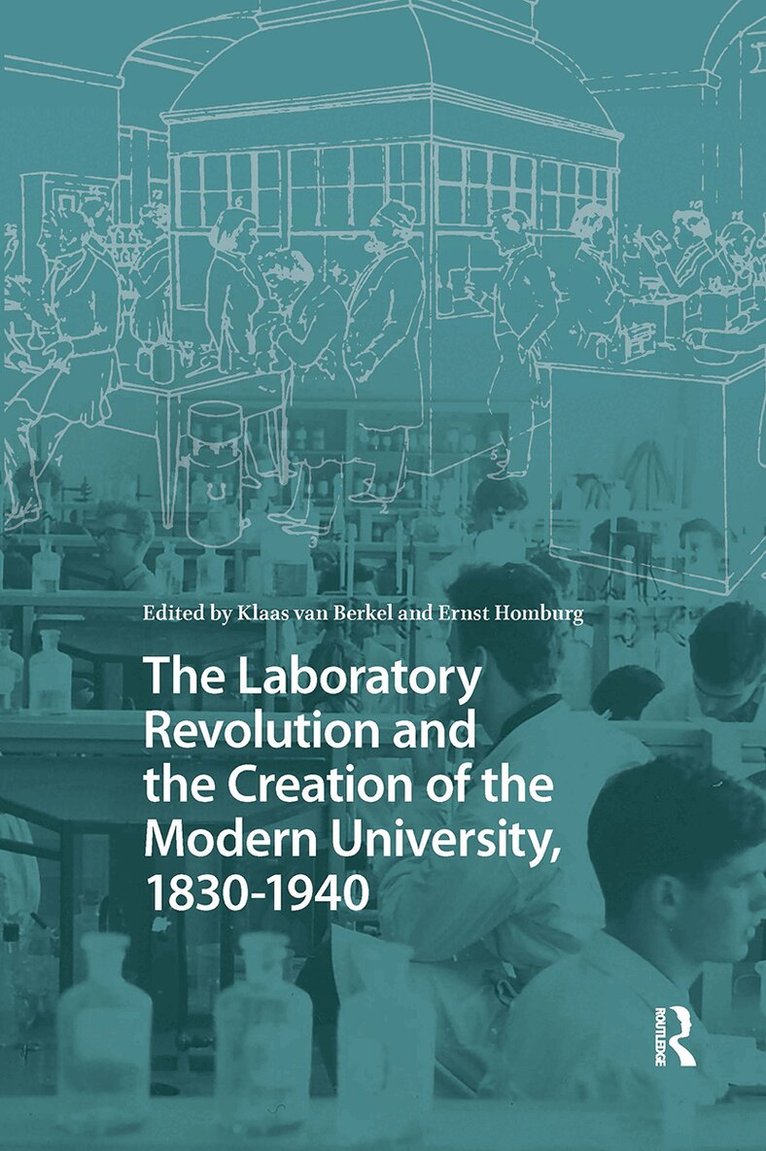
    The modern research university originated in Europe in the second half of the nineteenth century, largely due to the creation and expansion of the teaching and research laboratory. The universities and the sciences underwent a laboratory revolution that fundamentally changed the nature of both. This revolutionary development began in chemistry, where Justus Liebig is credited with systematically employing his students in his ongoing research during the 1830s. Later, this development spread to other fields, including the social sciences and the humanities. The consequences for the universities were colossal. The expansion of the laboratories demanded extensive new building programs, reshaping the outlook of the university. The social structure of the university also diversified because of this laboratory expansion, while what it meant to be a scientist changed dramatically. This volume explores the spatial, social, and cultural dimensions of the rise of the modern research laboratory within universities and their consequent reshaping.

    Produktinformation

    • Utgivningsdatum:2025-12-01
    • Mått:156 x 234 x 19 mm
    • Vikt:640 g
    • Format:Häftad
    • Språk:Engelska
    • Serie:Studies in the History of Knowledge
    • Antal sidor:346
    • Förlag:Taylor & Francis Ltd
    • ISBN:9781041188339

    Utforska kategorier

    • Europas historia inom Historia och arkeologi
    • Naturvetenskapens historia inom Naturvetenskap och teknik
    • Pedagogik: historia inom Psykologi och pedagogik

    Mer om författaren

    Klaas van Berkel recently retired as Rudolf Agricola professor of history at the University of Groningen. In his research he focuses on cultural history and the history of science, especially the history of scientific institutions (academies, universities). In 2021 he published, with Guus Termeer, The University of Groningen in the World. A Concise History (Amsterdam: Pallas Publications). Ernst Homburg is professor of history of science and technology emeritus at Maastricht University. His research is mainly on the interaction between science and technology in industry and academia, from the nineteenth to the twenty-first century. His most recent book publications are: Hazardous Chemicals: Agents of Risk and Change, 1800–2000 (New York, Oxford: Berghahn, 2019), edited with Elisabeth Vaupel, and Een eeuw chemische technologie in Nederland (Delft: Stichting Hoogewerff-Fonds, 2021), with Ton van Helvoort.

    Innehållsförteckning

    • List of Figures and Tables, Preface, 1. The Joint Emergence of the Teaching-Research Laboratory and the Modern University: An Introduction ( Klaas van Berkel and Ernst Homburg), Part I: THE LABORATORY REVOLUTION: ORIGINS AND IMPACT, 2. Origins and Spread of the 'Giessen Model' in University Science (Alan J. Rocke), 3. The Laboratory Ethos, 1850-1900 (Frans van Lunteren), Part II: LABORATORY NETWORKS, 4. Chemistry in Zürich, 1833-1930: Developing the Teaching-Research Laboratory in the Swiss Context (Peter J. Ramberg), 5. Island Kingdoms in the Making: The New Laboratories and the Fragmentation of Dutch Universities c. 1900 (Klaas van Berkel), 6. A Fertile Ecosystem: University Chemical Laboratories and their Suppliers in Fin-de-Siècle Paris (Pierre Laszlo), 7. Fighting for Modern Teaching and Research Laboratories in Norway: The Chemistry Laboratory in Political Dispute Around 1920 (Annette Lykknes), 8. Religion and the Laboratory Revolution: Towards a Physiological Laboratory at a Calvinist University in the Netherlands, 1880-1924 (Ab Flipse), Part III: LABORATORY VALUES, 9. Aspects of the Social Organization of the Chemical Laboratory in Heidelberg and Imperial College, London (Peter Morris), 10. Of Growing Significance: The Support Staff in the Laboratories and Institutes of Utrecht University During the Interwar Period (Bas Nugteren), 11. A Revolution in Genetics at Gendered Experimental Venues in Cambridge and London, 1890-1930 (Ida H. Stamhuis), 12. Serialized Laboratories: Laboratory Journals and the Making of Modern Science and Scientific Publishing, 1840s-1950s (Dorien Daling), 13. Images of the Laboratory in the Popular Press (Geert Vanpaemel), Acknowledgements.