• Fri frakt över 249 kr
  • •
  • Snabba leveranser
  • •
  • Billiga böcker
Kundservice

Du är på sajten för privatpersoner.

Företag, bibliotek eller offentlig verksamhet?

Du handlar på classic.bokus.com, där alla dina funktioner finns intakta.
Till classic.bokus.com
Bokus logotyp. Gå till startsidan.
  • Erbjudanden
  • Nyheter
  • Student
  • Topplistor
  • Barn & ungdom
  • Bokus Play
  • E-böcker
  • Pocketböcker
  • Spel & pussel

10% rabatt på allt med kod NYSTART10 →

Sidfot

Mina sidor

    Hjälp

    • Kundservice
    • Vanliga frågor och svar
    • Frakt och leverans
    • Retur vid ångerrätt
    • Reklamera vara
    • Betalning
    • Köpvillkor
    • Allmänna villkor
    • Information om webbplatsens tillgänglighet

    Om Bokus

    • Om oss
    • Pressrum
    • För studenter
    • För företag
    • För bibliotek och offentlig verksamhet
    • För leverantörer
    • Hållbarhet

    Populärt

    • Aktuella erbjudanden
    • Presentkort
    • Studentlitteratur
    • Nya böcker
    • Topplistor
    • Signerade böcker
    • Engelska böcker

    Inspiration

    • Boktips
    • BookTok
    • Populära bokserier
    • Barnbokskaraktärer
    • Populära författare
    Logotyp för Bokus
    Följ oss på Facebook (extern länk)Följ oss på Instagram (extern länk)Följ oss på YouTube (extern länk)Följ oss på TikTok (extern länk)
    bokus @ CookiesAnpassa cookiesIntegritetspolicyKöpvillkor
    Till Citymail hemsida (extern länk)Till Budbee hemsida (extern länk)Till Postnord hemsida (extern länk)Till Schenker hemsida (extern länk)Till Early Bird hemsida (extern länk)Till Walleys hemsida (extern länk)
    1. Samhälle och politik
    2. Samhälle och kultur
    3. Kultur och medier
    4. Referensverk och tvärvetenskap

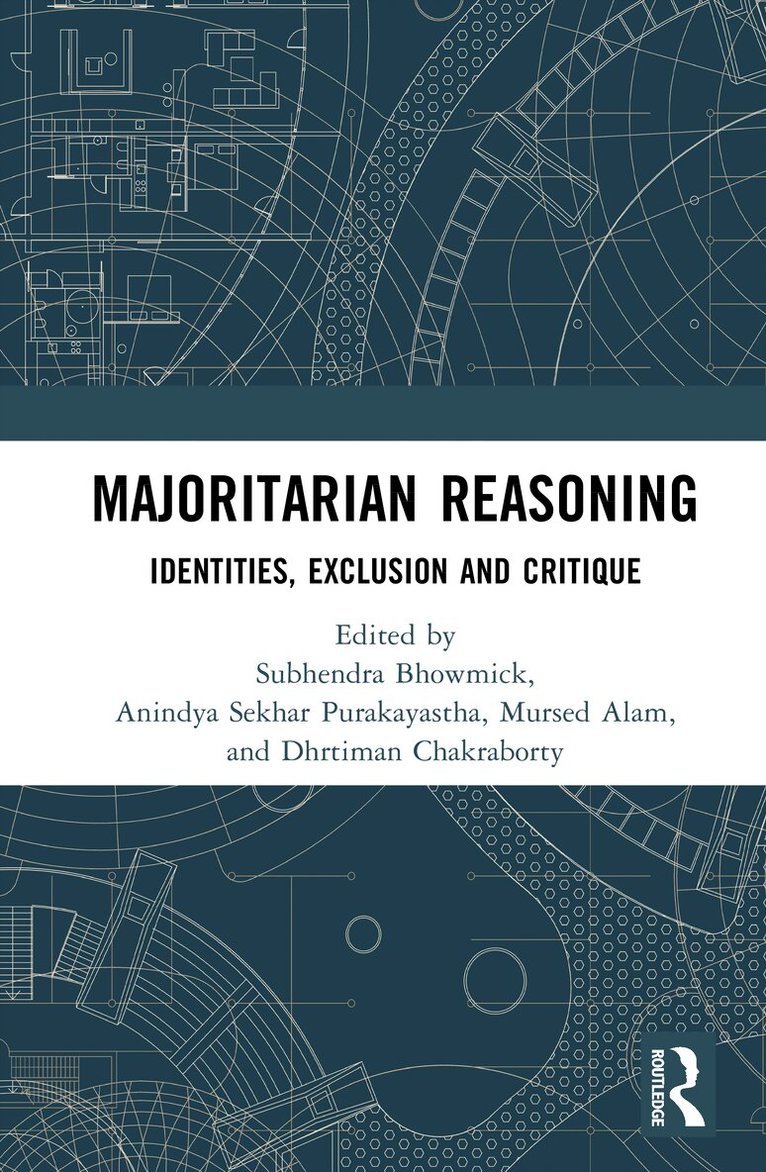
    Majoritarian Reasoning

    Identities, Exclusion and the Other

    AvSubhendra Bhowmick,Anindya Sekhar Purakayastha

    Inbunden, Engelska, 2026

    2 422 kr

    Slutsåld

    Beskrivning

    Majoritarian Reasoning: Identities, Exclusion and Critique examines the complex relationship between majoritarianism and nationalism in nation-building across the Indian subcontinent. The authors analyse historical patterns of identity formation and investigate connections between majority dominance and national identity, exploring how these dynamics continue to shape contemporary South Asian politics and society.Taking a comprehensive long-term view, the book traces the emergence and evolution of majoritarian politics throughout South Asia through diverse case studies, analysis of key thinkers, and previously unexplored historical accounts. Its multidisciplinary approach combines different historical methodologies with rigorous analytical frameworks to address critical questions about the relationship between majority identity and nationalism. The volume examines how historical patterns influence modern political formations and community relations along religious and ethnic lines, investigating the origins of nationhood and the connections between majoritarian impulses and nationalist expressions in South Asia's complex political evolution.This book serves scholars across South Asian politics and society, postcolonial studies, democracy studies, religious studies, area studies, and Global South studies, bridging disciplinary boundaries to provide insights into identity politics in contemporary South Asian societies and comparative perspectives on global political trends.

    Produktinformation

    • Utgivningsdatum:2026-12-21
    • Mått:156 x 234 x undefined mm
    • Format:Inbunden
    • Språk:Engelska
    • Antal sidor:264
    • Förlag:Taylor & Francis Ltd
    • ISBN:9781041308812

    Utforska kategorier

    • Referensverk och tvärvetenskap inom Samhälle och politik
    • Statsskick: demokrati inom Samhälle och politik
    • Kolonialism och imperialism inom Historia och arkeologi

    Mer om författaren

    Subhendra Bhowmick teaches sociology as an Assistant Professor of Sidho-Kanho-Birsha University, Purulia in West Bengal, India. He published in journals such as Foucault Studies, History and Sociology of South Asia (Sage), Transnational Literature, Contemporary South Asia (Routledge) etc. He wrote in both Bengali and English on the themes like: genealogical studies on dirt and impurity; Derridean critiques of The Mahabharata and death penalty; on the humanists like Vidyasagar and Tagore; postcolonial critiques of the neoliberal times in the everyday life contexts of contemporary Bengal; etc.Anindya Sekhar Purakayastha, currently with the Institute of Language Studies and Research (ILSR), Kolkata, has been professor of English at Kazi Nazrul University, India. He was 2025 Global South Visiting Fellow at the Centre for Research in the Arts, Humanities and Social Sciences (CRASSH), University of Cambridge. Among others, his Fulbright Fellowship stay was at the University of Massachusetts, Amherst (2018-19), he co-edits Kairos, A Journal of Critical Symposium and is one of the founding members of the Postcolonial Studies Association of the Global South (PSAGS). Mursed Alam is Associate Professor of English, Gour College, India. He has been a fellow at the IASH, University of Edinburgh (2023); and at ICSI, New School for Social Research, New York (2024). His areas of research include postcolonial theory, medical humanities, Islamic traditions and interfaith dialogue in South Asia. He is the managing editor of Kairos: A Journal of Critical Symposium and a founding member of the Postcolonial Studies Association of the Global South (PSAGS). His translated the short stories of Lutfor Rahaman (YODA Press, 2025).Dhritiman Chakraborty works in the field of literary and political traditions, postcolonial environmentalism, and questions of belonging in South Asia. His jointly edited book on Catastrophe Studies in India has been out from Springer in 2024, and in 2025, he jointly edited a special issue of a journal Sanglap on Women Intellectuals in India. His contributions have been published in anthologies and journals from Routledge, Oxford, Sage, De-Gruyter Brill, among others.

    Innehållsförteckning

    • List of contributors Acknowledgements. Introduction: Critique of Majoritarian Reason: Genealogies and Strategic Implications in Post-independence India Section I: Histories of Majoritarianism in India 1. Historicising Majoritarian Nationalism in India: Its resurgence in the 1990s and its current hegemony 2. Postcolonial Identity, Secularism and the Indian Constitution 3. Kashmir, History of Article 370 and Majoritarian Reasoning Section II: Fall outs and Cultural Frames of Majoritarian Trends 4. Identifying the 'Enemy': Minoritarian Determination of Nationalism in Contemporary India 5. Pedagogies of Nation: Education Policy and Campus Politics 6. Nation as Symbols- Reawakening Bharat Mata 7. Visual Culture and National Sentiments: Bollywood and the Representation of Muslims Section III: New Tools & New Game Plans 8. Digital Nationalism and 24x7 Media 9. Garrison State, Strong Nation and Militarism Section IV: Majoritarianism and Social Exclusion 10. Dalit Muslim Alliances in the Backdrop of Majoritarian Nationalism 11. Nation and the Postcolonial Predicament of Caste 12. Secular Politics and Communal Outcomes 13. Nation and its Women: Temple Entry, Love Jihad and the Question of Faith Section V: Political Economy and Divisive Frames 14. Majoritarian Politics and the Market: Hindutva and Neoliberal India Index