• Fri frakt över 249 kr
  • •
  • Snabba leveranser
  • •
  • Billiga böcker
Kundservice

Du är på sajten för privatpersoner.

Företag, bibliotek eller offentlig verksamhet?

Du handlar på classic.bokus.com, där alla dina funktioner finns intakta.
Till classic.bokus.com
Bokus logotyp. Gå till startsidan.
  • Erbjudanden
  • Nyheter
  • Student
  • Topplistor
  • Barn & ungdom
  • Bokus Play
  • E-böcker
  • Pocketböcker
  • Spel & pussel

Må bättre, för mindre! Upp till 50% rabatt på hälsoböcker

Sidfot

Mina sidor

    Hjälp

    • Kundservice
    • Vanliga frågor och svar
    • Frakt och leverans
    • Retur vid ångerrätt
    • Reklamera vara
    • Betalning
    • Köpvillkor
    • Allmänna villkor
    • Information om webbplatsens tillgänglighet

    Om Bokus

    • Om oss
    • Pressrum
    • För studenter
    • För företag
    • För bibliotek och offentlig verksamhet
    • För leverantörer
    • Hållbarhet

    Populärt

    • Aktuella erbjudanden
    • Presentkort
    • Studentlitteratur
    • Nya böcker
    • Topplistor
    • Signerade böcker
    • Engelska böcker

    Inspiration

    • Boktips
    • BookTok
    • Populära bokserier
    • Barnbokskaraktärer
    • Populära författare
    Logotyp för Bokus
    Följ oss på Facebook (extern länk)Följ oss på Instagram (extern länk)Följ oss på YouTube (extern länk)Följ oss på TikTok (extern länk)
    bokus @ CookiesAnpassa cookiesIntegritetspolicyKöpvillkor
    Till Citymail hemsida (extern länk)Till Budbee hemsida (extern länk)Till Postnord hemsida (extern länk)Till Schenker hemsida (extern länk)Till Early Bird hemsida (extern länk)Till Walleys hemsida (extern länk)
    1. Psykologi och pedagogik
    2. Psykologi
    3. Arbetspsykologi

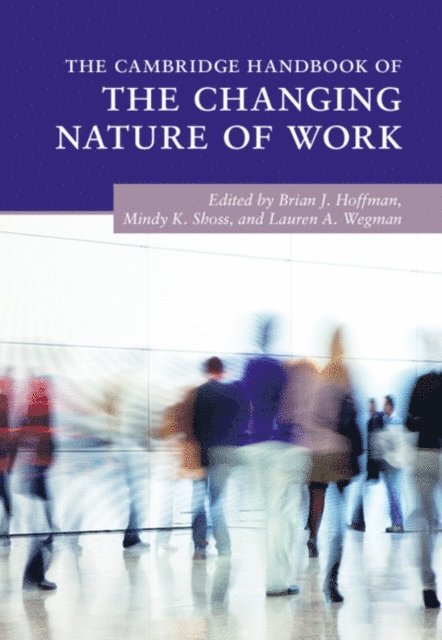
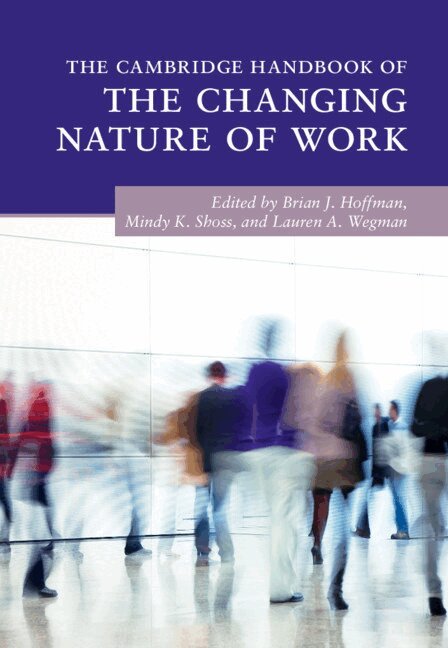
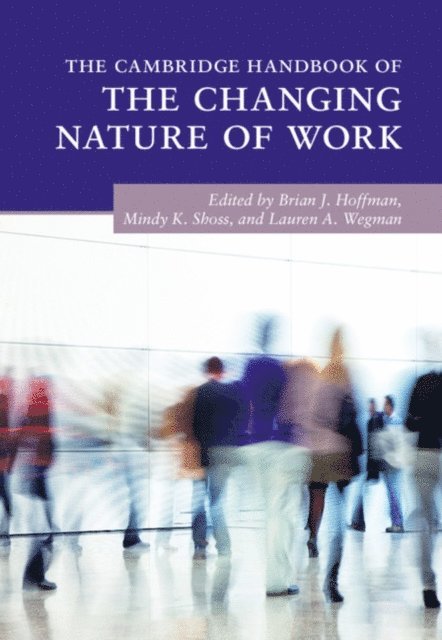
    The Cambridge Handbook of the Changing Nature of Work

    AvBrian J. Hoffman,Mindy K. Shoss

    Häftad, Engelska, 2020

    Del i serien Cambridge Handbooks in Psychology

    804 kr

    Beställningsvara. Skickas inom 10-15 vardagar. Fri frakt över 249 kr.

    Beskrivning

    This handbook provides an overview of the research on the changing nature of work and workers by marshalling interdisciplinary research to summarize the empirical evidence and provide documentation of what has actually changed. Connections are explored between the changing nature of work and macro-level trends in technological change, income inequality, global labor markets, labor unions, organizational forms, and skill polarization, among others. This edited volume also reviews evidence for changes in workers, including generational change (or lack thereof), that has accumulated across domains. Based on documented changes in work and worker behavior, the handbook derives implications for a range of management functions, such as selection, performance management, leadership, workplace ethics, and employee well-being. This evaluation of the extent of changes and their impact gives guidance on what best practices should be put in place to harness these developments to achieve success.

    Produktinformation

    • Utgivningsdatum:2020-04-23
    • Mått:255 x 175 x 35 mm
    • Vikt:1 200 g
    • Format:Häftad
    • Språk:Engelska
    • Serie:Cambridge Handbooks in Psychology
    • Antal sidor:636
    • Förlag:Cambridge University Press
    • ISBN:9781108405539

    Utforska kategorier

    • Arbetspsykologi inom Psykologi och pedagogik

    Mer om författaren

    Brian Hoffman is Professor and Chair of the Industrial-Organizational Psychology Program at the University of Georgia, USA, and Fellow of the Society for Industrial-Organizational Psychology. Mindy Shoss is Associate Professor of Psychology at the University of Central Florida, USA, and Honorary Fellow of Australian Catholic University, Australia. Lauren A. Wegman graduated from the University of Georgia, USA, where her research focus was the changing nature of work. She now works in the people analytics field.

    Recensioner i media

    'There is no more important issue facing workers, organizations, and society-at-large than the transformation of the 21st century workplace. This handbook is an extremely timely and enormously valuable resource for understanding how the intersection of technology, globalization, economics, and generational differences have changed our fundamental conceptions of work.' John C. Scott, Chief Operating Officer, APTMetrics, Inc.

    Innehållsförteckning

    • Part I. Introduction to the Changing Nature of Work: 1. Introduction Brian Hoffman, Mindy Shoss and Lauren Wegman; 2. Inappropriate inferences from generational research David Costanza, Lisa Finkelstein, Ruth Imose and David Ravid; 3. What has changed and what has not? Kevin Murphy and Warren Tierney; Part II. What has Changed?: 4. Changes in technology Jerod White, Tara Behrend and Ian Sidertis; 5. The changing nature of work: a global perspective Christopher Clott; 6. Changes in occupations, jobs, and skill polarization Arthur Sakamoto, ChangHwan Kim and Christopher Tamborini; 7. Changes in the legal landscape Chester Hanvey and Kayo Sady; 8. The rise and decline of organized labor in the United States: American unions from Truman to Trump Raymond Hogler; 9. Changes in organizational income inequality: the causes and consequences Lixin Jiang; 10. Work and employment in fluid organizational forms Jörg Sydow and Markus Helfen; 11. Changes in worker demographics Shannon Cheng, Abby Corrington, Eden King, and Linnea Ng; 12. Generational changes in personality, values and abilities Jorge Lumbreras and W. Keith Campbell; 13. Changes in work behavior patterns Sara Jansen Perry, Emily David and Lars Johnson; Part III. Implications for Talent Management and Impact on Employees: 14. Implications for selection Brian Lyons, Alexander Alonso, Robert Moorman and Ashley Miller; 15. Implications of the changing nature of work for recruitment and retention Wayne Cascio; 16. Performance management and the changing nature of work Deidra Schleicher and Heidi Baumann; 17. Implications for training Tiffany Bisbey, Allison Traylor and Eduardo Salas; 18. Leader behaviors and the changing nature of work John Michel and Gary Yukl; 19. The changing nature of teams: recommendations for managing 21st century teamwork Justin Jones, Gouri Mohan, Hayley Trainer and Dorothy Carter; 20. Managing employees across the working lifespan Cort Rudolph and Hannes Zacher; 21. Implications for employee attitudes and work perceptions Lauren Wegman and Brian Hoffman; 22. Implications for the interface between work and nonwork roles Jeffery Greenhaus and Gerry Callanan; 23. The changing nature of work: implications for employee health and safety Robert Sinclair, John Morgan and Elyssa Johnson; 24. The dark side of workplace technology: cyber-related counterproductive work behavior, workplace mistreatment, and violation of workplace ethics David Howard and Paul Spector; 25. Implications for the employee-organization relationship Mindy Shoss, Robert Eisenberger, Juseob Lee, Blaine Lewis, Dustin Maneethai, Xueqi Wen, Jia Yu and Jimmy Zheng; 26. The future of work Muriel Clauson; 27. Sustainability as a driver of organizational change Lori Foster and Telma Viale.