• Fri frakt över 249 kr
  • •
  • Snabba leveranser
  • •
  • Billiga böcker
Kundservice

Du är på sajten för privatpersoner.

Företag, bibliotek eller offentlig verksamhet?

Du handlar på classic.bokus.com, där alla dina funktioner finns intakta.
Till classic.bokus.com
Bokus logotyp. Gå till startsidan.
  • Erbjudanden
  • Nyheter
  • Student
  • Topplistor
  • Barn & ungdom
  • Bokus Play
  • E-böcker
  • Pocketböcker
  • Spel & pussel

10% rabatt på allt med kod NYSTART10 →

Sidfot

Mina sidor

    Hjälp

    • Kundservice
    • Vanliga frågor och svar
    • Frakt och leverans
    • Retur vid ångerrätt
    • Reklamera vara
    • Betalning
    • Köpvillkor
    • Allmänna villkor
    • Information om webbplatsens tillgänglighet

    Om Bokus

    • Om oss
    • Pressrum
    • För studenter
    • För företag
    • För bibliotek och offentlig verksamhet
    • För leverantörer
    • Hållbarhet

    Populärt

    • Aktuella erbjudanden
    • Presentkort
    • Studentlitteratur
    • Nya böcker
    • Topplistor
    • Signerade böcker
    • Engelska böcker

    Inspiration

    • Boktips
    • BookTok
    • Populära bokserier
    • Barnbokskaraktärer
    • Populära författare
    Logotyp för Bokus
    Följ oss på Facebook (extern länk)Följ oss på Instagram (extern länk)Följ oss på YouTube (extern länk)Följ oss på TikTok (extern länk)
    bokus @ CookiesAnpassa cookiesIntegritetspolicyKöpvillkor
    Till Citymail hemsida (extern länk)Till Budbee hemsida (extern länk)Till Postnord hemsida (extern länk)Till Schenker hemsida (extern länk)Till Early Bird hemsida (extern länk)Till Walleys hemsida (extern länk)
    1. Medicin
    2. Klinisk medicin och internmedicin

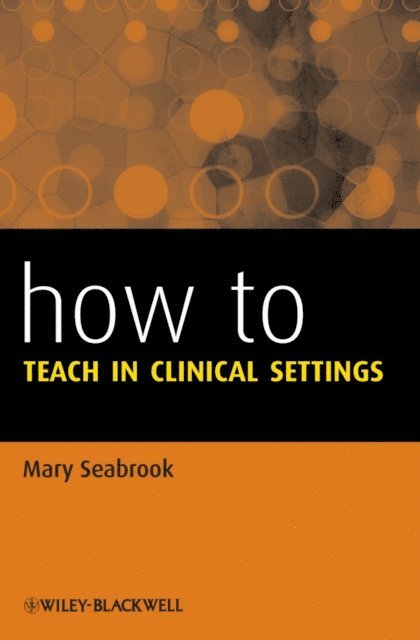
    How to Teach in Clinical Settings

    AvMary Seabrook

    Häftad, Engelska, 2014

    Del i serien How To

    455 kr

    Beställningsvara. Skickas inom 5-8 vardagar. Fri frakt över 249 kr.

    Fler format och utgåvor

    E-bok

    520 kr

    E-bok

    520 kr

    Beskrivning

    How to Teach in Clinical Settings is a practical guide to support all doctors wishing to develop their skills in clinical teaching and supervision.It provides hands on strategies to address common problems such as giving critical feedback effectively and teaching mixed-level groups. It gives guidance on the particular challenges of teaching in clinical settings including the need to manage teaching with service provision, to engage patients, motivate students, and to judge the balance of support and independence appropriate for each trainee.How to Teach in Clinical Settings is invaluable for all doctors involved in teaching and training at any stage of their career. It is also useful and accessible to medical students who increasingly need to consider and develop their own teaching skills as part of their career progression.

    Produktinformation

    • Utgivningsdatum:2014-01-31
    • Mått:140 x 216 x 10 mm
    • Vikt:159 g
    • Format:Häftad
    • Språk:Engelska
    • Serie:How To
    • Antal sidor:144
    • Förlag:John Wiley & Sons Inc
    • ISBN:9781118620939

    Utforska kategorier

    • Klinisk medicin och internmedicin inom Medicin
    • Pedagogisk metodik inom Psykologi och pedagogik

    Mer om författaren

    Mary Seabrook, Medical Education Consultant, London, UK

    Innehållsförteckning

    • Acknowledgements ixIntroduction xiChapter 1 Creating an effective learning environment 1Practical ways to create an environment conducive to learning 4Design of clinical placements 6Continuity between learners teachers and patients 8Teaching and learning resources 9The teaching climate 9What makes a good clinical teacher? 10Involving patients in teaching 11Involving other disciplines in teaching 13Some principles of effective clinical teaching 15Useful strategies for clinical teaching 15Five tips for clinical teaching which do not take time or money 17References 17Chapter 2 Teaching in clinical contexts 19Teaching on ward rounds 19General principles 19Useful strategies 21What you teach unwittingly 23The psychiatric ward round 25Handover meetings board rounds and bench rounds 26Bedside teaching 29Preparation 29Structure for bedside teaching 30Feedback at the bedside 34Examination practice at the bedside 36Teaching in clinics 38General principles 38Supervising trainees in parallel clinics 40Effective questioning on presented cases 41Seeing the patient together 42Supervising students or trainees who are supernumerary 43Teaching in the Accident and Emergency department 46Teaching the interpretation of images/specimens 47Teaching in theatre 49General principles 50Useful strategies 50Teaching practical skills 56On-call/remote teaching 60Teaching patients 62Teaching other disciplines 64Further reading on clinical teaching 65References 66Chapter 3 Workplace-based assessment and feedback 67The workplace-based assessments/supervised learning events 67Using the tools effectively 69Case-based discussion 71The mini-clinical evaluation exercise (Mini-ACE in psychiatry) 73Directly observed procedural skills 75Multi-source feedback (MSF) 77Teaching observation tools 79Giving feedback 81Giving negative feedback 81General principles of feedback 82Useful strategies for giving feedback 82Feedback models and structures 85Further reading on assessment and feedback 89References 90Chapter 4 Common problems in clinical teaching 91Balancing teaching and service demands 91Pitching teaching at the right level  94Dealing with complaints and clinical incidents 96Ad hoc teaching 100Teaching people at different levels together 101Teaching older or more experienced colleagues 103Engaging the quiet or reluctant learner 104The difficult consultation 106Teaching multiple students 107Teaching trainees with no interest in your speciality 108References 109Chapter 5 Next steps 110Developing as a teacher 110Evaluating your teaching 111Useful resources 115Appendix Glossary of assessment tools 118Index 119