• Fri frakt över 249 kr
  • •
  • Snabba leveranser
  • •
  • Billiga böcker
Kundservice

Du är på sajten för privatpersoner.

Företag, bibliotek eller offentlig verksamhet?

Du handlar på classic.bokus.com, där alla dina funktioner finns intakta.
Till classic.bokus.com
Bokus logotyp. Gå till startsidan.
  • Erbjudanden
  • Nyheter
  • Student
  • Topplistor
  • Barn & ungdom
  • Bokus Play
  • E-böcker
  • Pocketböcker
  • Spel & pussel

Må bättre, för mindre! Upp till 50% rabatt på hälsoböcker

Sidfot

Mina sidor

    Hjälp

    • Kundservice
    • Vanliga frågor och svar
    • Frakt och leverans
    • Retur vid ångerrätt
    • Reklamera vara
    • Betalning
    • Köpvillkor
    • Allmänna villkor
    • Information om webbplatsens tillgänglighet

    Om Bokus

    • Om oss
    • Pressrum
    • För studenter
    • För företag
    • För bibliotek och offentlig verksamhet
    • För leverantörer
    • Hållbarhet

    Populärt

    • Aktuella erbjudanden
    • Presentkort
    • Studentlitteratur
    • Nya böcker
    • Topplistor
    • Signerade böcker
    • Engelska böcker

    Inspiration

    • Boktips
    • BookTok
    • Populära bokserier
    • Barnbokskaraktärer
    • Populära författare
    Logotyp för Bokus
    Följ oss på Facebook (extern länk)Följ oss på Instagram (extern länk)Följ oss på YouTube (extern länk)Följ oss på TikTok (extern länk)
    bokus @ CookiesAnpassa cookiesIntegritetspolicyKöpvillkor
    Till Citymail hemsida (extern länk)Till Budbee hemsida (extern länk)Till Postnord hemsida (extern länk)Till Schenker hemsida (extern länk)Till Early Bird hemsida (extern länk)Till Walleys hemsida (extern länk)
    1. Medicin
    2. Medicin: allmänt
    3. Samhällsmedicin och preventiv medicin
    4. Folkhälsa och hälsopedagogik

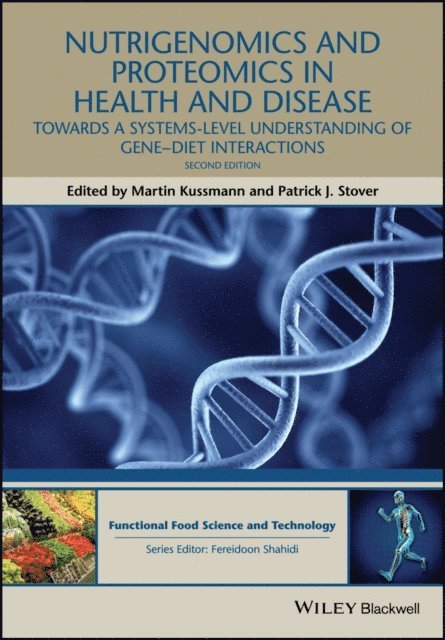
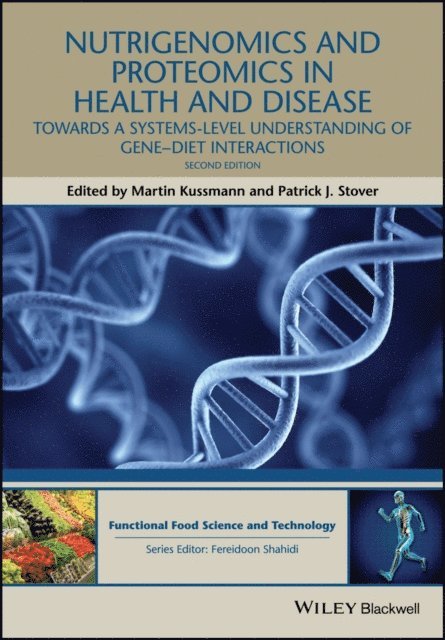
    Nutrigenomics and Proteomics in Health and Disease

    Towards a Systems-level Understanding of Gene-diet Interactions

    AvMartin Kussmann,Patrick J. Stover

    Inbunden, Engelska, 2017

    Del i serien Hui: Food Science and Technology

    2 452 kr

    Beställningsvara. Skickas inom 11-20 vardagar. Fri frakt över 249 kr.

    Beskrivning

    Now in a revised second edition, Nutrigenomics and Proteomics in Health and Disease brings together the very latest science based upon nutrigenomics and proteomics in food and health. Coverage includes many important nutraceuticals and their impact on gene interaction and health. Authored by an international team of multidisciplinary researchers, this book acquaints food and nutrition professionals with these new fields of nutrition research and conveys the state of the science to date.Thoroughly updated to reflect the most current developments in the field, the second edition includes six new chapters covering gut health and the personal microbiome; gut microbe-derived bioactive metabolites; proteomics and peptidomics in nutrition; gene selection for nutrigenomic studies; gene-nutrient network analysis, and nutrigenomics to nutritional systems biology. An additional five chapters have also been significantly remodelled. The new text includes a rethinking of in vitro and in vivo models with regard to their translatability into human phenotypes, and normative science methods and approaches have been complemented by more comprehensive systems biology-based investigations, deploying a multitude of omic platforms in an integrated fashion. Innovative tools and methods for statistical treatment and biological network analysis are also now included.

    Produktinformation

    • Utgivningsdatum:2017-05-05
    • Mått:173 x 246 x 20 mm
    • Vikt:839 g
    • Format:Inbunden
    • Språk:Engelska
    • Serie:Hui: Food Science and Technology
    • Antal sidor:352
    • Upplaga:2
    • Förlag:John Wiley & Sons Inc
    • ISBN:9781119098836

    Utforska kategorier

    • Folkhälsa och hälsopedagogik inom Medicin
    • Medicinsk genetik inom Medicin

    Mer om författaren

    About the Editors Martin Kussmann is Professor of "Systems Biology in Nutrition and Health" at the Liggins Institute, University of Auckland, New Zealand. He is also Chief Scientist of New Zealand's National Science Challenge "High-Value Nutrition". In 2011, Martin joined the Nestlè Institute of Health Sciences (NIHS) on the campus of the Ecole Polytechnique Fèdèrale Lausanne (EPFL), Switzerland, as Head of the "Molecular Biomarkers Core". From 2012 to 2016, he has been Lecturer at the Faculty of Life Sciences, EPFL. Since June 2009, Martin is Honorary Professor for Nutritional Science at the Faculty of Science, Aarhus University, Denmark. He holds a MSc and PhD in Chemistry from the University of Konstanz, Germany. Patrick J. Stover is Professor and Director of the Division of Nutritional Sciences at Cornell University. He graduated from Saint Joseph's University with a BS degree in Chemistry, and received a PhD degree in Biochemistry and Molecular Biophysics from the Medical College of Virginia, and performed his postdoctoral studies in Nutritional Sciences at the University of California at Berkeley.

    Innehållsförteckning

    • Contributors xPreface xiiiBiography of Martin Kussmann xivSection I Genes, Proteins, and Nutrition 11 The use of transcriptomics as a tool to identify differences in the response to diet 3Juri C. Matualatupauw and Lydia A. Afman1.1 New concepts in nutrition research 31.2 Comprehensive phenotyping 31.3 Phenotypic flexibility 41.4 Factors that influence the transcriptome response to diet 51.5 Using transcriptomics to explain mechanism behind differences in response to diet 101.6 Conclusion 101.7 Future perspectives 15References 162 Genetic or nutritional disturbances in folate]related pathways and epigenetic interactions 19Daniel Leclerc and Rima Rozen2.1 Introduction 192.2 Nutrition and one]carbon metabolism 202.3 Importance of DNAmethylation at CpG dinucleotides 232.4 Folate]dependent disorders: Dietary impact 242.5 Genetic influences on phenotype and interactions with epigenetics 272.6 Epigenetic inheritance across generations 312.7 Conclusions 34References 353 Early]life development and epigenetic mechanisms: Mediators of metabolic programming and obesity risk 42Felicia M. Low, Peter D. Gluckman, and Keith M. Godfrey3.1 Introduction 423.2 Origins of DOHaD and its conceptual basis 433.3 Epigenetic mechanisms 443.4 Early]life nutrition, epigenetics, and metabolic programming 483.5 Paternal effects 523.6 Transgenerational epigenetic inheritance 543.7 The potential value of DOHaD principles and epigenetic biology to the improvement of human health 553.8 Conclusion 57Acknowledgments 57References 58Section II Bioactives and Phytonutrients 654 Bioactive interactions in food and natural extracts 67Sofia Moco and Denis Barron4.1 Natural compounds as all compounds produced by nature 674.2 Not all natural compounds are created active 704.3 On the road of modern technologies for bioactive discovery 714.4 Metabolomics strategies applied to bioactives biochemistry 774.5 Bioactives as multi]target network instigators 814.6 ‘Let food be thy medicine and medicine be thy food’ – outlook 85Acknowledgments 85References 855 Anthocyanins in metabolic health and disease 92John Overall, Mary Ann Lila, and Slavko Komarnytsky5.1 Introduction 925.2 Chemical structure 935.3 Structural effects on stability 935.4 Systemic bioavailability and tissue distribution 965.5 Metabolism and nutrigenomic effects 1025.6 Conclusions 114Acknowledgments 114References 1146 Dietary antioxidants and bioflavonoids in atherosclerosis and angiogenesis 125Mohsen Meydani and Angelo Azzi6.1 Introduction 1256.2 Dietary vitamins E and C and CVD 1266.3 Dietary polyphenols and CVD 1286.4 Flavonoids and angiogenesis 1346.5 Conclusion 135Acknowledgments 136References 1377 Genomics and proteomics approaches to identify resveratrol targets in cancer 143César López]Camarillo, Rubiceli Medina]Aguilar, Carlos Palma]Flores, and Laurence A. Marchat7.1 Introduction 1437.2 Sources and health benefits of resveratrol 1447.3 Resveratrol for cancer prevention and therapy 1457.4 Functional genomics approaches to identify resveratrol targets in cancer 1477.5 Proteomics approaches to identify resveratrol targets in cancer 1487.6 Metabolomics approaches to identify pathways modified by resveratrol in cancer 1507.7 Epigenomic events induced by resveratrol in cancer 1527.8 Conclusions and perspectives 153References 1538 Genomic effects of food bioactives in neuroprotection 156Ashraf Virmani, Syed Ali, Luigi Pinto, Saf Zerelli, and Zbigniew Binienda8.1 Introduction: Nature and nurture 1568.2 Mechanism underlying food nurture 1568.3 Natural cellular nurture mechanisms 1578.4 Effects of food bioactives on genomic activity 1588.5 Epigenetic modulation 1588.6 Modulation of the epigenome by food bioactives 1598.7 Possible role of the genome in neuroprotection 1608.8 Countering risk factors associated with neurodegeneration 1618.9 Using food bioactives to restore epigenetic balance 1618.10 Targeting inflammation, energy, and free radicals 1618.11 Food bioactives that reduce inflammation 1638.12 Food bioactive effects on bioenergetics and redox balance 1638.13 Role of food bioactive acetyl]l]carnitine in neurodegeneration 1638.14 Process of S]palmitoylation and the role of carnitine palmitoyltransferase 1c enzyme in the brain 1648.15 Conclusion 164References 1659 MicroRNAs: Bioactive molecules at the nexus of nutrition and disease 170Lisa M. Farmer and Kendal D. Hirschi9.1 Introduction to micro RNAs as dietary bioactive compounds 1709.2 Characteristics, biogenesis, and functions of miRNAs 1719.3 miRNA detection methods 1739.4 Small RNAs in the circulation 1749.5 Endogenous miRNAs and metabolic control 1769.6 miRNAs as biomarkers for diet and disease 1789.7 Absorption of dietary animal miRNAs in animal consumers 1849.8 Absorption of dietary plant miRNAs in animal consumers 1859.9 Contradictory evidence of dietary miRNA uptake 1889.10 Therapeutic potential of miRNAs 1909.11 Gut pathology may influence dietary miRNA uptake 1919.12 Conclusion 193Acknowledgments 195References 195Section III Prebiotics, Probiotics, Synbiotics, and the Gut Ecosystem 20110 Gut health and the personal microbiome 203Carolin A. Kolmeder and Willem M. de Vos10.1 Gut health and its concepts 20310.2 Microbiome and gut health – from composition to function 20610.3 The personalized microbiome – towards precision nutrition 21110.4 Conclusions and next]generation interventions 214Acknowledgments 215References 21511 Infant nutrition and the microbiome: Systems biology approaches to uncovering host–microbe interactions 220Mei Wang, Ivan Ivanov, Laurie A. Davidson, Robert S. Chapkin, and Sharon M. Donovan11.1 Introduction 22011.2 Environmental factors influencing development of the infant gut microbiota 22111.3 Infant nutrition and the development of gut microbiota 22311.4 Host genetics and the development of gut microbiota 22611.5 Host–microbe interactions regulating host phenotype and gene expression 23011.6 Systems biology approaches to diet]dependent host–microbe interaction 24311.7 Summary and conclusions 247References 24712 Bioactive host–microbial metabolites in human nutrition with a focus on aromatic amino acid co]metabolism 258François]Pierre J. Martin and Martin Kussmann12.1 Introduction: Gut microbiota metabolism in nutrition, health and disease 25812.2 Short]chain fatty acid metabolism 25912.3 Bile acid metabolism 26012.4 Aromatic amino acid metabolism 26112.5 Conclusions and perspectives 269References 270Section IV Nutrigenomic and Proteomic Technologies 27513 Network analysis in systems nutrition 277Marie]Pier Scott-Boyer and Corrado Priami13.1 Introduction 27713.2 Biological networks 27813.3 Network topology 28113.4 A general framework for network analysis of throughput data 28213.5 Examples of network analyses 28413.6 Conclusions and perspectives 286References 28714 Nutrigenomics analyses: Biostatistics and systems biology approaches 290Damien Valour and Bernard Valour14.1 Gene selection for nutrigenomics studies 29014.2 Specificity of high]dimension data and preprocessing before gene selection 29114.3 Exploratory and differential gene expression analysis 29214.4 Biomarker discovery in nutrigenomics: Gene selection and discrimination 29714.5 A step towards data integration: searching for correlation/covariance between two datasets 31014.6 From gene selection to systems biology 313References 315Index 319