• Fri frakt över 249 kr
  • •
  • Snabba leveranser
  • •
  • Billiga böcker
Kundservice

Du är på sajten för privatpersoner.

Företag, bibliotek eller offentlig verksamhet?

Du handlar på classic.bokus.com, där alla dina funktioner finns intakta.
Till classic.bokus.com
Bokus logotyp. Gå till startsidan.
  • Erbjudanden
  • Nyheter
  • Student
  • Topplistor
  • Barn & ungdom
  • Bokus Play
  • E-böcker
  • Pocketböcker
  • Spel & pussel

10% rabatt på allt med kod: NYSTART10 →

Sidfot

Mina sidor

    Hjälp

    • Kundservice
    • Vanliga frågor och svar
    • Frakt och leverans
    • Retur vid ångerrätt
    • Reklamera vara
    • Betalning
    • Köpvillkor
    • Allmänna villkor
    • Information om webbplatsens tillgänglighet

    Om Bokus

    • Om oss
    • Pressrum
    • För studenter
    • För företag
    • För bibliotek och offentlig verksamhet
    • För leverantörer
    • Hållbarhet

    Populärt

    • Aktuella erbjudanden
    • Presentkort
    • Studentlitteratur
    • Nya böcker
    • Topplistor
    • Signerade böcker
    • Engelska böcker

    Inspiration

    • Boktips
    • BookTok
    • Populära bokserier
    • Barnbokskaraktärer
    • Populära författare
    Logotyp för Bokus
    Följ oss på Facebook (extern länk)Följ oss på Instagram (extern länk)Följ oss på YouTube (extern länk)Följ oss på TikTok (extern länk)
    bokus @ CookiesAnpassa cookiesIntegritetspolicyKöpvillkor
    Till Citymail hemsida (extern länk)Till Budbee hemsida (extern länk)Till Postnord hemsida (extern länk)Till Schenker hemsida (extern länk)Till Early Bird hemsida (extern länk)Till Walleys hemsida (extern länk)
    1. Samhälle och politik
    2. Politik och statsskick
    3. Politisk aktivism

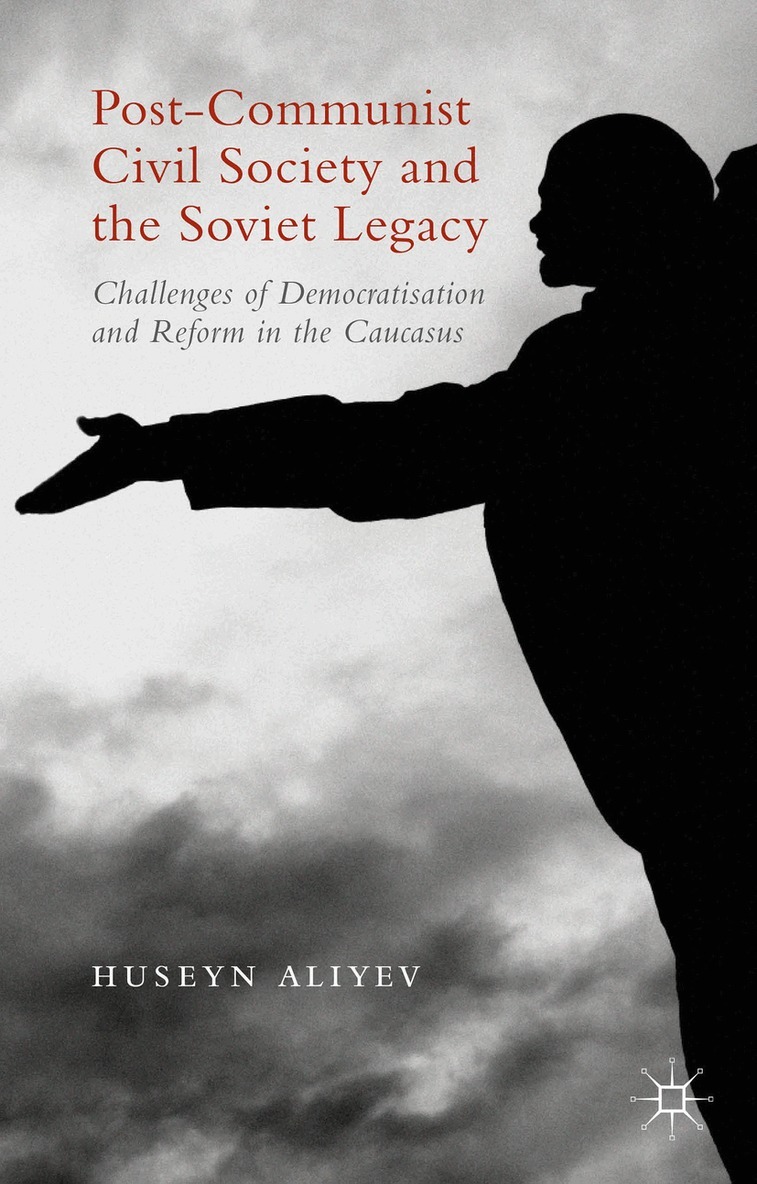
    Post-Communist Civil Society and the Soviet Legacy

    Challenges of Democratisation and Reform in the Caucasus

    AvHuseyn Aliyev

    Inbunden, Engelska, 2015

    547 kr

    Beställningsvara. Skickas inom 10-15 vardagar. Fri frakt över 249 kr.

    Fler format och utgåvor

    E-bok

    755 kr

    Beskrivning

    This book argues that the weakness of civil society in the post-Soviet Caucasus is a result not only of post-communist political and economic problems, but also of the effects of historical legacies. These influence both formal and informal civil societies and weaken the countries' ability to facilitate democratisation.

    Produktinformation

    • Utgivningsdatum:2015-08-12
    • Mått:140 x 216 x 14 mm
    • Vikt:426 g
    • Format:Inbunden
    • Språk:Engelska
    • Antal sidor:222
    • Upplaga:2015
    • Förlag:Palgrave Macmillan
    • ISBN:9781137489142

    Utforska kategorier

    • Politisk aktivism inom Samhälle och politik
    • Statsskick: demokrati inom Samhälle och politik
    • Marxism och kommunism inom Samhälle och politik

    Mer om författaren

    Huseyn Aliyev holds a Ph.D in Politics from the University of Otago, New Zealand. He is the author of over 20 articles on post-communist comparative politics, civil society, armed conflicts in the North Caucasus and informal institutions.

    Recensioner i media

    "Fruitfully combining empirical evidence and personal experience, Huseyn Aliyev succeeds in casting new light on the legacy of Soviet authoritarianism in weakening civil society, hampering democratization and building peace in the Caucasus. This original study is a required reading for those who want to understand the political crises in the Caucasus." Dennis Dijkzeul, Institute for International Law of Peace and Armed Conflict, Ruhr-Universitat, Bochum, Germany "Dr Aliyev's book is an insightful examination of the weaknesses of civil society in the Caucasus. In detailing the continued impact of the Soviet legacy, he shows how political regimes can have broad-reaching effects long after their demise, and thus makes a fruitful contribution to the literature on democratisation." James Headley, Senior Lecturer, Department of Politics, University of Otago, New Zealand "This book is an important contribution to the research on post-communist civil society and the contentious politics of the Caucasus region. It is the first book length treatment of the development of civil society in the contemporary Caucasus region." Chris Rudd, University of Otago, New Zealand

    Innehållsförteckning

    • List of Figures and TablesNote on TransliterationPreface List of Abbreviations Introduction Outline of the argument Relevance of research Case study: CaucasusSources of dataOverview of contents PART I: DEMOCRATISATION, CIVIL SOCIETY AND COMMUNIST LEGACIES 1. Democracy In The Caucasus And The Former Soviet Union2. Structural Democratisation 3. '' ''Transition '' '' Theories4. Civil Society, Social Capital And Networking 5. Why Is Civil Society Important?6. What Is Civil Society?7. Social Capital 8. Informal Networking 9. What Determines The Development Of Civil Society?10. Political System 11. Armed Conflicts12. Economic Well-Being 13. Antecedent Regime '' ''s Legacy 14. Post-Totalitarian Legacy 15. Soviet Legacy: Conceptual And Analytical Baseline16. Conclusion PART II: HISTORY OF CIVIL SOCIETY IN THE CAUCASUS17. Pre-Communist Civil Sector18. The Caucasus '' ''s Civil Sector Under Soviet Rule19. Public Sphere Of Soviet Society20. Soviet Private Sphere 21. Sovietisation22. '' ''Neformaly '' '' 23. Perestroika And The Birth Of Nationalist Civil Society24. Conclusion PART III: POST-COMMUNIST CIVIL SOCIETY25. The Post-Communist NGO Sector26. Overview Of The NGO Sector 27. Weaknesses Of The NGO Sector28. Membership And Participation 29. Distribution 30. Popular Trust Towards Ngos31. Operational Structure 32. Ngos '' '' Patron-Client Relations33. Post-Communist Informal Networks In The Caucasus34. Types Of Informal Networks 35. Informal Networks As Providers Of Public Goods36. Limits Of Informal Networking 37. Indigenous Social Capital 38. Conclusion PART IV: SOVIET LEGACY AND CIVIL SOCIETY39. Legacy Of The Soviet Public Sphere40. Institutional Legacy41. Individual Legacy42. Continuity Of Civic Traditions43. Informal Networks As Soviet Legacy44.How And Why Do Informal Civic Traditions Continue?45. Conclusion PART V: ALTERNATIVE EXPLANATIONS46. Political System47. Impact Of Political System On Formal Civil Society48. Political System And Informal Networks49. Armed Conflicts50. Economic Well-Being51. Conclusion Conclusion Alternative ExplanationsContributions And Implications NotesBibliography Index