• Fri frakt över 249 kr
  • •
  • Snabba leveranser
  • •
  • Billiga böcker
Kundservice

Du är på sajten för privatpersoner.

Företag, bibliotek eller offentlig verksamhet?

Du handlar på classic.bokus.com, där alla dina funktioner finns intakta.
Till classic.bokus.com
Bokus logotyp. Gå till startsidan.
  • Erbjudanden
  • Nyheter
  • Student
  • Topplistor
  • Barn & ungdom
  • Bokus Play
  • E-böcker
  • Pocketböcker
  • Spel & pussel

10% rabatt på allt med kod NYSTART10 →

Sidfot

Mina sidor

    Hjälp

    • Kundservice
    • Vanliga frågor och svar
    • Frakt och leverans
    • Retur vid ångerrätt
    • Reklamera vara
    • Betalning
    • Köpvillkor
    • Allmänna villkor
    • Information om webbplatsens tillgänglighet

    Om Bokus

    • Om oss
    • Pressrum
    • För studenter
    • För företag
    • För bibliotek och offentlig verksamhet
    • För leverantörer
    • Hållbarhet

    Populärt

    • Aktuella erbjudanden
    • Presentkort
    • Studentlitteratur
    • Nya böcker
    • Topplistor
    • Signerade böcker
    • Engelska böcker

    Inspiration

    • Boktips
    • BookTok
    • Populära bokserier
    • Barnbokskaraktärer
    • Populära författare
    Logotyp för Bokus
    Följ oss på Facebook (extern länk)Följ oss på Instagram (extern länk)Följ oss på YouTube (extern länk)Följ oss på TikTok (extern länk)
    bokus @ CookiesAnpassa cookiesIntegritetspolicyKöpvillkor
    Till Citymail hemsida (extern länk)Till Budbee hemsida (extern länk)Till Postnord hemsida (extern länk)Till Schenker hemsida (extern länk)Till Early Bird hemsida (extern länk)Till Walleys hemsida (extern länk)
    1. Kultur
    2. Konstböcker
    3. Konstteori

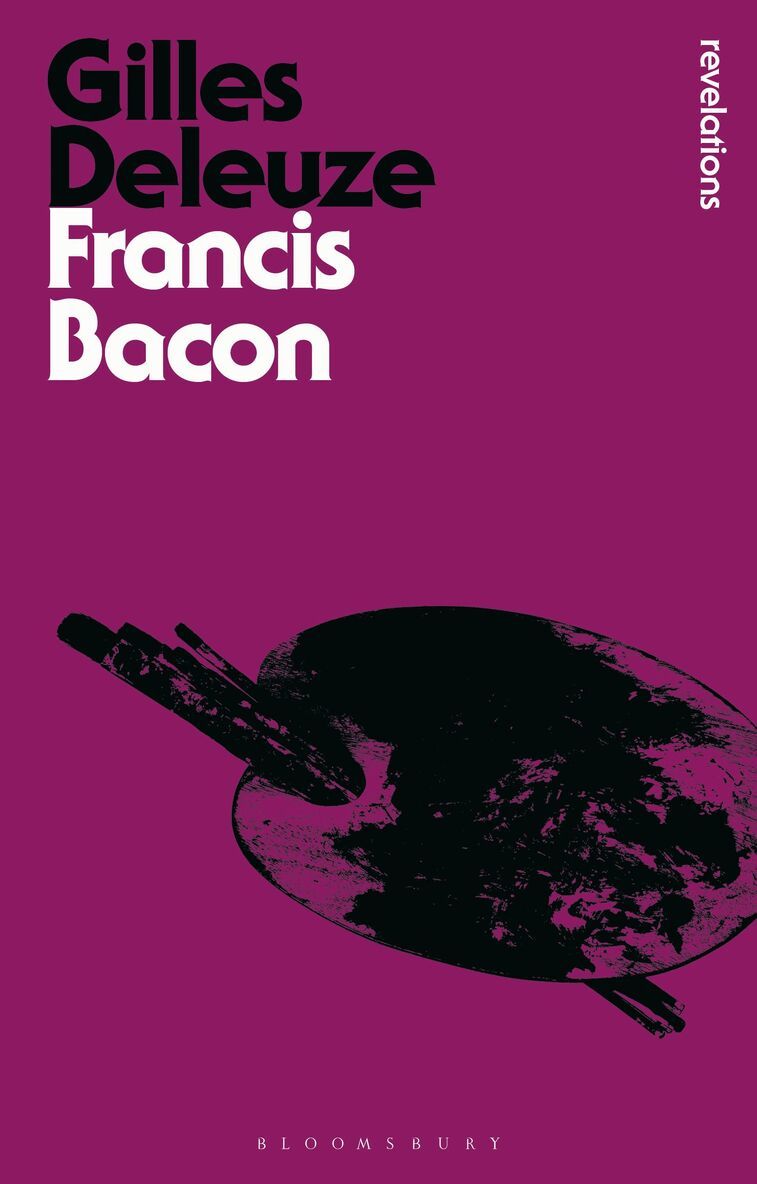
    Francis Bacon

    The Logic of Sensation

    AvGilles Deleuze

    Häftad, Engelska, 2017

    Del i serien Bloomsbury Revelations

    322 kr

    Beställningsvara. Skickas inom 5-8 vardagar. Fri frakt över 249 kr.

    Fler format och utgåvor

    Häftad

    250 kr

    Inbunden

    1 673 kr

    E-bok

    348 kr

    E-bok

    347 kr

    Beskrivning

    In this landmark text by one of the most influential philosophers of the twentieth century, Gilles Deleuze takes the paintings of Francis Bacon as his object of his study. The book presents a deep engagement with Bacon's work and the nature of art. Deleuze analyzes the distinctive innovations that came to mark Bacon's style: the isolation of the figure, the violation and deformations of the flesh, the complex use of color, the method of chance, and the use of the triptych form. Here Deleuze creates a number of his well-known concepts, such as the 'body without organs' and contrasts his own approach to painting with that of both the phenomenological and the art historical traditions. Deleuze links Bacon's work to Cezanne's notion of a 'logic' of sensation and, investigating this logic, explores Bacon's crucial relation to past painters such as Cezanne, Velasquez, and Soutine.

    Produktinformation

    • Utgivningsdatum:2017-10-19
    • Mått:146 x 218 x 10 mm
    • Vikt:240 g
    • Format:Häftad
    • Språk:Engelska
    • Serie:Bloomsbury Revelations
    • Antal sidor:168
    • Förlag:Bloomsbury Publishing PLC
    • ISBN:9781350040823
    • Översättare:Daniel W. Smith

    Utforska kategorier

    • Konstteori inom Kultur
    • Filosofiska discipliner inom Filosofi och religion

    Mer om författaren

    Gilles Deleuze (1925-1995) was one of the key figures in poststructuralism, and one of the most influential philosophers of the 20th century. His major works include, with Felix Guattari, A Thousand Plateaus and Anti-Oedipus, also published in the Bloomsbury Revelations series.

    Recensioner i media

    A lively and systematic study of Bacon's work. The book is clearly organised, helping to make complicated arguments easier to follow.

    Innehållsförteckning

    • Translator's Preface, by Daniel W. Smith Preface to the French Edition, by Alain Badiou and Barbara Cassin Author's Foreword Author's Preface to the English Edition1. The Round Area, the RingThe round area and its analogues - Distinction between the Figure and the figurative - The fact - The question of "matters of fact" - The three elements of painting: structure, Figure, and contour - Role of the fields2. Note on Figuration in Past PaintingPainting, religion, and photography - On two misconceptions3. Athleticism First movement: from the structure to the Figure - Isolation - Athleticism - Second movement: from the Figure to the structure - The body escapes from itself: abjection - Contraction, dissipation: washbasins, umbrellas, and mirrors4. Body, Meat, and Spirit, Becoming-AnimalMan and animal - The zone of indiscernibility - Flesh and bone: the meat descends from the bone - Pity - Head, face, and meat5. Recapitulative Note: Bacon's Periods and AspectsFrom the scream to the smile: dissipation - Bacon's three successive periods - The coexistence of all the movements - The functions of the contour6. Painting and SensationCezanne and sensation — The levels of sensation — Figuration and violence - The movement of translation, the stroll - The phenomenological unity of the senses: sensation and rhythm7. HysteriaThe body without organs: Artaud - Worringer's Gothic line - What the "difference of level" in sensation means - Vibration - Hysteria and presence - Bacon's doubt — Hysteria, painting, and the eye8. Painting ForcesRendering the invisible: the problem of painting - Deformation: neither transformation nor decomposition - The scream - Bacon's love of life - Enumeration of forces9. Couples and TriptychsCoupled Figures — The battle and the coupling of sensation - Resonance - Rhythmic Figures - Amplitude and the three rhythms - Two types of "matters of fact"10. Note: What Is a Triptych?The attendant - The active and the passive - The fall: the active reality of the difference in level - Light, union and separation11. The Painting before Painting .. .Cezanne and the fight against the cliche - Bacon and photographs - Bacon and probabilities - Theory of chance: accidental marks - The visual and the manual - The status of the figurative12. The DiagramThe diagram in Bacon (traits and color-patches) - Its manual character - Painting and the experience of catastrophe - Abstract painting, code, and optical space - Action Painting, diagram, and manualspace - What Bacon dislikes about both these ways13. Analogy Cezanne: the motif as diagram - The analogical and the digital - Painting and analogy - Theparadoxical status of abstract painting - The analogical language of Cezanne and of Bacon: plane, color, and mass - Modulation - Resemblance recovered14. Every Painter Recapitulates the History of Painting in His or Her Own Way .. .Egypt and haptic presentation - Essence and accident - Organic representation and the tactileoptical world - Byzantine art: a pure optical world? - Gothic art and the manual - Light and color, the optic and the haptic15. Bacon's PathThe haptic world and its avatars - Colorism - A new modulation - From Van Gogh and Gauguin to Bacon - The two aspects of color: bright tone and broken tone, field and Figure, shores and flows .. .16. Note on ColorColor and the three elements of painting - Color-structure: the fields and their divisions - The role of black Color-force: Figures, flows, and broken tones Heads and shadows - Color-contour - Painting and taste: goodand bad taste17. The Eye and the Hand Digital, tactile, manual, and haptic - The practice of the diagram - On "completely different" relations - Michelangelo: the pictorial factIndex of Paintings Notes Index

    Betyg & recensioner

    5/5