• Fri frakt över 249 kr
  • •
  • Snabba leveranser
  • •
  • Billiga böcker
Kundservice

Du är på sajten för privatpersoner.

Företag, bibliotek eller offentlig verksamhet?

Du handlar på classic.bokus.com, där alla dina funktioner finns intakta.
Till classic.bokus.com
Bokus logotyp. Gå till startsidan.
  • Erbjudanden
  • Student
  • Topplistor
  • Barn & ungdom
  • Bokus Play
  • E-böcker
  • Ljudböcker
  • Pocketböcker
  • Spel och pussel

5% studentrabatt – använd koden KURSBOK27 →

Sidfot

Mina sidor

    Hjälp

    • Kundservice
    • Vanliga frågor och svar
    • Frakt och leverans
    • Retur vid ångerrätt
    • Reklamera vara
    • Betalning
    • Köpvillkor
    • Allmänna villkor
    • Information om webbplatsens tillgänglighet

    Om Bokus

    • Om oss
    • Pressrum
    • För studenter
    • För företag
    • För bibliotek och offentlig verksamhet
    • För leverantörer
    • Hållbarhet

    Populärt

    • Aktuella erbjudanden
    • Presentkort
    • Studentlitteratur
    • Nya böcker
    • Topplistor
    • Signerade böcker
    • Engelska böcker

    Inspiration

    • Boktips
    • BookTok
    • Barnbokskaraktärer
    • Populära författare
    Logotyp för Bokus
    Följ oss på Facebook (extern länk)Följ oss på Instagram (extern länk)Följ oss på YouTube (extern länk)Följ oss på TikTok (extern länk)
    bokus @ CookiesAnpassa cookiesIntegritetspolicyKöpvillkor
    Till Citymail hemsida (extern länk)Till Budbee hemsida (extern länk)Till Postnord hemsida (extern länk)Till Schenker hemsida (extern länk)Till Early Bird hemsida (extern länk)Till Walleys hemsida (extern länk)
    1. Filosofi och religion
    2. Filosofi
    3. Filosofiska discipliner

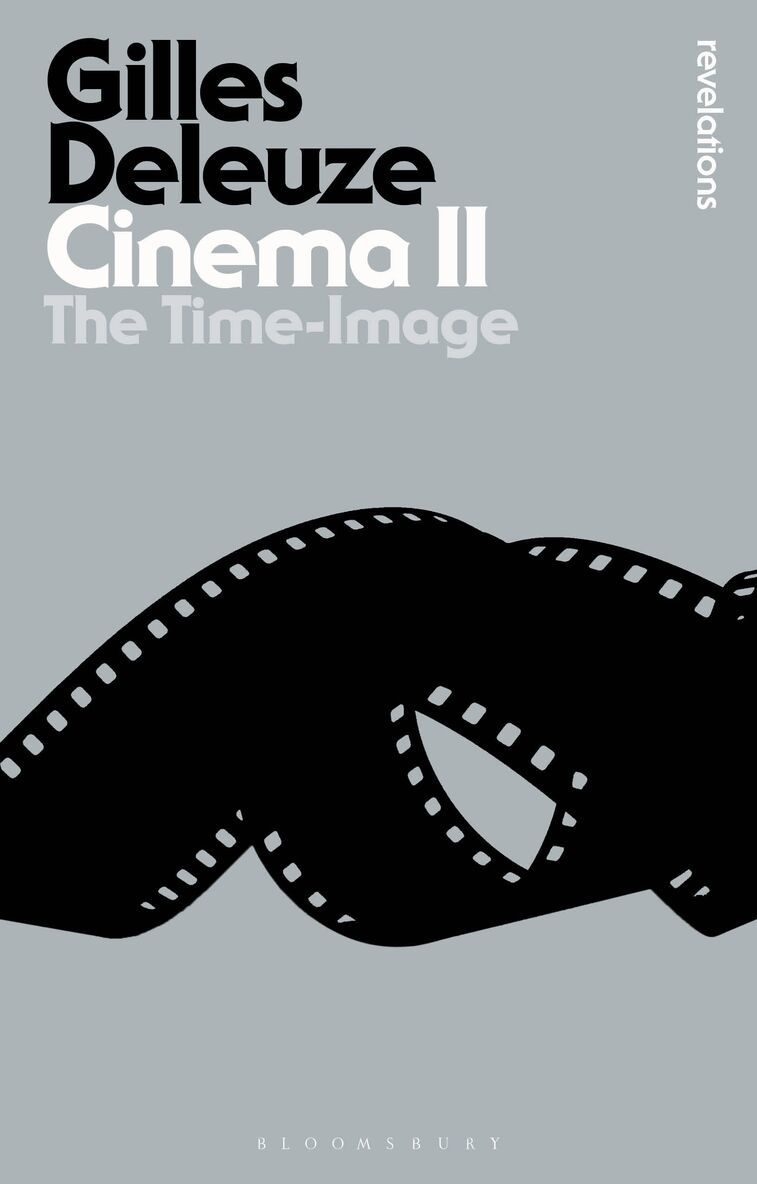
    Cinema II

    The Time-Image

    AvGilles Deleuze

    Häftad, Engelska, 2013

    Del i serien Bloomsbury Revelations

    340 kr

    Beställningsvara. Skickas inom 3-6 vardagar. Fri frakt över 249 kr.

    Fler format och utgåvor

    E-bok

    363 kr

    E-bok

    362 kr

    Beskrivning

    Gilles Deleuze was one of the most influential figures in twentieth-century philosophy, whose master-works, Difference and Repetition and – with Felix Guattari - A Thousand Plateaus and Anti-Oedipus have become one of the most widely-influential bodies of work in contemporary thought. Cinema II is Deleuze’s second work on cinema, completing the reassessment of the art form begun in Cinema I. Influenced by the philosophy of Henri Bergson, Deleuze here offers a compelling analysis of the cinematic treatment of time and memory, thought and speech. The work draws on examples from major film makers, including Federico Fellini, Alfred Hitchcock and Orson Welles, among many others.

    Produktinformation

    • Utgivningsdatum:2013-10-24
    • Mått:139 x 209 x 19 mm
    • Vikt:476 g
    • Format:Häftad
    • Språk:Engelska
    • Serie:Bloomsbury Revelations
    • Antal sidor:376
    • Förlag:Bloomsbury Publishing PLC
    • ISBN:9781472512604

    Utforska kategorier

    • Filosofiska discipliner inom Filosofi och religion
    • Film inom Kultur

    Mer om författaren

    Gilles Deleuze (1925-1995) was one of the key figures in poststructuralism, and one of the most influential philosophers of the twentieth century. His major works include, with Felix Guattari, A Thousand Plateaus and Anti-Oedipus.

    Recensioner i media

    "Cinema I and Cinema II must be understood as works of philosophy, not of film criticism. They are Deleuze's reflection on the new ways the cinema enables us to think about time and movement, opening up insights into semiotics and our ideological construction of a world increasingly experienced through representational media.... The main purpose of these books is to identify and explore the implications of a vital shift from classical, pre-World War II cinema of the movement-image to post-World War II cinema of the time-imaging....                "Cinema 1 and Cinema 2 perhaps ultimately have more to teach us about philosophy, conceptions of subjectivity, and hermeneutics than to say something about any specific film. These books are challenging because they develop their own vocabulary in dialogue with the history of philosophy, and they assume a wide knowledge of films from the Soviet, European and Hollywood traditions. They reward the effort required to read them, however, for the original tools with which they provide us to understand cinema and semiotics more generally. Deleuze concludes that it is important to think of cinema not as a language, but as a way of bringing to light 'intelligible content' which is a condition through which language constructs its objects (Cinema 2, p.251). Thus, purely optical and sound images which do not extend into action might be one way in which aesthetics might help us break outside of the determining structure of linguistic systems, enabling us to imagine the world otherwise. Deleuze helps us to see cinema as more than just a collection of texts but as additionally 'a new practice of images and signs, whose theory philosophy must produce as conceptual practice' (Cinema 2, p. 269)."- Sherryl Vint, Film International, Issue 27

    Innehållsförteckning

    • Preface to the English Edition \ Translator's Introduction \1. Beyond the Movement-Image \ 2. Recapitulation of Images and Signs \ 3. FromRecollections to Dreams: Third Commentary on Bergson \ 4. The Crystals of Time\ 5. Peaks of Present and Sheets of Past: Fourth Commentary on Bergson \ 6. ThePowers of the False \ 7. Thought and Cinema \ 8. Cinema, Body and Brain,Thought \ 9. The Components of the Image \ 10. Conclusions \ Notes \ Glossary \Index.

    Betyg & recensioner

    5/5