• Fri frakt över 249 kr
  • •
  • Snabba leveranser
  • •
  • Billiga böcker
Kundservice

Du är på sajten för privatpersoner.

Företag, bibliotek eller offentlig verksamhet?

Du handlar på classic.bokus.com, där alla dina funktioner finns intakta.
Till classic.bokus.com
Bokus logotyp. Gå till startsidan.
  • Erbjudanden
  • Nyheter
  • Student
  • Topplistor
  • Barn & ungdom
  • Bokus Play
  • E-böcker
  • Pocketböcker
  • Spel & pussel

10% studentrabatt med kod TERM26

Sidfot

Mina sidor

    Hjälp

    • Kundservice
    • Vanliga frågor och svar
    • Frakt och leverans
    • Retur vid ångerrätt
    • Reklamera vara
    • Betalning
    • Köpvillkor
    • Allmänna villkor
    • Information om webbplatsens tillgänglighet

    Om Bokus

    • Om oss
    • Pressrum
    • För studenter
    • För företag
    • För bibliotek och offentlig verksamhet
    • För leverantörer
    • Hållbarhet

    Populärt

    • Aktuella erbjudanden
    • Presentkort
    • Studentlitteratur
    • Nya böcker
    • Topplistor
    • Signerade böcker
    • Engelska böcker

    Inspiration

    • Boktips
    • BookTok
    • Populära bokserier
    • Barnbokskaraktärer
    • Populära författare
    Logotyp för Bokus
    Följ oss på Facebook (extern länk)Följ oss på Instagram (extern länk)Följ oss på YouTube (extern länk)Följ oss på TikTok (extern länk)
    bokus @ CookiesAnpassa cookiesIntegritetspolicyKöpvillkor
    Till Citymail hemsida (extern länk)Till Budbee hemsida (extern länk)Till Postnord hemsida (extern länk)Till Schenker hemsida (extern länk)Till Early Bird hemsida (extern länk)Till Walleys hemsida (extern länk)
    1. Historia och arkeologi
    2. Arkeologi
    3. Arkeologiska perioder och områden

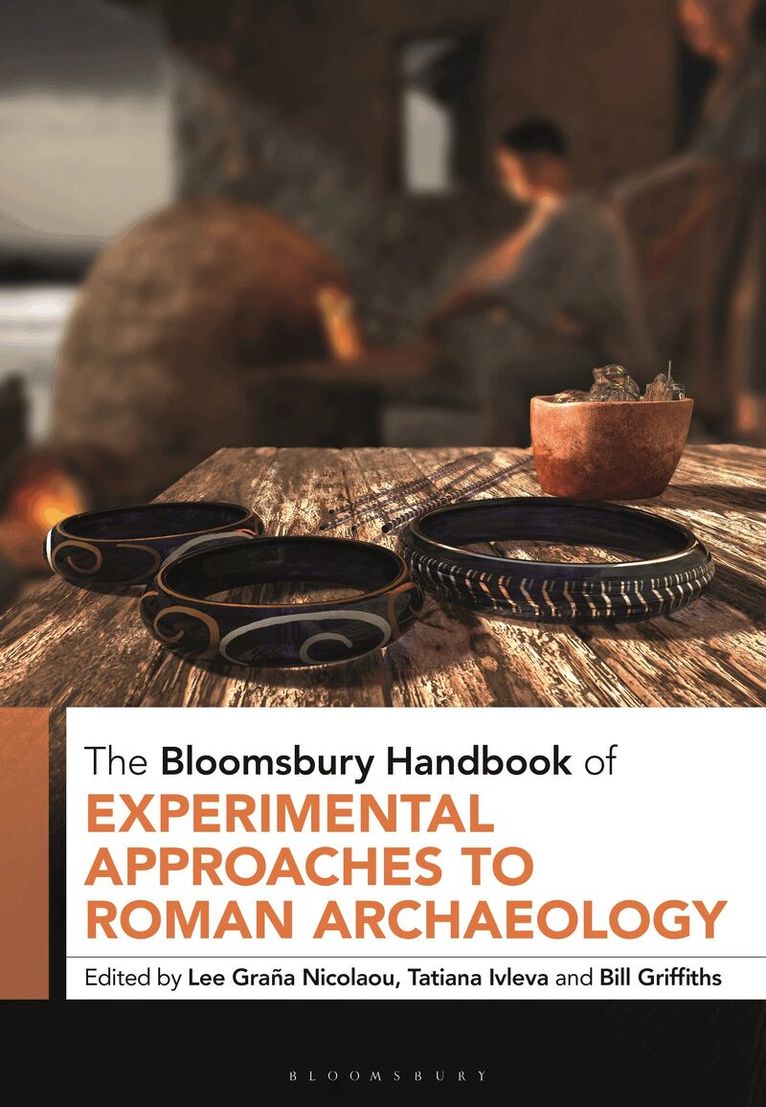
    Bloomsbury Handbook of Experimental Approaches to Roman Archaeology

    AvLee Graña Nicolaou,Tatiana Ivleva

    Inbunden, Engelska, 2024

    Del i serien Bloomsbury Handbooks

    1 840 kr

    Beställningsvara. Skickas inom 5-8 vardagar. Fri frakt över 249 kr.

    Beskrivning

    This volume is the first comprehensive overview of Roman experimental archaeology, exploring its key themes, methodologies and applications through a diverse array of international case studies. Experiments, simulations and reconstructions are important methods for understanding the past, from uncovering how ancient objects and structures were made, used, destroyed, deposited and affected underground, to illuminating the experiences of tasting ancient foods, fighting alongside comrades or living in replicated structures. Although the incorporation of experimentation has had great success in prehistoric studies, greater reliance on the wealth of literary and material sources remaining from the classical period has meant that its potential for Roman studies has yet to be fully realised. The 26 chapters in this book are divided into 5 thematic parts, each of which opens with a contextualizing introduction that frames the detailed case studies found in individual chapters and showcases the actual and potential diversity of experimentation as applied to the Roman past by scholars, re-enactors, and practitioners in the heritage sector. In laying out a detailed guide to Roman experimental archaeology, the volume as a whole maps its past, present and future, and provides a firm foundation for further practical research and collaboration. In doing so, it reasserts that experiments and reconstructions are a significant resource for testing or developing theories, rather than merely artistic replicas, and that the vast amount of quantifiable data they yield can be invaluable in support of interpretations of relevant archaeological or historical evidence, regardless of the period in question and beyond the confines of academia.

    Produktinformation

    • Utgivningsdatum:2024-12-12
    • Mått:176 x 246 x 38 mm
    • Vikt:1 148 g
    • Format:Inbunden
    • Språk:Engelska
    • Serie:Bloomsbury Handbooks
    • Antal sidor:544
    • Förlag:Bloomsbury Publishing PLC
    • ISBN:9781350217836

    Utforska kategorier

    • Arkeologiska perioder och områden inom Historia och arkeologi
    • Referensverk och tvärvetenskap inom Samhälle och politik
    • Forntidens historia inom Historia och arkeologi

    Mer om författaren

    Lee Graña Nicolaou is a Research Fellow in Archaeology at the University of Bologna, Italy.Tatiana Ivleva is a Visiting Research Fellow at the University of Newcastle, UK. Bill Griffiths is Head of Programmes and Collections at Tyne and Wear Archives and Museums, UK.

    Recensioner i media

    An innovative volume with an impressive range of international contributors across a wide spectrum including professional archaeology, academia, museums, and independent researchers. With its strong focus on robust methodology and data gathering, it will be an invaluable resource for practitioners of experimental archaeology in Roman studies and beyond.

    Innehållsförteckning

    • List of IllustrationsList of TablesList of ContributorsPrefaceForeword (Roeland Paardekooper, EXARC, Netherlands)AcknowledgementsIntroductionIntroduction: The Past, Present, and Future Role of Experimentation in Roman StudiesLee Graña Nicolaou (University of Bologna, Italy), Tatiana Ivleva (University of Newcastle, UK) and Bill Griffiths (Tyne and Wear Archives and Museums, UK)Part I: Experimentation as a Tool for Academic and Public EngagementChapter 1: Towards Sets of Guidelines for Roman Re-enactment and Reconstruction Archaeology – RevisitedBill Griffiths (Tyne and Wear Archives and Museums, UK)Chapter 2: Doing (Roman) History: Blurring the Lines between Academics, Reenactors and ArtisansAnique Hamelink (University of Amsterdam, Netherlands) Chapter 3: Popularising Local Archaeology via Roman Experimentation: The ‘Man and Iron in the First Centuries Project’ in PolandAndrzej Przychodni (Historical and Archaeological Museum in Ostrowiec Swietokrzyski, Poland)Chapter 4: The Influence of Experimental Workshops on Archaeological Communities: The Impact of ‘TRACamp’Matthew Mandich (Independent Researcher, UK)Part II. Rebuilding the Past: Architectural Reconstructions and Open-air MuseumsChapter 5: Adventures with a Hypocaust and Mass wall Cob WallingRichard Brunning (South West Heritage Trust, UK)Chapter 6: Mind the Gap(s): Theoretical and Hands-on Approaches to the Production of Roman Brick and TileTim Clerbaut (Ghent University, Belgium), Thomas Hauck (Vicus Eisenberg, Germany), Anna Langgartner (Museum Roman Fort Saalburg, Germany) and Rüdiger Schwarz (Museum Roman Fort Saalburg, Germany)Chapter 7: Rammed Earth, Hand-hewn Timber, and Wood-fired Tiles: The Physical reconstruction of Three Roman Craftsmen Houses at Xanten, GermanyPeter Kienzle (Xanten Archaeological Park, Germany)Chapter 8: The Oil Merchant’s House in the Roman City Quarter of CarnuntumMarion Grossmann (Carnuntum, Austria)Part III. Actualistic Experiments: Activities, Processes and Chains of ProductionChapter 9: Ancient Fish Sauce at the Roman Table: Identifying Archaeological Traces of Ancient Recipes via Experimental Research into the Use and Deposition of Cooking WaresSally Grainger (Independent Researcher, UK), Edward Biddulph (Oxford Archaeology, UK), Simona Mileto (Independent Researcher, Spain) and Alessandra Pecci (University of Barcelona, Spain)Chapter 10: The Panis Quadratus: Form, Flour, and Tools of the TradeFarrell Monaco (University of Leicester, UK)Chapter 11: Roman Leather Manufacture and the Archaeological Record: An Experimental ApproachHrafnhildur Helga Halldórsdóttir and Gillian Taylor (Teesside University, UK)Chapter 12: Off with their Heads! Broken Figurines and Religious Practice in Roman BritainMatthew Fittock (Finds Liaison Officer for Bedfordshire and Hertfordshire, UK)Chapter 13: An Experimental Approach to the Study of the Roman Oil LampCaitlin Lobl (University College Dublin, Ireland)Chapter 14: The Role of Interdisciplinary Experiments in Developing Untested Theories: The Application of Engineering and Digital Approaches in the Study of Roman Dyeing Vats from PompeiiHeather Hopkins (Independent Researcher, UK)Chapter 15: Testing Ethnographic Hypotheses with Reconstructed Artefacts: Replicated Lead Fishing-net Weights and their Use on Cast-netsLee Graña Nicolaou (University of Bologna, Italy)Part IV. Experiencing the Past: Sensory Experiences and InterpretationsChapter 16: Approaching the Romano-British Glass Bangle Craft with a Craftsperson PerspectiveTatiana Ivleva (University of Newcastle, UK)Chapter 17: Reconstructing Recipes from Apicius: Professional Observations on Practices, Consistencies and SuccessesJill Hatch and Mark Hatch (Taste of History, UK)Chapter 18: The Price of a Mile. Marching and its Impact on the Soldier: An Approximation to the Republican Army through an Experimental PerspectiveJose Miguel Gallego (University of Barcelona, Spain, Eduard Ble (University of Barcelona, Spain), Pau Valdés Matías (Independent Researcher, Spain), and María Martínez-Esparza (Medical School of the Murcia University, Spain)Chapter 19: Identifying Severe Hair Loss via the Reproduction of Known Roman Hair Styles: The Case of Julia DomnaJanet Stephens (Independent Researcher, USA)Chapter 20: Interpreting Clothing of the Late Antique Period: The Role of Experimental ArchaeologyFaith Pennick Morgan (Independent Researcher, UK)Part V. Digital technologies: 3D reconstructions and gamingChapter 21: 3D Reconstructions as an Educational ToolMatthew Nicholls (University of Oxford, UK)Chapter 22: Methods and Applications of 3D digital Reconstructions: The Roman Fishponds of Maritime Villas in Southern LatiumRoberta Ferritto (University of Bologna, Italy, and UPenn, USA)Chapter 23: Shedding Light in Roman Houses: Using 3D Reconstructions to Analyse the Use of Natural LightLucia Michielin (University of Edinburgh, UK)Chapter 24: Digital Reconstructions as a Method to Test the Feasibility of Multiple Interpretations of Archaeological Artefacts as Illustrated by a Case Study of a Belt-like Object from Second Century CE VimoseMartijn Wijnhoven (Institute of Archaeology of the Czech Academy of Sciences, Czech Republic), Aleksei Moskvin and Mariia Moskvina (Saint Petersburg State University of Industrial Technologies and Design, Russia)Chapter 25: Rome was not Built in a Day: Reimagining the Roman Empire in Video GamesAris Politopoulos, Angus Mol (Leiden University Netherlands), Corine Gerritsen (Independent Researcher, Netherlands) and Omar Bugter (Independent Researcher, Netherlands)Chapter 26: The Missing Dead: Reconstructing the Past through Digital Gameplay at Roman VindolandaBarbara Birley (Vindolanda Trust and Roman Army Museum, UK), Claire Stocks (University of Amsterdam, Netherlands) and Richard Davison (Newcastle University, UK)Concluding chapterRe-imagining the Roman pastAndrew Gardner (University College London, UK)NotesIndex