• Fri frakt över 249 kr
  • •
  • Snabba leveranser
  • •
  • Billiga böcker
Kundservice

Du är på sajten för privatpersoner.

Företag, bibliotek eller offentlig verksamhet?

Du handlar på classic.bokus.com, där alla dina funktioner finns intakta.
Till classic.bokus.com
Bokus logotyp. Gå till startsidan.
  • Erbjudanden
  • Nyheter
  • Student
  • Topplistor
  • Barn & ungdom
  • Bokus Play
  • E-böcker
  • Pocketböcker
  • Spel & pussel

10% rabatt på allt med kod: NYSTART10 →

Sidfot

Mina sidor

    Hjälp

    • Kundservice
    • Vanliga frågor och svar
    • Frakt och leverans
    • Retur vid ångerrätt
    • Reklamera vara
    • Betalning
    • Köpvillkor
    • Allmänna villkor
    • Information om webbplatsens tillgänglighet

    Om Bokus

    • Om oss
    • Pressrum
    • För studenter
    • För företag
    • För bibliotek och offentlig verksamhet
    • För leverantörer
    • Hållbarhet

    Populärt

    • Aktuella erbjudanden
    • Presentkort
    • Studentlitteratur
    • Nya böcker
    • Topplistor
    • Signerade böcker
    • Engelska böcker

    Inspiration

    • Boktips
    • BookTok
    • Populära bokserier
    • Barnbokskaraktärer
    • Populära författare
    Logotyp för Bokus
    Följ oss på Facebook (extern länk)Följ oss på Instagram (extern länk)Följ oss på YouTube (extern länk)Följ oss på TikTok (extern länk)
    bokus @ CookiesAnpassa cookiesIntegritetspolicyKöpvillkor
    Till Citymail hemsida (extern länk)Till Budbee hemsida (extern länk)Till Postnord hemsida (extern länk)Till Schenker hemsida (extern länk)Till Early Bird hemsida (extern länk)Till Walleys hemsida (extern länk)
    1. Psykologi och pedagogik
    2. Psykologi
    3. Psykologi: jaget, identitet och personlighet

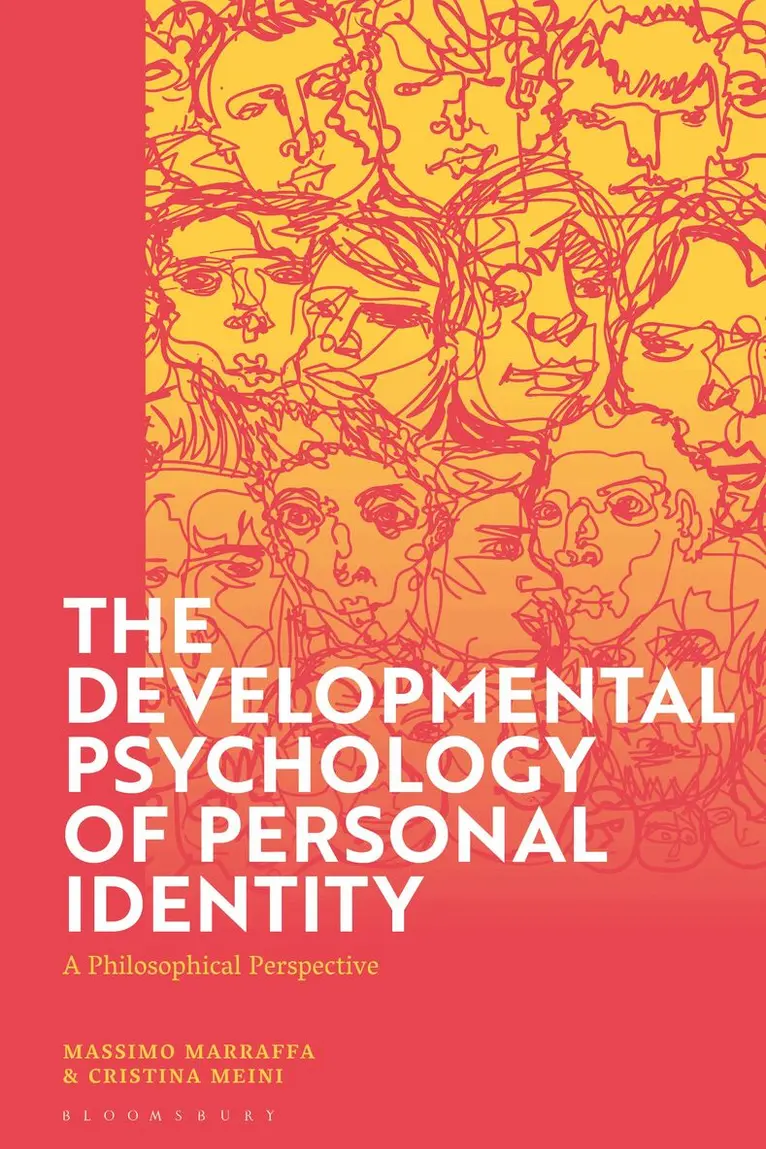
    Developmental Psychology of Personal Identity

    A Philosophical Perspective

    AvMassimo Marraffa,Cristina Meini

    Inbunden, Engelska, 2024

    1 256 kr

    Beställningsvara. Skickas inom 10-15 vardagar. Fri frakt över 249 kr.

    Beskrivning

    Massimo Marraffa and Cristina Meini re-connect the psychology of identity with its philosophical roots in this study. They trace the contemporary problem of the self to John Locke and William James’ foundational theories on personal identity. By integrating the philosophy of identity with empirical and neuropsychological research, Marraffa and Meini provide an original synthesis of multidisciplinary conceptions of the self.The Developmental Psychology of Personal Identity builds on Chomsky-inspired developmental psychology, Jean Piaget’s constructivism, Lev Vygotskij’s sociocultural perspective on development and John Bowlby’s attachment theory. In this theoretical framework, the book draws on the data of the psychological sciences to reconstruct the trajectory of the self as a ‘Lockean person’ (i.e., as morally responsible agent). The authors link the birth of self-consciousness through the body and emotions to the construction of a narrative self. Their combination of philosophy and cognitive sciences makes an important contribution to multiple disciplines concerned with personal identity. It provokes new routes to understanding identity and self, autobiographical memory, and personality.

    Produktinformation

    • Utgivningsdatum:2024-03-21
    • Mått:158 x 236 x 20 mm
    • Vikt:520 g
    • Format:Inbunden
    • Språk:Engelska
    • Antal sidor:240
    • Förlag:Bloomsbury Publishing PLC
    • ISBN:9781350368996

    Utforska kategorier

    • Psykologi: jaget, identitet och personlighet inom Psykologi och pedagogik
    • Filosofiska discipliner inom Filosofi och religion
    • Barnpsykologi och utvecklingspsykologi inom Psykologi och pedagogik

    Mer om författaren

    Massimo Marraffa is Professor, Department of Philosophy, Communication and Performing Arts, is Professor, Department of Philosophy, Communication and Performing Arts, Roma Tre University, Italy.Cristina Meini is Professor, University of Eastern Piedmont, Vercelli, Italy.

    Recensioner i media

    Marraffa and Meini virtuously integrate the psychology of identity with its philosophical roots and substantiate both with empirical (neuro-)psychological research. This beautiful journey through the developmental history underscores that personal identity is a necessity of personhood, making it a must-read for those intrigued by self, personality, and autobiographical memory.

    Innehållsförteckning

    • Introduction: Locke, James and Subjective Identity 1. The toolbox 1.1. The Jamesian Self in the Framework of Darwinian Naturalism 1.2. From the Hobbesian Individual to the Mother-Child Dyad 1.3. In search of a synthesis between individual constructivism and sociocultural constructivism 2. Self-consciousness in its simplest form: the perception of a physical identity 2.1. The initial state: sensitivity to contingency 2.2. Ecological self and pre-reflective self-consciousness 2.3. The link between self-consciousness and identity 2.4. Bodily self-consciousness 3. The recipe for emotional introspection 3.1. Emotions in the body 3.2. A socio-constructivist model of emotional introspection 3.3. Basic emotions and affect programs 3.4. Forms of vitality 3.5. Core affect and the process of emotion construction 3.6. Forms of vitality and background feelings 3.7. Beyond emotions: simple desires 3.8. What about beliefs? 4. Naïve psychology 4.1. Attachment and mindreading 4.2. Naïve psychology: the early stage 4.3. Naïve psychology: mindreading 4.4. Concluding remarks 5. Expanding introspective space 5.1. The self/other parity 5.2. Inner sense theories 5.3. Sensory access and self-interpretation 5.4. Turning our mindreading skills upon ourselves I: inner speech 5.5. Turning our mindreading skills upon ourselves II: naïve ethics 6. Subjective identity as a unifying and meaningful story 6.1. Identity and memory 6.2. From a bodily self in time to a psychological one 6.3. Narrative identity6.4. Dissociation of the Jamesian selves 7. The defensive nature of self-consciousness 7.1. A clarification regarding the psychodynamics of defenses 7.2. The construction and defense of identity is the cornerstone of the development of the entire existence of the individual 7.3. Building and defending a strong sense of identity as the foundation of psychological well-being and mental health 7.4. Self-memory system, inner working models and autobiographical arguments 7.5. Individuation and eudaimonia Conclusions References Index