• Fri frakt över 249 kr
  • •
  • Snabba leveranser
  • •
  • Billiga böcker
Kundservice

Du är på sajten för privatpersoner.

Företag, bibliotek eller offentlig verksamhet?

Du handlar på classic.bokus.com, där alla dina funktioner finns intakta.
Till classic.bokus.com
Bokus logotyp. Gå till startsidan.
  • Erbjudanden
  • Student
  • Topplistor
  • Barn & ungdom
  • Bokus Play
  • E-böcker
  • Ljudböcker
  • Pocketböcker
  • Spel och pussel

5% studentrabatt – använd koden KURSBOK27 →

Sidfot

Mina sidor

    Hjälp

    • Kundservice
    • Vanliga frågor och svar
    • Frakt och leverans
    • Retur vid ångerrätt
    • Reklamera vara
    • Betalning
    • Köpvillkor
    • Allmänna villkor
    • Information om webbplatsens tillgänglighet

    Om Bokus

    • Om oss
    • Pressrum
    • För studenter
    • För företag
    • För bibliotek och offentlig verksamhet
    • För leverantörer
    • Hållbarhet

    Populärt

    • Aktuella erbjudanden
    • Presentkort
    • Studentlitteratur
    • Nya böcker
    • Topplistor
    • Signerade böcker
    • Engelska böcker

    Inspiration

    • Boktips
    • BookTok
    • Barnbokskaraktärer
    • Populära författare
    Logotyp för Bokus
    Följ oss på Facebook (extern länk)Följ oss på Instagram (extern länk)Följ oss på YouTube (extern länk)Följ oss på TikTok (extern länk)
    bokus @ CookiesAnpassa cookiesIntegritetspolicyKöpvillkor
    Till Citymail hemsida (extern länk)Till Budbee hemsida (extern länk)Till Postnord hemsida (extern länk)Till Schenker hemsida (extern länk)Till Early Bird hemsida (extern länk)Till Walleys hemsida (extern länk)
    1. Samhälle och politik
    2. Samhälle och kultur
    3. Kultur och medier
    4. Referensverk och tvärvetenskap

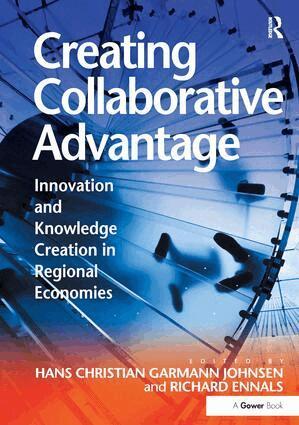
    Creating Collaborative Advantage

    Innovation and Knowledge Creation in Regional Economies

    AvHans Christian Garmann Johnsen,Richard Ennals

    Inbunden, Engelska, 2012

    2 485 kr

    Beställningsvara. Skickas inom 10-15 vardagar. Fri frakt över 249 kr.

    Fler format och utgåvor

    Häftad

    756 kr

    Beskrivning

    In the emerging new collaborative economic order, innovation is achieved by an integrated process of collaboration between policymakers, business and society. Often, the focus for this collaboration is at a regional level. Creating Collaborative Advantage examines the trends in innovation policy that reflect this new thinking and regional focus. This book develops the view that collaboration is one of many ways of organising a competitive economy. It asks how, when and where collaboration is a meaningful way of organisation. It explores collaboration at business level, business networks between companies, and a wider collaborative coalition between business and public authorities. It is not a manual, a 'how to do it', because there is no single straightforward universal model to replace current orthodoxy on economic development, but it will enable people to learn. The contributors to this unique book have been involved with the implementation of some of the most outstanding examples of collaborative approaches, it therefore gives an outstanding picture of diversity, inbuilt comparisons and contrast, and debate between the cases. The co-authors give their understanding of these issues, but the book tries to establish some common understandings and bring the concept of collaboration to a larger audience, and to increase interest in a field which requires further exploration. Policy makers, advisers and administrators at all levels of government, those involved in research and development, and business leaders and educators, will find this book invaluable, together with readers having an academic interest in the subject of innovation.

    Produktinformation

    • Utgivningsdatum:2012-05-28
    • Mått:174 x 246 x 25 mm
    • Vikt:793 g
    • Format:Inbunden
    • Språk:Engelska
    • Antal sidor:304
    • Förlag:Taylor & Francis Ltd
    • ISBN:9781409403333

    Utforska kategorier

    • Referensverk och tvärvetenskap inom Samhälle och politik
    • Ledarskap och motivation inom Ekonomi och Ledarskap
    • Projektledning inom Ekonomi och Ledarskap

    Mer om författaren

    Hans Christian Garmann Johnsen is a professor in the Faculty of Economics and Social Sciences at the University of Agder in Norway. Professor Garmann Johnsen is a specialist in the study of working life and innovation. He has an MBA from the Norwegian School of Economics and Business Administration and gained his PhD at the Copenhagen Business School. He has been a visiting scholar and fellow at several universities including UC Berkeley and Cornell in the USA. For 15 years Garmann Johnsen has been involved in a national research programme into collaborative innovation. He has written and presented papers and authored journal articles published worldwide. Richard Ennals is Professor of Corporate Responsibility and Working Life at the Centre for Working Life Research, Kingston Business School, Kingston University in the UK. He is a visiting professor at the Swedish Royal institute of Technology, and a director of the UK Work Organisation Network. He is Vice-Chair of the World Council for Total Quality and Excellence in Education. Ennals is Review Editor of the journal AI and Society and has himself authored many books, papers and journal articles.

    Innehållsförteckning

    • Collaborative Advantage in Regional Economies; Part I: Programmes for Collaboration; Chapter 1: Collaboration, Autonomy and Constructivist Society; Chapter 2: Managing Collaborative R&D Programmes; Chapter 3: Collaborative Advantage in Small Regional Economies; Chapter 4: A Collaborative Economic Model – the Case of Norway 1; Part 2: Governing Regional Development through Collaborative Networks; Chapter 5: Strategy Development in Knowledge Cities Revisited – The Roles of Innovation Strategy in Helsinki Metropolitan Area Explored; Chapter 6: The Collaborative Steering Dilemma of Network-based Development; Chapter 7: Raufoss – Creation of Collaborative Advantage; Chapter 8: Regional Collaboration; Chapter 9: Creating New Opportunities, Exploiting Possibilities and Learning From Differences; Part 3: Collaboration in Regional Innovation Systems; Chapter 10: Innovation and the Role of Diversity in the Globalising Knowledge Economy; Chapter 11: Changing Regional Collaborative Relations in a Global Economy; Chapter 12: Social Capital, Knowledge Flows and Collaboration. Example from the Agder Region, Norway; Chapter 13: Regional Innovation Networks and University-based Technology Transfer; Part 4: Collaboration as Strategy in and Between Organisations; Chapter 14: Researching Collaborative Advantage; Chapter 15: Improving the Commercialisation Probability of Publicly Funded Co-operative R&D Project Outputs; Chapter 16: The University–industry Interface; Chapter 17: Collaboration in Business to Business Relationships in a Three-tier Supply Chain; Chapter 18: Managing Innovation through Communication; Concluding Reflections