• Fri frakt över 249 kr
  • •
  • Snabba leveranser
  • •
  • Billiga böcker
Kundservice

Du är på sajten för privatpersoner.

Företag, bibliotek eller offentlig verksamhet?

Du handlar på classic.bokus.com, där alla dina funktioner finns intakta.
Till classic.bokus.com
Bokus logotyp. Gå till startsidan.
  • Erbjudanden
  • Nyheter
  • Student
  • Topplistor
  • Barn & ungdom
  • Bokus Play
  • E-böcker
  • Pocketböcker
  • Spel & pussel

10% rabatt på allt med kod: NYSTART10 →

Sidfot

Mina sidor

    Hjälp

    • Kundservice
    • Vanliga frågor och svar
    • Frakt och leverans
    • Retur vid ångerrätt
    • Reklamera vara
    • Betalning
    • Köpvillkor
    • Allmänna villkor
    • Information om webbplatsens tillgänglighet

    Om Bokus

    • Om oss
    • Pressrum
    • För studenter
    • För företag
    • För bibliotek och offentlig verksamhet
    • För leverantörer
    • Hållbarhet

    Populärt

    • Aktuella erbjudanden
    • Presentkort
    • Studentlitteratur
    • Nya böcker
    • Topplistor
    • Signerade böcker
    • Engelska böcker

    Inspiration

    • Boktips
    • BookTok
    • Populära bokserier
    • Barnbokskaraktärer
    • Populära författare
    Logotyp för Bokus
    Följ oss på Facebook (extern länk)Följ oss på Instagram (extern länk)Följ oss på YouTube (extern länk)Följ oss på TikTok (extern länk)
    bokus @ CookiesAnpassa cookiesIntegritetspolicyKöpvillkor
    Till Citymail hemsida (extern länk)Till Budbee hemsida (extern länk)Till Postnord hemsida (extern länk)Till Schenker hemsida (extern länk)Till Early Bird hemsida (extern länk)Till Walleys hemsida (extern länk)
    1. Samhälle och politik
    2. Samhälle och kultur
    3. Kultur och medier
    4. Kulturvetenskap

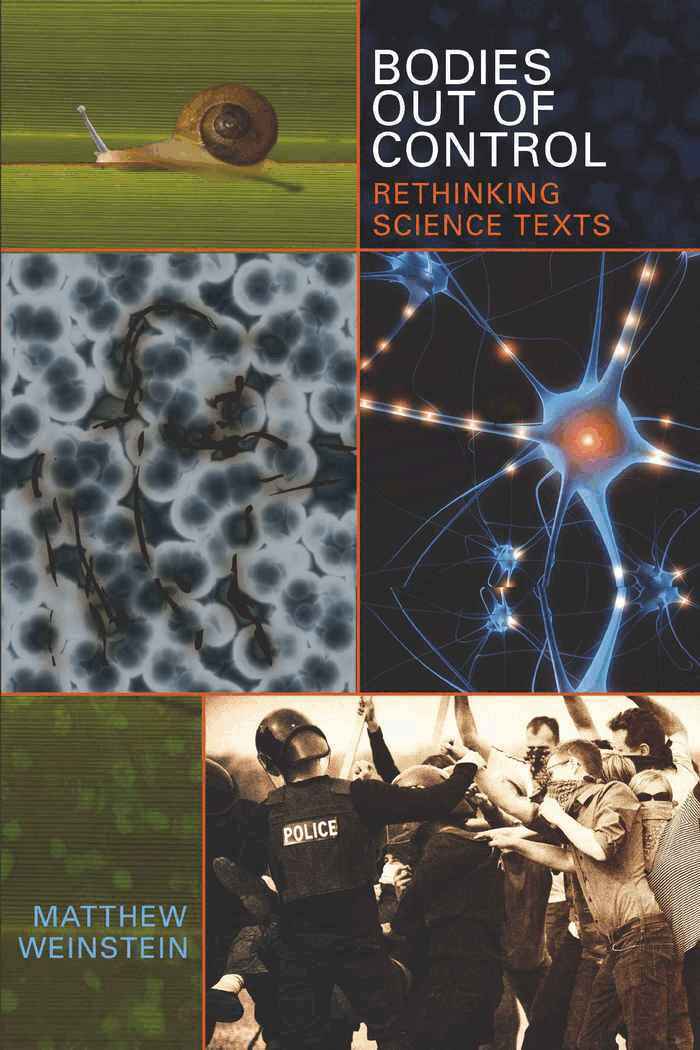
    Bodies Out of Control

    Rethinking Science Texts

    AvMatthew Weinstein,William F. Pinar

    Häftad, Engelska, 2009

    Del 30 i serien Complicated Conversation

    322 kr

    Tillfälligt slut

    Beskrivning

    What is the cultural politics of science, health, and disease in the U.S.? Bodies Out of Control explores this question through a series of case studies. From its in-depth examination of the discussions of sickle-cell anemia, schistosomiasis, and cancer in middle school and high school textbooks to its analysis of the news coverage of the anthrax attacks of 2001, the book reveals the entanglements of science, colonialism, nationalism, and identity. The book also explores how the meaning of science itself is worked through in public discourses, offering alternatively medical salvation, confusion, and a vision of a world without pleasure. Finally, to explore what agency and a critical practice of engaging science in classrooms and elsewhere might look like, the book turns to the writings of politicized human research subjects, which demonstrate a spectrum of possibilities for more democratic engagements with science. As a whole, the book emphasizes the importance of engaging texts critically in science education and the ways that the cultural politics of science works through images of human and institutional bodies in and out of control.

    Produktinformation

    • Utgivningsdatum:2009-12-04
    • Mått:160 x 230 x 13 mm
    • Vikt:230 g
    • Format:Häftad
    • Språk:Engelska
    • Serie:Complicated Conversation
    • Antal sidor:144
    • Förlag:Peter Lang Publishing Inc
    • ISBN:9781433105159

    Utforska kategorier

    • Kulturvetenskap inom Samhälle och politik
    • Referensverk och tvärvetenskap inom Samhälle och politik
    • Undervisning i specifika ämnen inom Psykologi och pedagogik

    Mer om författaren

    The Author: Matthew Weinstein is Associate Professor of science education at the University of Washington-Tacoma. He is the author of Robot World: Education, Popular Culture, Science (Lang, 1998) as well as numerous articles about the cultural politics of science education.

    Recensioner i media

    «In ‘Bodies out of Control’, Matthew Weinstein provides a vivid analysis of how disease, cancer, anthrax, and medical research are represented as both the subject and object of science in the classroom, community and transnational discourse. Weinstein challenges the reader to consider why such sociopolitical issues are so often erased from the discourse of school science. In doing so, his book reveals how critical engagement with the text of science and its concomitant ways of knowing and being, such as that of the guinea pigs and the anthrax workers, deprivilege the authority of text and teacher. Exposing and understanding just these sorts of contradictions between the world of school science and the world of corporate-community-personal science deepen the field’s understanding of what we seek for when we claim ‘scientific literacy for all’. Weinstein builds a strong case for why we should be concerned with science multiliteracy for all, pushing back against the monolithic narrative that frames school science.» (Angela Calabrese Barton, Professor of Teacher Education, Michigan State University)«‘Bodies Our of Control’ is a witty and intriguing invitation to a conversation of hope for a new science education of students and the public through a re-reading and even re-writing of the familiar text of science as an objective discourse of facts intent on advancing the public good. Through carefully selected case-texts of nested topics on the body that range from how disease is portrayed in school textbooks to resistance to objectification by human participants in science experiments, this book reveals how science is entangled in colonial, national, financial, and racist interests. Discovering what is represented and absent in the texts of science in schools, media, and science publications, Weinstein successfully models the pedagogy he advocates by colliding such received texts of science with re-readings from experience, zines, and the deep questioning of social-cultural studies of science. ‘Bodies Out of Control’ is a brilliant and welcome text of civic engagement important for realizing a science education pedagogy that critically explores the complexity and humanness of the body of texts received in schools and in the media as science.» (David Blades, Professor of Science Education and Curriculum Studies, University of Victoria, Canada)