• Fri frakt över 249 kr
  • •
  • Snabba leveranser
  • •
  • Billiga böcker
Kundservice

Du är på sajten för privatpersoner.

Företag, bibliotek eller offentlig verksamhet?

Du handlar på classic.bokus.com, där alla dina funktioner finns intakta.
Till classic.bokus.com
Bokus logotyp. Gå till startsidan.
  • Erbjudanden
  • Nyheter
  • Student
  • Topplistor
  • Barn & ungdom
  • Bokus Play
  • E-böcker
  • Pocketböcker
  • Spel & pussel

10% rabatt på allt med kod: NYSTART10 →

Sidfot

Mina sidor

    Hjälp

    • Kundservice
    • Vanliga frågor och svar
    • Frakt och leverans
    • Retur vid ångerrätt
    • Reklamera vara
    • Betalning
    • Köpvillkor
    • Allmänna villkor
    • Information om webbplatsens tillgänglighet

    Om Bokus

    • Om oss
    • Pressrum
    • För studenter
    • För företag
    • För bibliotek och offentlig verksamhet
    • För leverantörer
    • Hållbarhet

    Populärt

    • Aktuella erbjudanden
    • Presentkort
    • Studentlitteratur
    • Nya böcker
    • Topplistor
    • Signerade böcker
    • Engelska böcker

    Inspiration

    • Boktips
    • BookTok
    • Populära bokserier
    • Barnbokskaraktärer
    • Populära författare
    Logotyp för Bokus
    Följ oss på Facebook (extern länk)Följ oss på Instagram (extern länk)Följ oss på YouTube (extern länk)Följ oss på TikTok (extern länk)
    bokus @ CookiesAnpassa cookiesIntegritetspolicyKöpvillkor
    Till Citymail hemsida (extern länk)Till Budbee hemsida (extern länk)Till Postnord hemsida (extern länk)Till Schenker hemsida (extern länk)Till Early Bird hemsida (extern länk)Till Walleys hemsida (extern länk)
    1. Samhälle och politik
    2. Sociologi och antropologi
    3. Antropologi

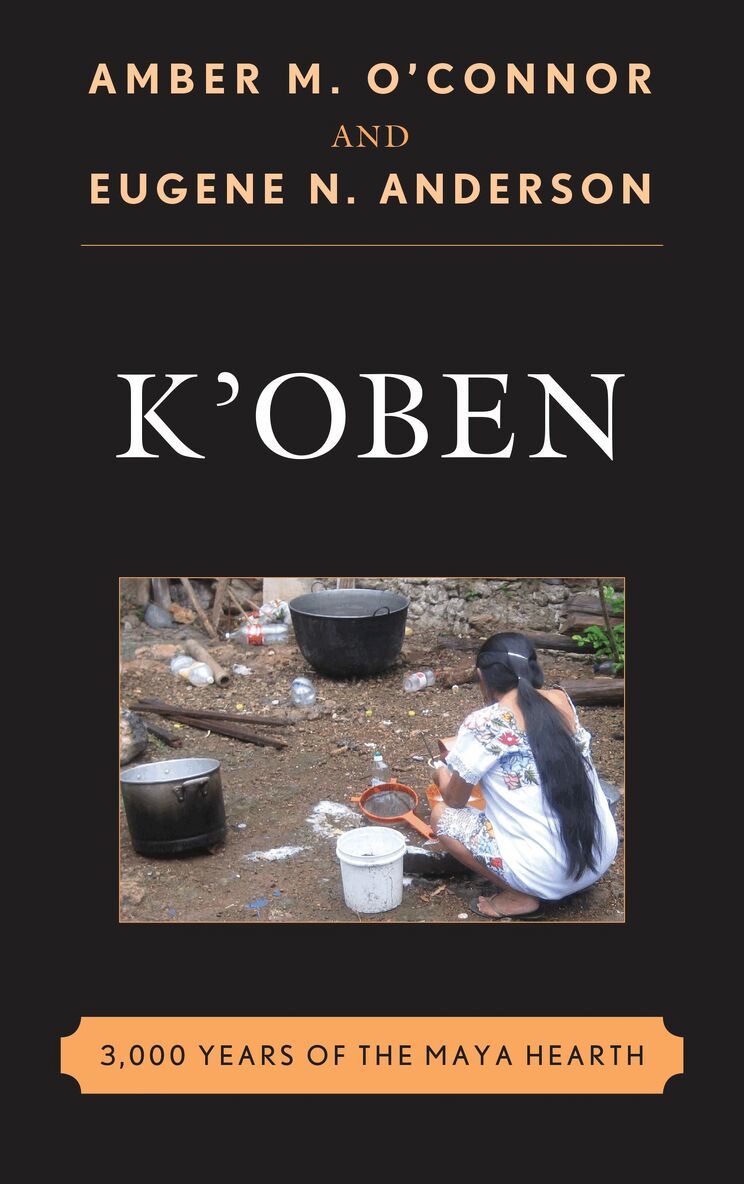
    K'Oben

    3,000 Years of the Maya Hearth

    AvAmber M. O'Connor,Eugene N. Anderson

    Inbunden, Engelska, 2016

    Del i serien Bloomsbury Studies in Food and Gastronomy

    1 222 kr

    Beställningsvara. Skickas inom 10-15 vardagar. Fri frakt över 249 kr.

    Fler format och utgåvor

    E-bok

    1 283 kr

    Beskrivning

    K’Oben traces the Maya kitchen and its associated hardware, ingredients, and cooking styles from the earliest times for which we have archaeological evidence through today’s culinary tourism in the area. It focuses not only on what was eaten and how it was cooked, but the people involved: who grew or sourced the foods, who cooked them, who ate them. Additionally, the authors examine how Maya foodways and the people involved fit into the social system, particularly in how food is incorporated into culture, economy, and society.The authors provide a detailed literature review of hard-to-find sources including: out of print centuries old cookbooks, archaeological field notes, ethnographies and ethnohistories out of circulation and not available in English, thesis documents only available in Spanish and in university archives as well as current field research on the Maya. The more recent Maya foodways can be studied from cookbooks, ethnographies and ethnohistorical documentation. Between the two of us, we have assembled a small but representative collection of cookbooks, some self-published and rare, that were available in Merida and elsewhere in Mexico during the late 20th century. Some are quite old, and all reflect local traditional foodways. Geographically, the book concentrates on Yucatan, Tabasco and Chiapas in Mexico, but will include Pre-Classic and Classic evidence from Guatemala and El Salvador, whose foodways are influenced by Maya traditions.

    Produktinformation

    • Utgivningsdatum:2016-12-14
    • Mått:159 x 237 x 20 mm
    • Vikt:454 g
    • Format:Inbunden
    • Språk:Engelska
    • Serie:Bloomsbury Studies in Food and Gastronomy
    • Antal sidor:212
    • Förlag:Bloomsbury Publishing Plc
    • ISBN:9781442255258

    Utforska kategorier

    • Antropologi inom Samhälle och politik
    • Arkeologiska perioder och områden inom Historia och arkeologi
    • Allmän historia och världshistoria inom Historia och arkeologi

    Mer om författaren

    Amber M. O’Connor has an extensive background in food studies. She’s been a cook, an advocate for food sustainability and security, and a culinary anthropologist. Amber started in the food world as a cook. During culinary school she worked in Oaxaca, Mexico in culinary tourism. Later, she worked in non-profits related to food security. Her current research interests involve researching how processes designed to promote cultural diversity seem to instead constrain individual creative endeavors. In particular she is focused on the impacts of UNESCO’s recognition of the indigenous cuisines of Mexico as “Intangible Cultural Heritage of Humanity” and the re-imagining of authentic “Maya” cuisine by the tourist industry in Quintana Roo and the greater Yucatan peninsula.E. N. Anderson is Professor of Anthropology, Emeritus, at the University of California, Riverside. He has done research on ethnobiology, cultural ecology, political ecology, and medical anthropology, in several areas, especially Hong Kong, British Columbia, California, and the Yucatan Peninsula of Mexico. His books include The Food of China, Ecologies of the Heart, Political Ecology of a Yucatec Maya Community, and The Pursuit of Ecotopia. He has five children and five grandchildren. He lives in Riverside, California, with his wife Barbara Anderson and three large dogs.

    Recensioner i media

    K’oben is the Yucatec term for the famous three-stoned hearth that centers the kitchen throughout the Maya region—and turns out to appear relatively recently in Maya history. What the two authors do best is move readers away from the stereotype of the Maya ‘triad’ (corn/tortilla, beans, squash, plus chiles) to understanding the historically emergent, postcolonial nature of Maya cooking, eating, and influence on world cuisines. O’Connor and Anderson (emer., anthropology, Univ. of California Riverside) organize most of their book chronologically; the last two chapters bring their account to the present. One details the cuisine of each Mexican ‘Mayaland’ state. The closing (and best written) chapter explores how expanded tourism and UNESCO efforts to curate and protect distinctive cuisines instead homogenize them and objectify Maya women. A useful appendix presents ingredients and recipes. The book is a lively read….The authors have filled it with sustained symbolic analysis as well as choice tidbits, such as the fact that the emblematic Mexican mole poblano is actually an Arab-Andalusian staple with chocolate and chile added, or Cuba’s role in Yucatec Maya flavors.Summing Up: Highly recommended. All levels/libraries.