• Fri frakt över 249 kr
  • •
  • Snabba leveranser
  • •
  • Billiga böcker
Kundservice

Du är på sajten för privatpersoner.

Företag, bibliotek eller offentlig verksamhet?

Du handlar på classic.bokus.com, där alla dina funktioner finns intakta.
Till classic.bokus.com
Bokus logotyp. Gå till startsidan.
  • Erbjudanden
  • Nyheter
  • Student
  • Topplistor
  • Barn & ungdom
  • Bokus Play
  • E-böcker
  • Pocketböcker
  • Spel & pussel

10% rabatt på allt med kod: NYSTART10 →

Sidfot

Mina sidor

    Hjälp

    • Kundservice
    • Vanliga frågor och svar
    • Frakt och leverans
    • Retur vid ångerrätt
    • Reklamera vara
    • Betalning
    • Köpvillkor
    • Allmänna villkor
    • Information om webbplatsens tillgänglighet

    Om Bokus

    • Om oss
    • Pressrum
    • För studenter
    • För företag
    • För bibliotek och offentlig verksamhet
    • För leverantörer
    • Hållbarhet

    Populärt

    • Aktuella erbjudanden
    • Presentkort
    • Studentlitteratur
    • Nya böcker
    • Topplistor
    • Signerade böcker
    • Engelska böcker

    Inspiration

    • Boktips
    • BookTok
    • Populära bokserier
    • Barnbokskaraktärer
    • Populära författare
    Logotyp för Bokus
    Följ oss på Facebook (extern länk)Följ oss på Instagram (extern länk)Följ oss på YouTube (extern länk)Följ oss på TikTok (extern länk)
    bokus @ CookiesAnpassa cookiesIntegritetspolicyKöpvillkor
    Till Citymail hemsida (extern länk)Till Budbee hemsida (extern länk)Till Postnord hemsida (extern länk)Till Schenker hemsida (extern länk)Till Early Bird hemsida (extern länk)Till Walleys hemsida (extern länk)
    1. Naturvetenskap och teknik
    2. Matematik och naturvetenskap
    3. Naturvetenskap:allmänt

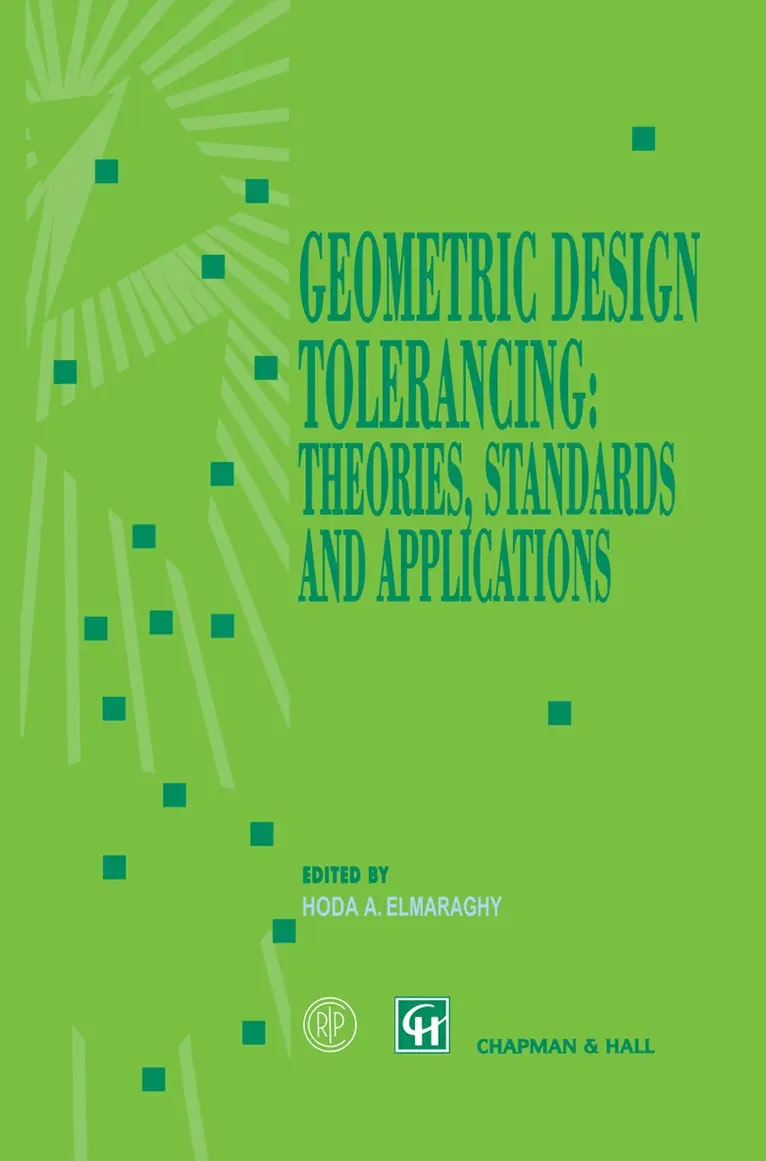
    Geometric Design Tolerancing: Theories, Standards and Applications

    AvHoda A. ElMaraghy

    E-bok
    PDF, Engelska, 2012

    2 044 kr

    Läs direkt i Bokus Reader – eller ladda ned till din enhet (PDF kräver ofta zoom och scroll på små skärmar).

    Beskrivning

    The importance of proper geometric dimensioning and tolerancing as a means of expressing the designer''s functional intent and controlling the inevitable geometric and dimensional variations of mechanical parts and assemblies, is becoming well recognized. The research efforts and innovations in the field of tolerancing design, the development of supporting tools, techniques and algorithms, and the significant advances in computing software and hardware all have contributed to its recognition as a viable area of serious scholarly contributions. The field of tolerancing design is successfully making the transition to maturity where deeper insights and sound theories are being developed to offer explanations, and reliable implementations are introduced to provide solutions. Machine designers realized very early that manufacturing processes do not produce the nominal dimensions of designed parts. The notion of associating a lower and an upper limit, referred to as tolerances, with each dimen­ sion was introduced. Tolerances were specified to ensure the proper function of mating features. Fits of mating features included clearances, location fits, and interference fits, with various sub-grades in each category assigned a tolerance value depending on the nominal size of the mating features. During the inspection process, a part is rejected if a dimension fell outside the specified range. As the accuracy requirements in assemblies became tighter, designers had to consider other critical dimensions and allocate tolerances to them in order to ensure the assembly''s functionality.


    Produktinformation

    • Utgivningsdatum:2012-12-06
    • Språk:Engelska
    • Filformat:PDF
    • Kopieringsskydd:LCP
    • ISBN:9781461557975
    • Förlag:Springer US

    Utforska kategorier

    • Naturvetenskap:allmänt inom Naturvetenskap och teknik
    • Teknik: allmänt inom Naturvetenskap och teknik
    • Tillverkningsteknik inom Naturvetenskap och teknik