• Fri frakt över 249 kr
  • •
  • Snabba leveranser
  • •
  • Billiga böcker
Kundservice

Du är på sajten för privatpersoner.

Företag, bibliotek eller offentlig verksamhet?

Du handlar på classic.bokus.com, där alla dina funktioner finns intakta.
Till classic.bokus.com
Bokus logotyp. Gå till startsidan.
  • Erbjudanden
  • Nyheter
  • Student
  • Topplistor
  • Barn & ungdom
  • Bokus Play
  • E-böcker
  • Pocketböcker
  • Spel & pussel

Må bättre, för mindre! Upp till 50% rabatt på hälsoböcker

Sidfot

Mina sidor

    Hjälp

    • Kundservice
    • Vanliga frågor och svar
    • Frakt och leverans
    • Retur vid ångerrätt
    • Reklamera vara
    • Betalning
    • Köpvillkor
    • Allmänna villkor
    • Information om webbplatsens tillgänglighet

    Om Bokus

    • Om oss
    • Pressrum
    • För studenter
    • För företag
    • För bibliotek och offentlig verksamhet
    • För leverantörer
    • Hållbarhet

    Populärt

    • Aktuella erbjudanden
    • Presentkort
    • Studentlitteratur
    • Nya böcker
    • Topplistor
    • Signerade böcker
    • Engelska böcker

    Inspiration

    • Boktips
    • BookTok
    • Populära bokserier
    • Barnbokskaraktärer
    • Populära författare
    Logotyp för Bokus
    Följ oss på Facebook (extern länk)Följ oss på Instagram (extern länk)Följ oss på YouTube (extern länk)Följ oss på TikTok (extern länk)
    bokus @ CookiesAnpassa cookiesIntegritetspolicyKöpvillkor
    Till Citymail hemsida (extern länk)Till Budbee hemsida (extern länk)Till Postnord hemsida (extern länk)Till Schenker hemsida (extern länk)Till Early Bird hemsida (extern länk)Till Walleys hemsida (extern länk)
    1. Kultur
    2. Konstböcker
    3. Konstformer
    4. Övriga konstformer
    5. Skulptur

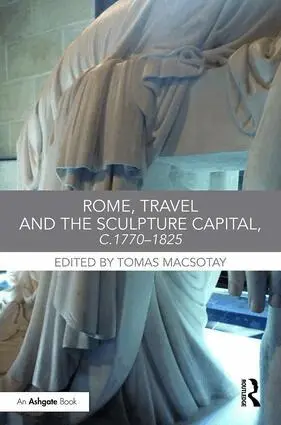
    Rome, Travel and the Sculpture Capital, c.1770–1825

    AvTomas Macsotay

    Inbunden, Engelska, 2016

    2 724 kr

    Beställningsvara. Skickas inom 10-15 vardagar. Fri frakt över 249 kr.

    Beskrivning

    The world that shaped Europe's first national sculptor-celebrities, from Schadow to David d'Angers, from Flaxman to Gibson, from Canova to Thorvaldsen, was the city of Rome. Until around 1800, the Holy See effectively served as Europe's cultural capital, and Roman sculptors found themselves at the intersection of the Italian marble trade, Grand Tour expenditure, the cult of the classical male nude, and the Enlightenment republic of letters. Two sets of visitors to Rome, the David circle and the British traveler, have tended to dominate Rome's image as an open artistic hub, while the lively community of sculptors of mixed origins has not been awarded similar attention. Rome, Travel and the Sculpture Capital, c.1770–1825 is the first study to piece together the labyrinthine sculptors' world of Rome between 1770 and 1825. The volume sheds new light on the links connecting Neo-classicism, sculpture collecting, Enlightenment aesthetics, studio culture, and queer studies. The collection offers ideal introductory reading on sculpture and Rome around 1800, but its combination of provocative perspectives is sure to appeal to a readership interested in understanding a modernized Europe's overwhelmingly transnational desire for Neo-classical, Roman sculpture.

    Produktinformation

    • Utgivningsdatum:2016-08-24
    • Mått:156 x 234 x 21 mm
    • Vikt:703 g
    • Format:Inbunden
    • Språk:Engelska
    • Antal sidor:274
    • Förlag:Taylor & Francis Ltd
    • ISBN:9781472420350

    Utforska kategorier

    • Skulptur inom Kultur
    • Konsthistoria inom Kultur

    Mer om författaren

    Tomas Macsotay is a Ramón y Cajal Research Fellow at the Universitat Pompeu Fabra, Barcelona. He is the author of The Profession of Sculpture in the Paris Académie (2014) and the co-editor of Morceaux. Die bildhauerischen Aufnahmestücke europäischer Kunstakademien im 18. und 19. Jahrhundert (2016).

    Recensioner i media

    ‘Rome, Travel and the Sculpture Capital, c. 1770–1825 offers a fresh approach to the study of patrons, artists and markets for Roman sculpture in the late eighteenth and early nineteenth centuries. Instead of focusing on the agency of the traditional cast of powerful tastemakers and artists, such as Antonio Canova, Bertel Thorvaldsen and Johann Winckelmann, the volume emphasizes the shifting status of travellers, trade routes, political systems and institutions that underpinned the production, consumption and reception of marble sculpture in Rome. The book thus points to areas of contingency and flux that have been otherwise obscured by the unquestionably canonical status of Rome as a "sculpture capital" during the period. […] Rome, Travel, and the Sculpture Capital, c. 1770–1825 helps to advance and complicate our understanding of Rome’s reputation as a center of neoclassical art and grand tourism that has long been enshrined in studies related to the history of sculpture. Its focus on complex systems and networks of artists, patrons and other local conditions provides an exciting path for future directions in the study of Roman sculpture.’ Katie Hornstein, review in Sculpture Journal (27.3, 2018, pp. 377–79)‘This important collection of essays by an international team of scholars sheds new light on Rome’s emergence as an international center of sculptural production and consumption at the period spanning the end of the eighteenth-century through the defeat of Napoleon. Their research takes us inside the studios of artistic giants like Canova and Thorvaldsen as well as a host of lesser-known figures who made Rome Europe’s sculpture capital par excellence. Together, the authors reveal the Eternal City as a cosmopolitan community of patrons and practitioners whose interactions led to technical breakthroughs, stylistic innovations, and lofty claims for the centrality of sculpture to modern life.’ Jeffrey Collins, Bard Graduate Center, USA‘Comprised of archivally rich analyses, this volume traces the myriad forces that ensured Rome's ascendance as the capital of European sculpture in the late-eighteenth and early-nineteenth centuries. Essays chart an expanded topography of sculptural networks, drawing together luminaries like Canova, Cavaceppi, and Flaxman; the specialized tradesmen and assistants whose work was integral to the business of sculpture; and aesthetic interlocutors in the guise of patrons, scholars, and museum personnel. Bringing new life to the material and theoretical lives of sculpture, its makers and audiences, the volume significantly expands our appreciation of the interlinked histories of sculptural restoration, production, and consumption that underwrote a Roman dialectic of ancient and modern.’ Sarah Betzer, University of Virginia, USA

    Innehållsförteckning

    • Contents:List of Illustrations List of Contributors Acknowledgments Introduction: ‘Close up and Far Away’ Tomas MacsotayPart IA Space for Encounters 1 Restoring and Making Sculpture in Eighteenth-Century Rome: A Shared Practice Chiara Piva2 Promoting Sculpture in Eighteenth-Century Rome: Exhibitions, Art Criticism, Public Susanne Adina Meyer3 Bringing Modern Rome to Chatsworth: The Formation of the 6th Duke of Devonshire’s Sculpture Collection Alison YarringtonPart IIClose to Canova 4 Truly Transnational? Sculpture Studios in Rome after the Restoration Christina Ferando5 In the Shadow of the Star: Career Strategies of Sculptors in Rome in the Age of Canova (c.1780–1820) Daniella Gallo6 Canova and his German Friends Johannes MyssokPart IIIDistance and Difference 7 Multiple Views, Contours and Sculptural Narration: Aesthetic Notions of Neoclassical Sculpture in and out of Rome Roland Kanz8 Sculptor and Tourist: John Flaxman and His Italian Journals and Sketchbooks (1787–1794) Eckart Marchand9 Struggle and the Memorial Relief: John Deare’s Caesar Invading Britain Tomas Macsotay10 The Sculptor, the Duke, and Queer Art Patronage: John Gibson’s Mars Restrained by Cupid and Winckelmannian Aesthetics Roberto C. FerrariBibliography Index