• Fri frakt över 249 kr
  • •
  • Snabba leveranser
  • •
  • Billiga böcker
Kundservice

Du är på sajten för privatpersoner.

Företag, bibliotek eller offentlig verksamhet?

Du handlar på classic.bokus.com, där alla dina funktioner finns intakta.
Till classic.bokus.com
Bokus logotyp. Gå till startsidan.
  • Erbjudanden
  • Nyheter
  • Student
  • Topplistor
  • Barn & ungdom
  • Bokus Play
  • E-böcker
  • Pocketböcker
  • Spel & pussel

10% rabatt på allt med kod: NYSTART10 →

Sidfot

Mina sidor

    Hjälp

    • Kundservice
    • Vanliga frågor och svar
    • Frakt och leverans
    • Retur vid ångerrätt
    • Reklamera vara
    • Betalning
    • Köpvillkor
    • Allmänna villkor
    • Information om webbplatsens tillgänglighet

    Om Bokus

    • Om oss
    • Pressrum
    • För studenter
    • För företag
    • För bibliotek och offentlig verksamhet
    • För leverantörer
    • Hållbarhet

    Populärt

    • Aktuella erbjudanden
    • Presentkort
    • Studentlitteratur
    • Nya böcker
    • Topplistor
    • Signerade böcker
    • Engelska böcker

    Inspiration

    • Boktips
    • BookTok
    • Populära bokserier
    • Barnbokskaraktärer
    • Populära författare
    Logotyp för Bokus
    Följ oss på Facebook (extern länk)Följ oss på Instagram (extern länk)Följ oss på YouTube (extern länk)Följ oss på TikTok (extern länk)
    bokus @ CookiesAnpassa cookiesIntegritetspolicyKöpvillkor
    Till Citymail hemsida (extern länk)Till Budbee hemsida (extern länk)Till Postnord hemsida (extern länk)Till Schenker hemsida (extern länk)Till Early Bird hemsida (extern länk)Till Walleys hemsida (extern länk)
    1. Naturvetenskap och teknik
    2. Matematik och naturvetenskap
    3. Biologi
    4. Biovetenskap

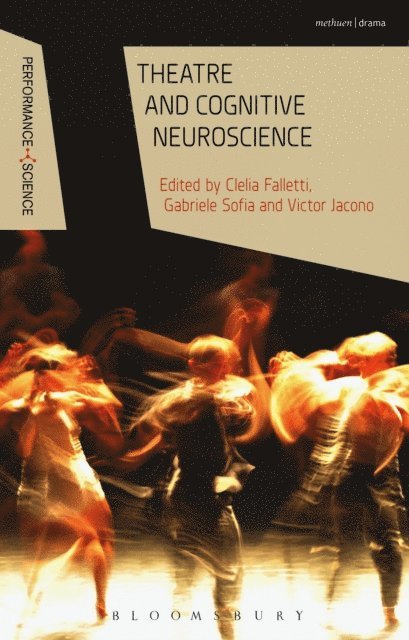
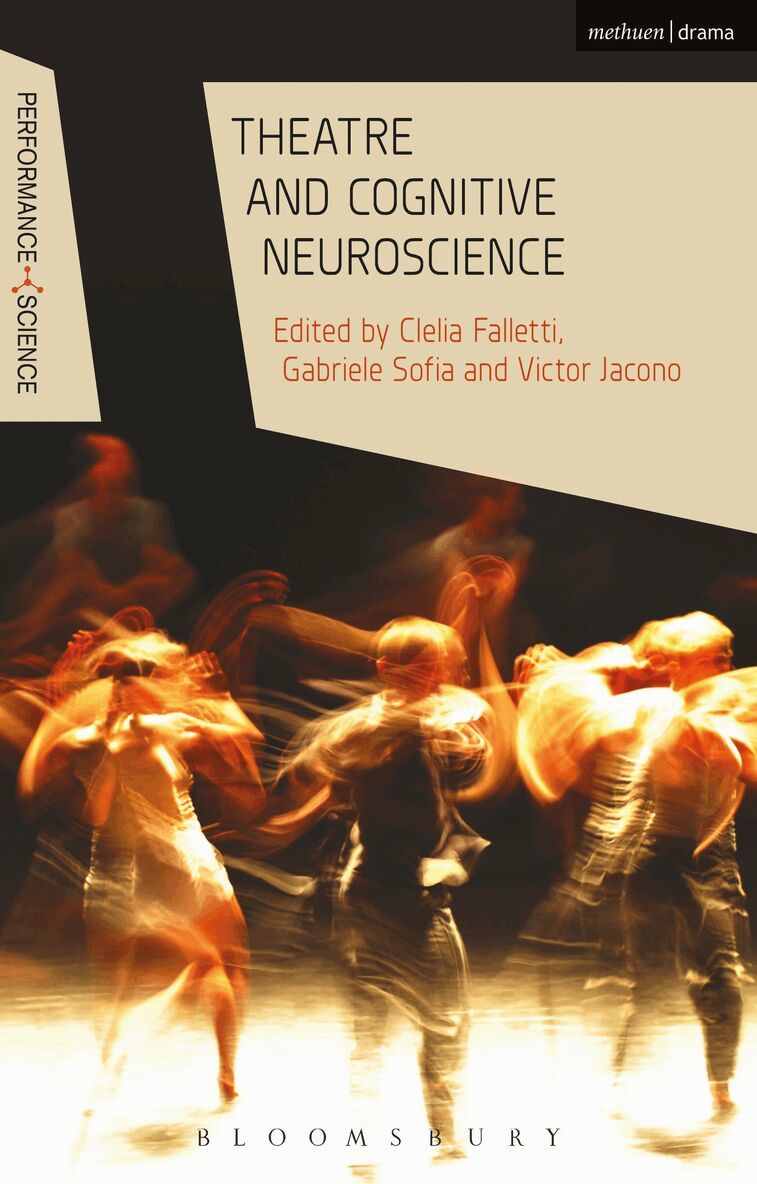
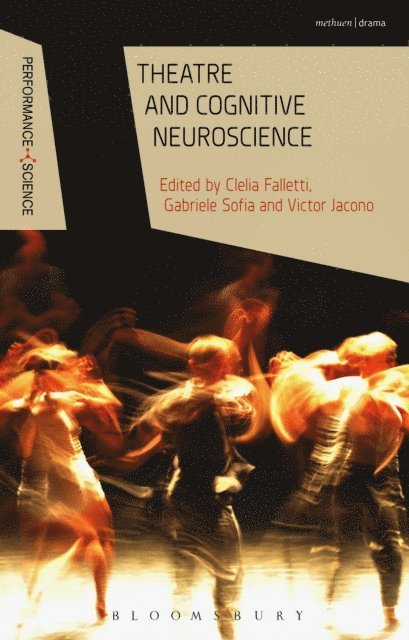
    Theatre and Cognitive Neuroscience

    AvClelia Falletti,Gabriele Sofia

    Inbunden, Engelska, 2016

    Del i serien Performance and Science: Interdisciplinary Dialogues

    1 867 kr

    Beställningsvara. Skickas inom 10-15 vardagar. Fri frakt över 249 kr.

    Beskrivning

    This is the first volume to provide a detailed introduction to some of the main areas of research and practice in the interdisciplinary field of art and neuroscience. With contributions from neuroscientists, theatre scholars and artists from seven countries, it offers a rich and rigorous array of perspectives as a springboard to further exploration. Divided into four parts, each prefaced by an expert editorial introduction, it examines:* Theatre as a space of relationships: a neurocognitive perspective* The spectator’s performative experience and ‘embodied theatrology’* The complexity of theatre and human cognition* Interdisciplinary perspectives on applied performanceEach part includes contributions from international pioneers of interdisciplinarity in theatre scholarship, and from neuroscientists of world-renown researching the physiology of action, the mirror neuron mechanism, action perception, space perception, empathy and intersubjectivity.While illustrating the remarkable growth of interest in the performing arts for cognitive neuroscience, this volume also reveals the extraordinary richness of exchange and debate born out of different approaches to the topics.

    Produktinformation

    • Utgivningsdatum:2016-02-25
    • Mått:138 x 216 x 19 mm
    • Vikt:476 g
    • Format:Inbunden
    • Språk:Engelska
    • Serie:Performance and Science: Interdisciplinary Dialogues
    • Antal sidor:280
    • Förlag:Bloomsbury Publishing PLC
    • ISBN:9781472584786

    Utforska kategorier

    • Biovetenskap inom Naturvetenskap och teknik
    • Kognitiv psykologi inom Psykologi och pedagogik
    • Teater inom Kultur

    Mer om författaren

    Clelia Falletti is Associate Professor at Sapienza University of Rome, Italy. Since 1981 she has participated in research by ISTA (International School of Theatre Anthropology) directed by Eugenio Barba; she is dramaturg for Teatro Potlach, and co-editor of theatre books series with two Italian publishing houses.Gabriele Sofia teaches theatre studies and physical theatre at Paul Valéry University, Montpellier, France. Since 2006 he has carried out an interdisciplinary research project on the neurophysiology of the actor and the spectator between the Sapienza University of Rome and the Maisons des Sciences de l’Homme Paris Nord. From 2009 to 2013 he promoted and organized five editions of the International Conference “Dialogues between Theatre and Neuroscience” at Sapienza.Victor Jacono, PhD in Performance Studies, teaches at the MCAST Institute for the Creative Arts and Drama at the Alternative Learning Program, Malta.

    Recensioner i media

    A key strength of the book lies in the diversity of its perspectives ... The book makes a significant contribution to this field of study, particularly since there is arguably a lacuna when it comes to the featuring of theatre ... in scientific publications ... Its speciality is its multifaceted perspective.

    Innehållsförteckning

    • PrefacePart One: Theatre as a space of relationships: a neurocognitive approach1. Editorial Introduction: The space of shared action (Clelia Falletti, Sapienza University of Rome, Italy)2. “Mirror mechanism” and motor behavior (Maria Alessandra Umiltà, neuroscientist, University of Parma, Italy)3. Body presence and extra-personal space perception (Giorgia Committeri and Chiara Fini neuroscientists, University of Chieti, Italy)4. The actor at the circus. Towards a cognitive approach (Philippe Goudard, University Paul Valéry Montpellier 3, France)Part Two: The spectator’s performative experience and “Embodied theatrology”5. Editorial introduction: Towards an “Embodied Theatrology”? (Gabriele Sofia, University Paul Valéry Montpellier 3, France)6. Body and corporeality. A small multidisciplinary glossary (Marco De Marinis, University of Bologna, Italy)7. Audiences’ experience of proximity and co-presence in live dance performance (Corinne Jola, neuroscientist and choreographer, Abertay University, Dundee and Matthew Reason, Faculty of Arts, York St John University, UK)8. “Theatre and science”. Some reflections on the theatre effectiveness mechanism in Antonin Artaud (Lorraine Dumenil, University Paris 3 Sorbonne Nouvelle, France)Part Three: The complexity of theatre and human cognition9. Editorial Introduction: The Complexity of the actor’s pedagogy and human cognition (Victor Jacono, Sapienza University of Rome, Italy)10. A rope over an abyss (John J. Schranz, University of Malta)11. The actor’s embodied language. Preliminary indications from a pilot experiment (Gabriele Sofia; Silvia Spadacenta, neuroscientist, University of Tu¨bingen, Germany; Clelia Falletti; Giovanni Mirabella, neuroscientist, Sapienza University of Rome, Italy)12. Perception and the organization of time in the theatre (Luciano Mariti, Sapienza University of Rome, Italy)Part Four: Interdisciplinary perspectives in applied performance13. Editorial introduction: Does art therapy work as a rehabilitative tool? (Giovanni Mirabella neuroscientist, Sapienza University of Rome, Italy)14. Use of theatrical techniques and elements as interventions for autism spectrum disorders (Jenna Gabriel, Harvard University, USA; Elisa Angevin, Columbia University, USA; Tamara Rosen and Matthew D. Lerner, Stony Brook University, USA)15. Theatre is a valuable tool for parkinson’s disease rehabilitation (Nicola Modugno, neurologist, IRCCS, Neuromed, Pozzilli; Imogen Kusch, theatre director of the Klesidra Company, Rome and Giovanni Mirabella)16. Theatre and therapy: care, cure or illusion? (Jean-Marie Pradier, Ethnoscenologist, University Paris 8 – MSH-Paris Nord, France)AfterwordEndnotesIndex