• Fri frakt över 249 kr
  • •
  • Snabba leveranser
  • •
  • Billiga böcker
Kundservice

Du är på sajten för privatpersoner.

Företag, bibliotek eller offentlig verksamhet?

Du handlar på classic.bokus.com, där alla dina funktioner finns intakta.
Till classic.bokus.com
Bokus logotyp. Gå till startsidan.
  • Erbjudanden
  • Nyheter
  • Student
  • Topplistor
  • Barn & ungdom
  • Bokus Play
  • E-böcker
  • Pocketböcker
  • Spel & pussel

10% rabatt på allt med kod: NYSTART10 →

Sidfot

Mina sidor

    Hjälp

    • Kundservice
    • Vanliga frågor och svar
    • Frakt och leverans
    • Retur vid ångerrätt
    • Reklamera vara
    • Betalning
    • Köpvillkor
    • Allmänna villkor
    • Information om webbplatsens tillgänglighet

    Om Bokus

    • Om oss
    • Pressrum
    • För studenter
    • För företag
    • För bibliotek och offentlig verksamhet
    • För leverantörer
    • Hållbarhet

    Populärt

    • Aktuella erbjudanden
    • Presentkort
    • Studentlitteratur
    • Nya böcker
    • Topplistor
    • Signerade böcker
    • Engelska böcker

    Inspiration

    • Boktips
    • BookTok
    • Populära bokserier
    • Barnbokskaraktärer
    • Populära författare
    Logotyp för Bokus
    Följ oss på Facebook (extern länk)Följ oss på Instagram (extern länk)Följ oss på YouTube (extern länk)Följ oss på TikTok (extern länk)
    bokus @ CookiesAnpassa cookiesIntegritetspolicyKöpvillkor
    Till Citymail hemsida (extern länk)Till Budbee hemsida (extern länk)Till Postnord hemsida (extern länk)Till Schenker hemsida (extern länk)Till Early Bird hemsida (extern länk)Till Walleys hemsida (extern länk)
    1. Samhälle och politik
    2. Politik och statsskick
    3. Politiska ideologier och rörelser
    4. Nationalism

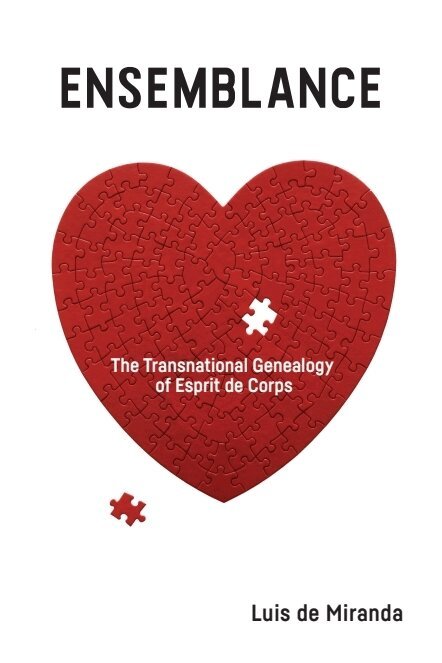
    Ensemblance

    The Transnational Genealogy of Esprit de Corps

    AvLuis de Miranda

    Häftad, Engelska, 2021

    596 kr

    Beställningsvara. Skickas inom 3-6 vardagar. Fri frakt över 249 kr.

    Fler format och utgåvor

    Inbunden

    2 174 kr

    Beskrivning

    Esprit de corps has played a significant role in the cultural and political history of the last 300 years. Through several historical case studies, Luis de Miranda shows how this phrase acts as a combat concept with a clear societal impact. He also reveals how interconnected, yet distinct, French, English and American modern intellectual and political thought is. In the end, this is a cautionary analysis of past and current ideologies of ultra-unified human ensembles, a recurrent historical and theoretical fabulation the author calls ‘ensemblance’.

    Produktinformation

    • Utgivningsdatum:2021-12-29
    • Mått:156 x 234 x 16 mm
    • Vikt:431 g
    • Format:Häftad
    • Språk:Engelska
    • Antal sidor:296
    • Förlag:Edinburgh University Press
    • ISBN:9781474454209

    Utforska kategorier

    • Nationalism inom Samhälle och politik
    • Statsvetenskap och politisk teori inom Samhälle och politik
    • Filosofiska discipliner inom Filosofi och religion

    Mer om författaren

    Luis de Miranda is a Researcher in the Department of History of Ideas and Science at Uppsala University, Sweden. He is the author of Being and Neonness (MIT Press, 2019), Peut-on jouir du capitalisme? Lacan avec Heidegger et Marx (Max Milo, 2009) and Une vie nouvelle est-elle possible? Deleuze et les lignes (Nous, 2009).

    Recensioner i media

    Since Foucault, Deleuze and Guattari and, more recently, Badiou, there has been considerable interest in countervailing the history of individualism with others on the production of group subjectivities, where the individual emerges from out of, or is sacrificially sublimated into, a cog in the machine of a no-less manufactured collective identity. Luis de Miranda's enquiry into the origins and ambivalent spread of esprit de corps, or the subjectivation of 'ensembles', marks a major intervention in this debate. Ensemblance is a remarkable 'histosophical' achievement, a compellingly original mix of transnational history and philosophy, from the philosophes to the present, and beautifully written to boot.

    Innehållsförteckning

    • Esprit de Corps: A TimelineIntroduction: A Thousand Platoons – The Enduring Importance of Esprit de CorpsTeam Spirits: Twenty-First Century Uses of ‘Esprit de Corps’Knowledge Aperture: Academic Literature on Esprit de CorpsAbstract Universalism: The Problem of a Philosophical Perspective When Studying Esprit de CorpsAs Far as We Can Tell: A Longue Durée Intellectual History of the Uses of ‘Esprit de Corps’Surveying Large Issues Within a Small Compass: Digital Genealogy1. Musketeers and Jesuits: The French Birth of ‘Esprit de Corps’ in the Eighteenth CenturyNot Only in the Military: First Occurrences of the Phrase in PrintThe Head of the World: A Short Prehistory of the Phrase ‘Esprit de Corps’One Hundred Fifty: A Quantification of Esprit de Corps?Bad Grafts: Critical Uses of ‘Esprit de Corps’ in the EncyclopédieToo Zealous to Be Honest? The Trial of the Jesuits2. Adunation of the Nation: Towards a Republican Esprit de CorpsThe Mask of Reason: Dialectics of Particularism and PatriotismCollective Cogito: The Nation as a Natural and Spiritual CorpsCapitalism versus Esprit de Corps: The Suppression of the Corps de MétiersCommon Good: Revolution and the ‘Adunation’ of Society3. We Must Hang Together: The English Appropriation of Esprit de Corps in the Eighteenth and Nineteenth CenturiesExotic Flavour and Distinction: Linguistic and Semantic ObservationsUnavoidable Zeal: Early Propagation of EdC in British EnglishThe Honour of a Nation: Official Debates about EdC in the UK and the USAThe Natural Bond: Universalist and Familial Esprit de Corps4. The Way of Napoleon: The Uniformization of Esprit de Corps in Early Nineteenth-Century FranceSuperiorly Normal: Renewal and Normalization of Esprit de CorpsEsprit de Corporation: The Decline of Labour Communities and the Spread of Individualist CompetitionThe Honour and Duty of the SoldierDefend Your Flag: Napoleonic Esprit de CorpsThe Cement of the Social Edifice: The Counter-Revolutionary Praise of Esprit de Corps5. Collective Temperament: Esprit de Corps as Sociality and Individuation in the Second Half of the Nineteenth Century Whose Norms? Conformative Esprit de Corps and Autonomist Esprit de Corps‘We Who Suffer’: The Problematic Regulation of SolidaritiesEsprit de Corps and The Spirit of Individuality: Tocqueville’s ReminiscenceEsprit de Corps and the First French Sociologists: Fourier, Tarde, DurkheimSelf-Alienation: The Individualistic critique of Esprit de Corps6. The Mystique of Esprit de Corps in France in the Twentieth CenturyThe Moral Empire: Permanence of the Ambiguity of Esprit de Corps in FrenchThe Superior Self: Esprit de Corps as Honour in Terraillon and BergsonProfessional Habitus: French Esprit de Corps in Work, Management and French EducationEsprit de Corps as a War Machine: From De Gaulle to DeleuzeThe future of a Gallicism: Canada as a Semantic Border Between French and English7. The Way of Hilton: Esprit de Corps in the UK and the USA in the Twentieth Century‘A Happy Phrase’: The Specificity of English Uses of ‘Esprit de Corps’Brothers in Arms: Esprit de Corps in Military DiscourseThe Purpose of Unity: Political and Institutional Aspects of Esprit de CorpsMeasure by Measure: Intellectual and Theoretical Uses of ‘Esprit de Corps’The Management of Men: Corporate and Managerial DiscourseConclusion: Ensemblance‘Large issues within a small compass’: HistosophyIs a General Theory of Esprit de Corps Possible?Drive, Discipline, Duty and Distinction: Four Scales of Esprit de Corps?The Contigency of Ensembles: Six Questions Raised and AnsweredBibliographyIndex