• Fri frakt över 249 kr
  • •
  • Snabba leveranser
  • •
  • Billiga böcker
Kundservice

Du är på sajten för privatpersoner.

Företag, bibliotek eller offentlig verksamhet?

Du handlar på classic.bokus.com, där alla dina funktioner finns intakta.
Till classic.bokus.com
Bokus logotyp. Gå till startsidan.
  • Erbjudanden
  • Student
  • Topplistor
  • Barn & ungdom
  • Bokus Play
  • E-böcker
  • Ljudböcker
  • Pocketböcker
  • Spel och pussel

Pocketfynda! Hundratals böcker för 49 kr/st →

Sidfot

Mina sidor

    Hjälp

    • Kundservice
    • Vanliga frågor och svar
    • Frakt och leverans
    • Retur vid ångerrätt
    • Reklamera vara
    • Betalning
    • Köpvillkor
    • Allmänna villkor
    • Information om webbplatsens tillgänglighet

    Om Bokus

    • Om oss
    • Pressrum
    • För studenter
    • För företag
    • För bibliotek och offentlig verksamhet
    • För leverantörer
    • Hållbarhet

    Populärt

    • Aktuella erbjudanden
    • Presentkort
    • Studentlitteratur
    • Nya böcker
    • Topplistor
    • Signerade böcker
    • Engelska böcker

    Inspiration

    • Boktips
    • BookTok
    • Barnbokskaraktärer
    • Populära författare
    Logotyp för Bokus
    Följ oss på Facebook (extern länk)Följ oss på Instagram (extern länk)Följ oss på YouTube (extern länk)Följ oss på TikTok (extern länk)
    bokus @ CookiesAnpassa cookiesIntegritetspolicyKöpvillkor
    Till Citymail hemsida (extern länk)Till Budbee hemsida (extern länk)Till Postnord hemsida (extern länk)Till Schenker hemsida (extern länk)Till Early Bird hemsida (extern länk)Till Walleys hemsida (extern länk)
    1. Kultur
    2. Scenkonst och film
    3. Film
    • Nyhet

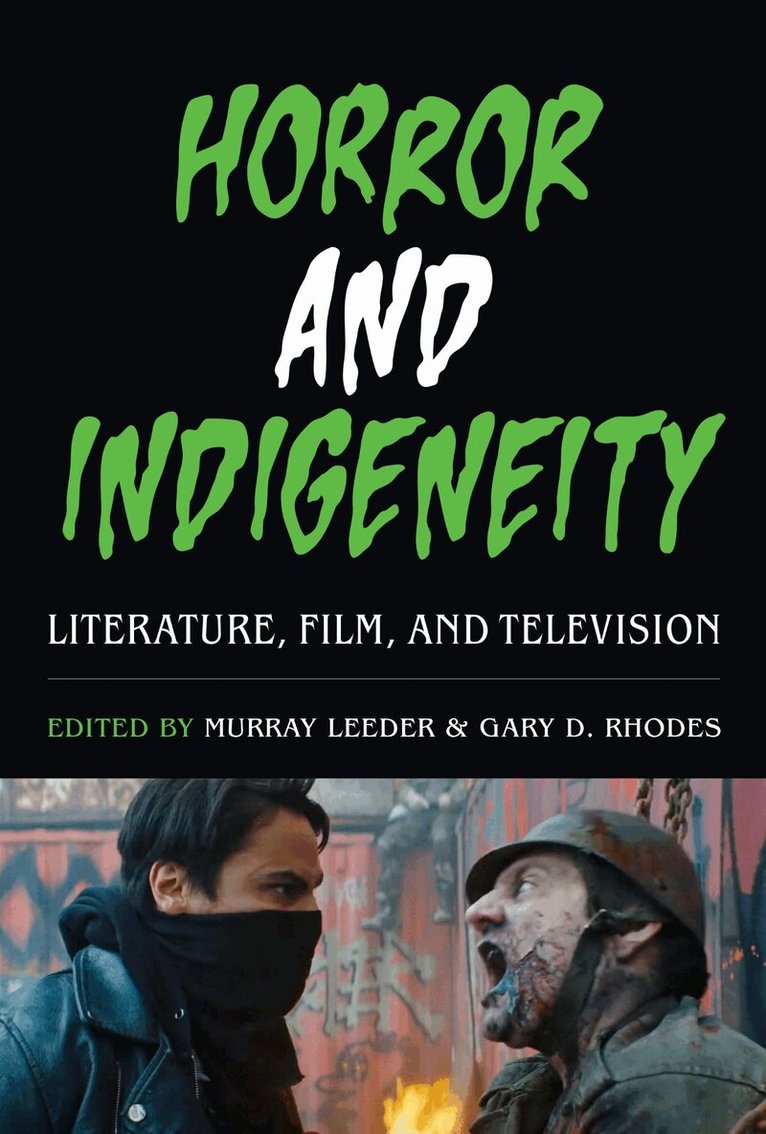
    Horror and Indigeneity

    Literature, Film, and Television

    AvMurray Leeder,Gary D. Rhodes

    Inbunden, Engelska, 2026

    606 kr

    Beställningsvara. Skickas inom 5-8 vardagar. Fri frakt över 249 kr.

    Beskrivning

    A collection of essays about Indigeneity and horror in cinema, literature, and beyond.How did Indigeneity come to be horrifying? Think of the “Indian burial ground” trope, a staple of 1970s horror cinema, not to mention decades of western films and fictions that made “savage Indians” the face of fear in popular culture. Can horror do something else in the hands of Indegnous people? Creators such as Eden Robinson and Jeff Barnaby have self-consciously turned to horror to tell new kinds of stories, stories that question who is a monster and what constitutes the monstrous. Horror and Indigeneity explores representations of Indigenous people in settler horror texts and in the growing corpus of horror by Indigenous writers and filmmakers. Widely spanning time periods and media, the contributors to this edited volume address themes such as cannibalism, eco-horror, historical trauma, and contemporary anti-racism as they relate to classical horror cinema and recent works such as The Dead Can’t Dance, Lovecraft Country, and Stephen Graham Jones’s The Only Good Indians. Also featuring interviews with Jones and director T. J. Cuthand, Horror and Indigeneity rethinks the terror of the Other in potent and provactive terms.

    Produktinformation

    • Utgivningsdatum:2026-07-14
    • Mått:152 x 229 x 30 mm
    • Vikt:595 g
    • Format:Inbunden
    • Språk:Engelska
    • Antal sidor:296
    • Förlag:University of Texas Press
    • ISBN:9781477334133

    Utforska kategorier

    • Film inom Kultur
    • Radio / podcasts inom Kultur
    • Etnicitet inom Samhälle och politik

    Mer om författaren

    Murray Leeder is an assistant lecturer in film and English at the University of Alberta. He is the author of Horror Film: A Critical Introduction and The Modern Supernatural and the Beginnings of Cinema.Gary D. Rhodes is a professor of media production at Oklahoma Baptist University, a filmmaker. and a poet. He is the author of Vampires in Silent Cinema and coeditor of Film by Design: The Art of the Movie Poster.

    Recensioner i media

    "Horror and Indigeneity is a must-read for scholars, students, filmmakers and horror fans everywhere. It makes a major contribution to the fast-growing field of Indigenous horror studies while providing context and meaning for authors, producers, practitioners, and audiences alike. Through fifteen fascinating chapters, this book explores the spectrum of Indigenous representation across time and genres, first unpacking the history of the tropes of the "uncivilized Native," the "Indian burial ground," and "the Merciless Savage" as they have played out in literature, film, and television over more than a century, before delving into the trajectory of Indigenous counternarratives of colonialism-as-monster. Through interviews and chapters exploring the slashers, dramas, documentaries, mysteries, and thrillers that have featured spirits, mutants, zombies, windigos, ghosts, and other fearsome figures, this book unsettles the horror genre and answers the question: Who are the real savages we should fear?" - Heather Igloliorte, coeditor of The Routledge Companion to Indigenous Art Histories in the United States and Canada"This ambitious edited volume makes a significant contribution to the interdisciplinary field of Indigenous studies and fills a gap in the scholarly study of horror films, novels, and television shows from the perspectives of other disciplines aligned with Indigenous studies. The coeditors pull all the threads together, and the accessibility of different chapters will make them useful in both undergraduate and graduate studies courses." - Cailín Murray, editor of Phantom Past, Indigenous Presence: Native Ghosts in North American Culture and History"Horror and Indigeneity is a significant contribution to horror studies, representing an important early step in introducing decolonial perspectives into the study of horror and providing a foundation upon which future scholars can build. As editors, Murray Leeder and Gary D. Rhodes do an excellent job framing the volume and establishing the need for it. The scope of the volume will make it an important scholarly resource that will undoubtedly appear on the shelves of many horror scholars." - Kendall R. Phillips, author of A Place of Darkness: The Rhetoric of Horror in Early American Cinema

    Innehållsförteckning

    • List of IllustrationsIntroduction (Murray Leeder and Gary D. Rhodes)Chapter 1. Toward an Indigenous Monster Theory: Un/settling Creatures and Decolonizing Horror (Anne Mai Yee Jansen)Chapter 2. The Monsters Are Real: Indigenous Horror and Historical Trauma (Andrew Fisher)Chapter 3. Night of the Living Indian (Gary D. Rhodes)Chapter 4. Physical Antiquities: Indigeneity in Classical Horror Films (Murray Leeder)Chapter 5. Indigenous Rights in 1970s and 1980s Eco-Horror: Rethinking the Survival Space, from Rural to Urban (Brooke Cameron and Alyce Soulodre)Chapter 6. We Had a Mutant Bear Problem: The Image of Native Americans in John Frankenheimer’s Prophecy (Robert Guffey)Chapter 7. For Fear of the Other: Simulation of Native American Presence in Horror Fiction (Weronika Łaszkiewicz)Chapter 8. Savage Appetites: Cannibalistic Colonialism and the Windigo (K. Hadley)Chapter 9. The Yahima Controversy and Antiracism in HBO’s Lovecraft Country (Michael Truscello)Chapter 10. Pow Wow Tapes and the Zombie Outbreak: Survivance in The Dead Can’t Dance (Jacob Floyd)Chapter 11. Blood on the Land: Jeff Barnaby’s Indigenous Horror (Darrell Varga)Chapter 12. Spirits as Relatives in Eden Robinson’s Monkey Beach and Jessica Johns’s Bad Cree (June Scudeler)Chapter 13. “It Came from the Rez”: Slasher Ecologies in Stephen Graham Jones’s The Only Good Indians (Eric Gary Anderson)Chapter 14. Beautiful Monsters: A Conversation with Stephen Graham Jones (Nicole Kuʻuleinapuananiolikoʻawapuhimelemeleolani Furtado)Chapter 15. A Conversation with Theo Jean Cuthand (Ariel Smith)AcknowledgmentsContributorsIndex