• Fri frakt över 249 kr
  • •
  • Snabba leveranser
  • •
  • Billiga böcker
Kundservice

Du är på sajten för privatpersoner.

Företag, bibliotek eller offentlig verksamhet?

Du handlar på classic.bokus.com, där alla dina funktioner finns intakta.
Till classic.bokus.com
Bokus logotyp. Gå till startsidan.
  • Erbjudanden
  • Nyheter
  • Student
  • Topplistor
  • Barn & ungdom
  • Bokus Play
  • E-böcker
  • Pocketböcker
  • Spel & pussel

10% rabatt på allt med kod: NYSTART10 →

Sidfot

Mina sidor

    Hjälp

    • Kundservice
    • Vanliga frågor och svar
    • Frakt och leverans
    • Retur vid ångerrätt
    • Reklamera vara
    • Betalning
    • Köpvillkor
    • Allmänna villkor
    • Information om webbplatsens tillgänglighet

    Om Bokus

    • Om oss
    • Pressrum
    • För studenter
    • För företag
    • För bibliotek och offentlig verksamhet
    • För leverantörer
    • Hållbarhet

    Populärt

    • Aktuella erbjudanden
    • Presentkort
    • Studentlitteratur
    • Nya böcker
    • Topplistor
    • Signerade böcker
    • Engelska böcker

    Inspiration

    • Boktips
    • BookTok
    • Populära bokserier
    • Barnbokskaraktärer
    • Populära författare
    Logotyp för Bokus
    Följ oss på Facebook (extern länk)Följ oss på Instagram (extern länk)Följ oss på YouTube (extern länk)Följ oss på TikTok (extern länk)
    bokus @ CookiesAnpassa cookiesIntegritetspolicyKöpvillkor
    Till Citymail hemsida (extern länk)Till Budbee hemsida (extern länk)Till Postnord hemsida (extern länk)Till Schenker hemsida (extern länk)Till Early Bird hemsida (extern länk)Till Walleys hemsida (extern länk)
    1. Samhälle och politik
    2. Samhälle och kultur
    3. Sociala och etiska frågor
    4. Våld och övergrepp

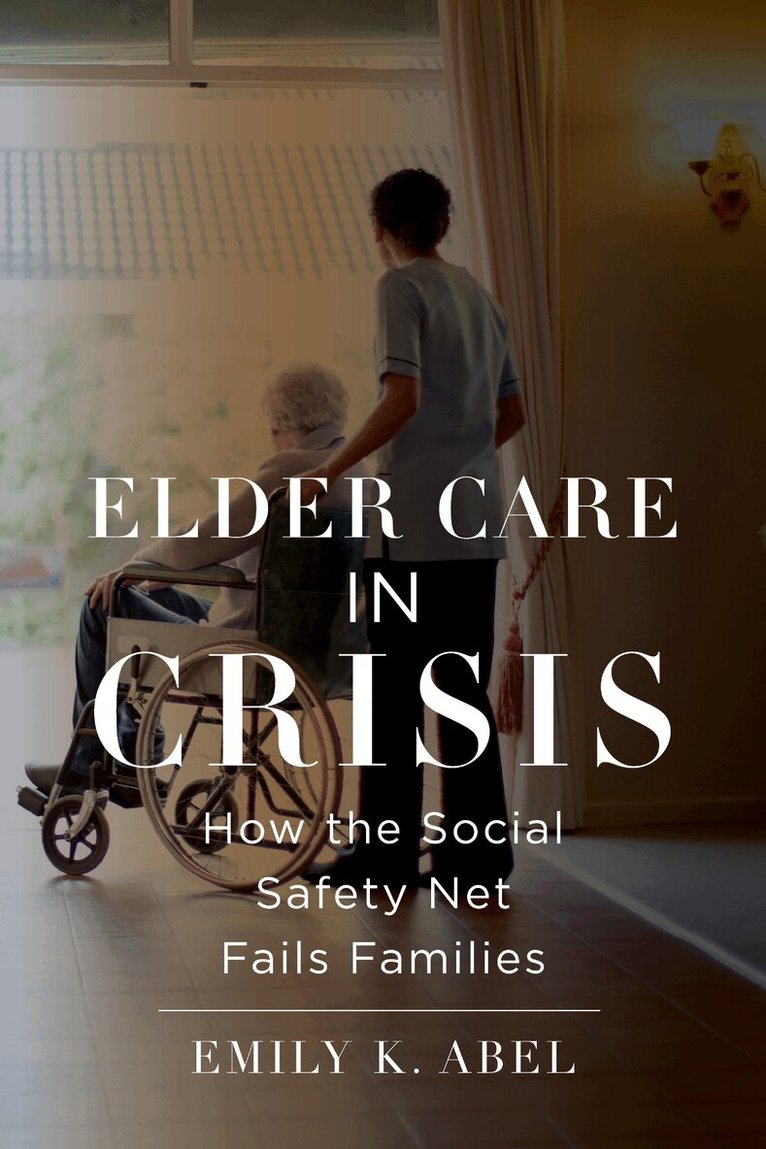
    Elder Care in Crisis

    How the Social Safety Net Fails Families

    AvEmily K. Abel

    Inbunden, Engelska, 2022

    Del i serien Health, Society, and Inequality

    717 kr

    Skickas . Fri frakt över 249 kr.

    Fler format och utgåvor

    Häftad

    238 kr

    Beskrivning

    Explains why there is a crisis in caring for elderly people and how the COVID-19 pandemic exacerbated itBecause government policies are based on an ethic of family responsibility, repeated calls to support family members caring for the burgeoning elderly population have gone unanswered. Without publicly funded long-term care services, many family caregivers cannot find relief from obligations that threaten to overwhelm them. The crisis also stems from the plight of direct care workers (nursing home assistants and home health aides), most of whom are women from racially marginalized groups who receive little respect, remuneration, or job security. Drawing on an online support group for people caring for spouses and partners with dementia, Elder Care in Crisis examines the availability and quality of respite care (which provides temporary relief from the burdens of care), the long, tortuous process through which family members decide whether to move spouses and partners to institutions, and the likelihood that caregivers will engage in political action to demand greater public support. When the pandemic began, caregivers watched in horror as nursing homes turned into deathtraps and then locked their doors to visitors. Terrified by the possibility of loved ones in nursing homes contracting the disease or suffering from loneliness, some caregivers brought them home. Others endured the pain of leaving relatives with severe cognitive impairments at the hospital door and the difficulties of sheltering in place with people with dementia who could not understand safety regulations or describe their symptoms. Direct care workers were compelled to accept unsafe conditions or leave the labor force. At the same time, however, the disaster provided an impetus for change and helped activists and scholars develop a vision of a future in which care is central to social life.Elder Care in Crisis exposes the harrowing state of growing old in America, offering concrete solutions and illustrating why they are necessary.

    Produktinformation

    • Utgivningsdatum:2022-10-01
    • Mått:152 x 229 x 22 mm
    • Vikt:496 g
    • Format:Inbunden
    • Språk:Engelska
    • Serie:Health, Society, and Inequality
    • Antal sidor:232
    • Förlag:New York University Press
    • ISBN:9781479815388

    Utforska kategorier

    • Våld och övergrepp inom Samhälle och politik
    • Sociologi inom Samhälle och politik
    • Sociala grupper och identitet inom Samhälle och politik

    Mer om författaren

    Emily K. Abel is Professor Emerita at the UCLA-Fielding School of Public Health. She is the author of many books, including Hearts of Wisdom: American Women Caring for Kin, 1850-1940; Limited Choices: Mable Jones, A Black Children's Nurse in a Northern White Household (with Margaret K. Nelson); and Elder Care in Crisis: How the Social Safety Net Fails Families. Her book Tuberculosis and the Politics of Exclusion won the 2008 Viseltear Award for outstanding book in the history of public health from the Medical Care Section, American Public Health Association.

    Recensioner i media

    "Abel writes with empathy for direct caregivers as a family caregiver herself as well as a cancer survivor. While we are all familiar with how nursing homes failed during the pandemic, these stories of family members fighting for their institutionalized relatives, still feel new and crucially important to read." (Meika Loe, author of Aging our Way: Lessons for Living from 85 and Beyond) "Drawing upon her deep knowledge and first-person accounts, from the nineteenth century to the COVID-19 pandemic, Emily Abel portrays both the joyful and heart-breaking aspects of family caregivers' struggles to care for elderly people with dementia. This book will spur everyone to ask: why don't we as a country do better for both the elderly and their caregivers?" (Joan C. Tronto, author of Caring Democracy: Markets, Equality and Justice) "Here you have a poignant, thoughtful, and extraordinarily useful account of trends that will curse us all unless we take action now. Call it investment in infrastructure, improved social insurance, commitment to common decency, or all of the above: we need a better, more sustainable system of care provision. The qualitative research highlighted here helps show us the way forward." (Nancy Folbre, author of Valuing Children: Rethinking the Economics of the Family) "The author's observations, anecdotes, and notes yield a perspective that challenges the current system of long-term care. The author eschews providing simplistic answers, allowing those most concerned—currently active caregivers—to speak for themselves." - T. E. Getzen, emeritus, Temple University (CHOICE)