• Fri frakt över 249 kr
  • •
  • Snabba leveranser
  • •
  • Billiga böcker
Kundservice

Du är på sajten för privatpersoner.

Företag, bibliotek eller offentlig verksamhet?

Du handlar på classic.bokus.com, där alla dina funktioner finns intakta.
Till classic.bokus.com
Bokus logotyp. Gå till startsidan.
  • Erbjudanden
  • Nyheter
  • Student
  • Topplistor
  • Barn & ungdom
  • Bokus Play
  • E-böcker
  • Pocketböcker
  • Spel & pussel

10% rabatt på allt med kod: NYSTART10 →

Sidfot

Mina sidor

    Hjälp

    • Kundservice
    • Vanliga frågor och svar
    • Frakt och leverans
    • Retur vid ångerrätt
    • Reklamera vara
    • Betalning
    • Köpvillkor
    • Allmänna villkor
    • Information om webbplatsens tillgänglighet

    Om Bokus

    • Om oss
    • Pressrum
    • För studenter
    • För företag
    • För bibliotek och offentlig verksamhet
    • För leverantörer
    • Hållbarhet

    Populärt

    • Aktuella erbjudanden
    • Presentkort
    • Studentlitteratur
    • Nya böcker
    • Topplistor
    • Signerade böcker
    • Engelska böcker

    Inspiration

    • Boktips
    • BookTok
    • Populära bokserier
    • Barnbokskaraktärer
    • Populära författare
    Logotyp för Bokus
    Följ oss på Facebook (extern länk)Följ oss på Instagram (extern länk)Följ oss på YouTube (extern länk)Följ oss på TikTok (extern länk)
    bokus @ CookiesAnpassa cookiesIntegritetspolicyKöpvillkor
    Till Citymail hemsida (extern länk)Till Budbee hemsida (extern länk)Till Postnord hemsida (extern länk)Till Schenker hemsida (extern länk)Till Early Bird hemsida (extern länk)Till Walleys hemsida (extern länk)
    1. Data och IT
    2. Systemvetenskap och AI

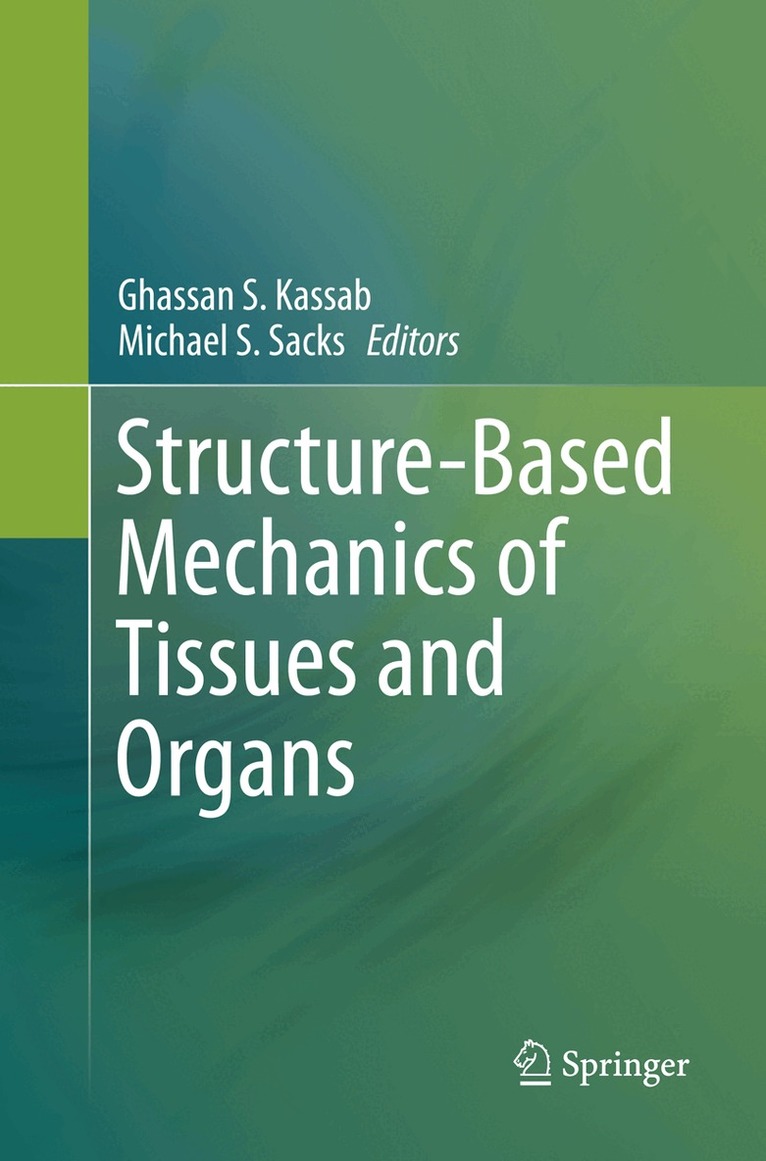
    Structure-Based Mechanics of Tissues and Organs

    AvGhassan S. Kassab,Michael S. Sacks

    Häftad, Engelska, 2018

    1 673 kr

    Beställningsvara. Skickas inom 10-15 vardagar. Fri frakt över 249 kr.

    Beskrivning

    This book portrays the commonality of tissue micro-structure that dictates physiological function in various organs (microstructure-function relation). Tissue and organ models are used to illustrate physiological functions based on microstructure. Fiber scale properties such as orientation and crimp are described in detail. Structurally-based constitutive models are given throughout the book, not only to avoid ambiguities in material characterization, but also to offer insights into the function, structure, and mechanics of tissue components. A statement of future directions of the field is also given, including how advancements, such as state-of-the-art computational modeling and optical measurements of tissue/cells structures, are taking structure-based modeling to the next level.This book also:Provides a comprehensive view of tissue modeling across multiple systemsBroadens readers’ understanding of state-of-the-art computational modeling and optical measurements of tissue/cells structuresDescribes in detail fiber scale properties such as orientation and crimp

    Produktinformation

    • Utgivningsdatum:2018-03-30
    • Mått:155 x 235 x 26 mm
    • Vikt:848 g
    • Format:Häftad
    • Språk:Engelska
    • Antal sidor:469
    • Förlag:Springer-Verlag New York Inc.
    • ISBN:9781493979387

    Utforska kategorier

    • Systemvetenskap och AI inom Data och IT
    • Biovetenskap inom Naturvetenskap och teknik
    • Biomedicinsk teknik inom Medicin

    Innehållsförteckning

    • Chapter 1 The Influence of Microstructure on Neural Tissue Mechanics.- Chapter 2 Modeling a Collagenous Tissues Using Distributed Fiber Orientations.- Chapter 3 Emergent Behaviors in Cell Mechanics.- Chapter 4 Histomechanical Modeling of the Wall of Abdominal Aortic Aneurysm.- Chapter 5 The Biomechanics of Fat: From Tissue to a Cell Scale.- Chapter 6 Glaucoma and Structure-Based Mechanics of the Lamina Cribrosa at Multiple Scales.- Chapter 7 From Stress-Strain Relations to Formulation of Growth and Remodeling Theories: A Historical Reflection on Microstructurally-Motivated Constitutive Relations.- Chapter 8 Relationship Between Structure and Mechanics for Membranous Tissues.- Chapter 9 Structure-Function Relations in the Coronary Vasculature.- Chapter 10 Biomechanical Basis of Myocardium/Vessel Interaction: Implications for Patho-Physiology and Therapy.- Chapter 11 Microstructure-Based Constitutive Models for Coronary Artery Adventitia.- Chapter 12 Structural-Based Models of Ventricular Myocardium.- Chapter 13 Structure-Based Constitutive Model of Coronary Media.- Chapter 14 Biomechanics of the Cornea and Sclera.- Chapter 15 Mechanical Modeling of Skin.- Chapter 16 Undesirable Anisotropy in a Discrete Fiber Bundle Model of Fibrous Tissues.-     Chapter 17 Structural Models as Applied to Engineered Tissue Scaffolds.- Chapter 18 Finite Element Implementation of Structural Models.- Chapter 19 A Microvascular Model in Skeletal Muscle Fascia.- Chapter 20 Network Approaches to the Mechanical Failure of Soft Tissues: Implications for Disease and Tissue Engineering.