• Fri frakt över 249 kr
  • •
  • Snabba leveranser
  • •
  • Billiga böcker
Kundservice

Du är på sajten för privatpersoner.

Företag, bibliotek eller offentlig verksamhet?

Du handlar på classic.bokus.com, där alla dina funktioner finns intakta.
Till classic.bokus.com
Bokus logotyp. Gå till startsidan.
  • Erbjudanden
  • Nyheter
  • Student
  • Topplistor
  • Barn & ungdom
  • Bokus Play
  • E-böcker
  • Pocketböcker
  • Spel & pussel

Må bättre, för mindre! Upp till 50% rabatt på hälsoböcker

Sidfot

Mina sidor

    Hjälp

    • Kundservice
    • Vanliga frågor och svar
    • Frakt och leverans
    • Retur vid ångerrätt
    • Reklamera vara
    • Betalning
    • Köpvillkor
    • Allmänna villkor
    • Information om webbplatsens tillgänglighet

    Om Bokus

    • Om oss
    • Pressrum
    • För studenter
    • För företag
    • För bibliotek och offentlig verksamhet
    • För leverantörer
    • Hållbarhet

    Populärt

    • Aktuella erbjudanden
    • Presentkort
    • Studentlitteratur
    • Nya böcker
    • Topplistor
    • Signerade böcker
    • Engelska böcker

    Inspiration

    • Boktips
    • BookTok
    • Populära bokserier
    • Barnbokskaraktärer
    • Populära författare
    Logotyp för Bokus
    Följ oss på Facebook (extern länk)Följ oss på Instagram (extern länk)Följ oss på YouTube (extern länk)Följ oss på TikTok (extern länk)
    bokus @ CookiesAnpassa cookiesIntegritetspolicyKöpvillkor
    Till Citymail hemsida (extern länk)Till Budbee hemsida (extern länk)Till Postnord hemsida (extern länk)Till Schenker hemsida (extern länk)Till Early Bird hemsida (extern länk)Till Walleys hemsida (extern länk)
    1. Samhälle och politik
    2. Samhälle och kultur
    3. Kultur och medier
    4. Kulturvetenskap

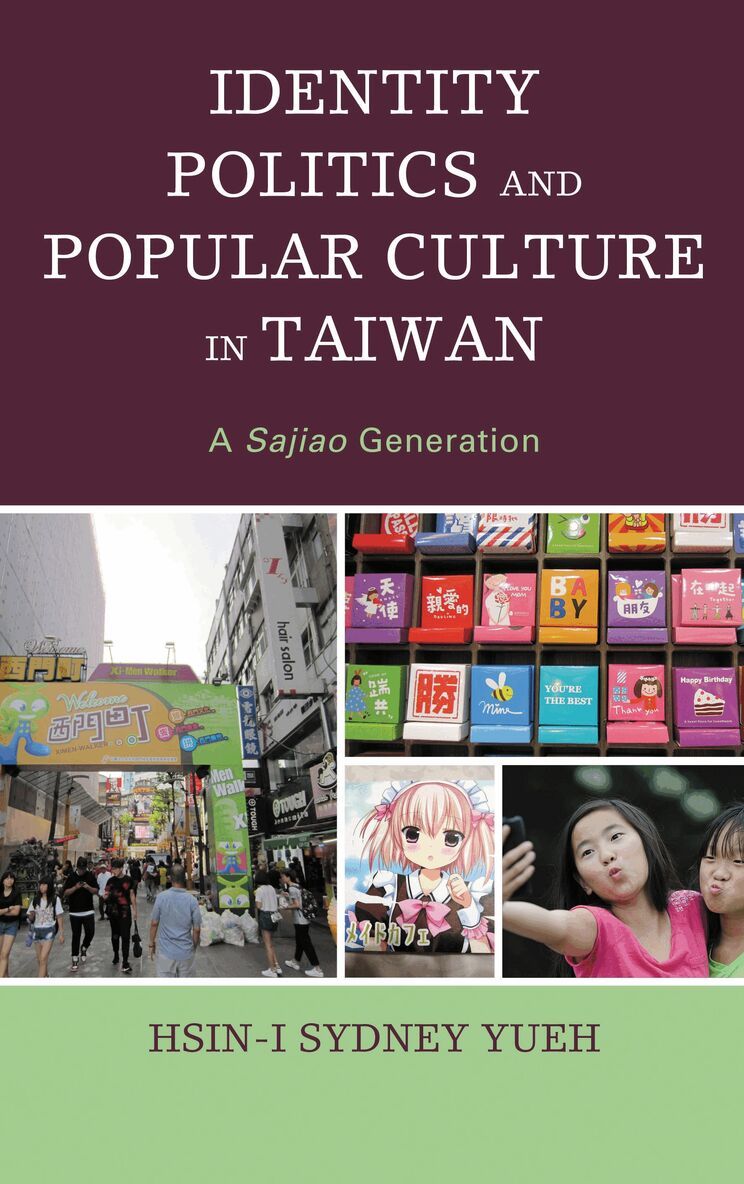
    Identity Politics and Popular Culture in Taiwan

    A Sajiao Generation

    AvHsin-I Sydney Yueh

    Inbunden, Engelska, 2016

    1 256 kr

    Beställningsvara. Skickas inom 10-15 vardagar. Fri frakt över 249 kr.

    Fler format och utgåvor

    Häftad

    562 kr

    Beskrivning

    In the past two decades, a uniform representation of cutified femininity prevails in the Taiwanese media, evidenced by the shift of Taiwan’s popular cultural taste from a Chinese-centered tradition to a mixed absorption from neighboring cultural capitals in the global market. This book argues that the native term “sajiao” is the key to understand the phenomenon. Originally referring to a set of persuasive tactics through imitating a spoiled child’s gestures and ways of speaking to get attention or material goods, sajiao is commonly understood to be women’s weapon to manipulate men in the Mandarin-speaking communities. By re-interpreting sajiao as a “feminine” tactic, or the tactic of the weak, the book aims to propose a “feminine framework” in exploring identity politics in the following three aspects: the rising obsession with the immature female image in Taiwan’s popular culture, the adoption of the feminine communication style in native speakers’ everyday language and interactions, and the competing discourses between dominant/subordinate, central/peripheral, global/local, and Chinese/Taiwanese in shaping the identity politics in current Taiwanese society. The micro-analysis of everyday language politics leads the reader to examine layers of discourse about gender, identity, and communication, and finally to inquire how to situate or categorize “Taiwan” in area studies. The “feminine framework” is a useful theoretical tool that not only deconstructs everyday communication practice but also provides a bottom-up, alternative angle in analyzing Taiwan’s role in political, economic, and cultural flows in East Asia.The massive imports of popular cultural products in the late 80s, mainly from Japan, fermented the kawaii (Japanese cute) type of femininity in regulating everyday communication and the perception of gender roles in Taiwan. The popularity of the baby-like female image is concurrent with the simmering debate on Taiwanese identity. Taiwan offers a unique perspective for observing identity politics because it still holds an undetermined status in the international community. The collective uncertainty about the island’s future and the diminishing voice in the international society become the backdrop for the growth of defining, interpreting, and appropriating sajiao elements in the popular culture. This book offers an in-depth examination of the interplay among local historical contexts, cross-border capitalist exchange, and everyday communication that shapes the dialogism of Taiwanese identity.

    Produktinformation

    • Utgivningsdatum:2016-12-07
    • Mått:161 x 237 x 19 mm
    • Vikt:454 g
    • Format:Inbunden
    • Språk:Engelska
    • Antal sidor:222
    • Förlag:Bloomsbury Publishing Plc
    • ISBN:9781498510325
    • Utmärkelser:2018 International and Intercultural Communication Division (IICD) Best Book Award

    Utforska kategorier

    • Kulturvetenskap inom Samhälle och politik
    • Nationalekonomi inom Ekonomi och Ledarskap
    • Antropologi inom Samhälle och politik

    Mer om författaren

    Hsin-I Sydney Yueh is associate professor of communication at Northeastern State University.

    Recensioner i media

    Hsin-I Yueh offers us the most complete and thorough analysis to date of sajiao in Taiwan…. By offering a holistic view of what sajiao means, this book is a significant addition to scholarship…. Yueh’s book leads to a further understanding of Taiwan’s complicated national, regional, and marginal identity. Anyone eager to learn more about Taiwan pop culture, everyday culture, communication and identity now have a marvelous resource, while scholars interested in an original analysis of sajiao will be able to turn to this book for insight.

    Innehållsförteckning

    • Note on Asian Names and Traditional Chinese Character UsagesChapter 1: Introduction: The Necessity of Going “Feminine”Chapter 2: The Word of Sajiao: The Gendered Body and LanguageChapter 3: The Uses of Sajiao: Identity Construction in Everyday CommunicationChapter 4: Situating Sajiao in the Age of GlobalizationChapter 5: The Dialogic Struggle of Becoming TaiChapter 6: Conclusion: Toward Taiwan Studies