• Fri frakt över 249 kr
  • •
  • Snabba leveranser
  • •
  • Billiga böcker
Kundservice

Du är på sajten för privatpersoner.

Företag, bibliotek eller offentlig verksamhet?

Du handlar på classic.bokus.com, där alla dina funktioner finns intakta.
Till classic.bokus.com
Bokus logotyp. Gå till startsidan.
  • Erbjudanden
  • Nyheter
  • Student
  • Topplistor
  • Barn & ungdom
  • Bokus Play
  • E-böcker
  • Pocketböcker
  • Spel & pussel

10% rabatt på allt med kod: NYSTART10 →

Sidfot

Mina sidor

    Hjälp

    • Kundservice
    • Vanliga frågor och svar
    • Frakt och leverans
    • Retur vid ångerrätt
    • Reklamera vara
    • Betalning
    • Köpvillkor
    • Allmänna villkor
    • Information om webbplatsens tillgänglighet

    Om Bokus

    • Om oss
    • Pressrum
    • För studenter
    • För företag
    • För bibliotek och offentlig verksamhet
    • För leverantörer
    • Hållbarhet

    Populärt

    • Aktuella erbjudanden
    • Presentkort
    • Studentlitteratur
    • Nya böcker
    • Topplistor
    • Signerade böcker
    • Engelska böcker

    Inspiration

    • Boktips
    • BookTok
    • Populära bokserier
    • Barnbokskaraktärer
    • Populära författare
    Logotyp för Bokus
    Följ oss på Facebook (extern länk)Följ oss på Instagram (extern länk)Följ oss på YouTube (extern länk)Följ oss på TikTok (extern länk)
    bokus @ CookiesAnpassa cookiesIntegritetspolicyKöpvillkor
    Till Citymail hemsida (extern länk)Till Budbee hemsida (extern länk)Till Postnord hemsida (extern länk)Till Schenker hemsida (extern länk)Till Early Bird hemsida (extern länk)Till Walleys hemsida (extern länk)
    1. Samhälle och politik
    2. Sociologi och antropologi
    3. Antropologi

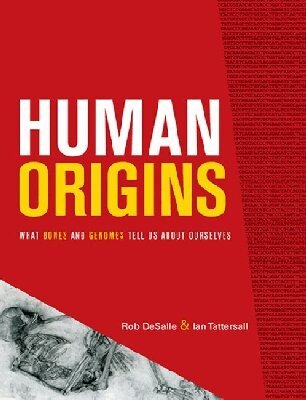
    Human Origins

    What Bones and Genomes Tell Us About Ourselves

    AvRob DeSalle,Ian Tattersall

    Häftad, Engelska, 2012

    Del 13 i serien Texas a&M University Anthropology Series

    322 kr

    Beställningsvara. Skickas inom 5-8 vardagar. Fri frakt över 249 kr.

    Beskrivning

    Ever since the recognition of the Neanderthals as an archaic human in the mid-nineteenth century, the fossilized bones of extinct humans have been used by paleoanthropologists to explore human origins. These bones told the story of how the earliest humans—bipedal apes, actually—first emerged in Africa some 6 to 7 million years ago. Starting about 2 million years ago, the bones revealed, as humans became anatomically and behaviorally more modern, they swept out of Africa in waves into Asia, Europe and finally the New World.Even as paleoanthropologists continued to make important discoveries—Mary Leakey’s Nutcracker Man in 1959, Don Johanson’s Lucy in 1974, and most recently Martin Pickford’s Millennium Man, to name just a few—experts in genetics were looking at the human species from a very different angle. In 1953 James Watson and Francis Crick first saw the double helix structure of DNA, the basic building block of all life. In the 1970s it was shown that humans share 98.7% of their genes with the great apes—that in fact genetically we are more closely related to chimpanzees than chimpanzees are to gorillas. And most recently the entire human genome has been mapped—we now know where each of the genes on the chromosomes that make up DNA is located on the double helix.In Human Origins: What Bones and Genomes Tell Us about Ourselves, two of the world’s foremost scientists, geneticist Rob DeSalle and paleoanthropologist Ian Tattersall, show how research into the human genome confirms what fossil bones have told us about human origins. This unprecedented integration of the fossil and genomic records provides the most complete understanding possible of humanity’s place in nature, its emergence from the rest of the living world, and the evolutionary processes that have molded human populations to be what they are today.Human Origins serves as a companion volume to the American Museum of Natural History’s new permanent exhibit, as well as standing alone as an accessible overview of recent insights into what it means to be human.

    Produktinformation

    • Utgivningsdatum:2012-03-30
    • Mått:177 x 251 x 15 mm
    • Vikt:660 g
    • Format:Häftad
    • Språk:Engelska
    • Serie:Texas a&M University Anthropology Series
    • Antal sidor:216
    • Förlag:Texas A & M University Press
    • ISBN:9781603445184

    Utforska kategorier

    • Antropologi inom Samhälle och politik
    • Biovetenskap inom Naturvetenskap och teknik
    • Människans biologi inom Naturvetenskap och teknik

    Mer om författaren

    Ron DeSalle is a curator at the American Museum of Natural History in the Sackler Institute for Comparative Genomics. He curated the American Museum of Natural History's new Hall of Human Origins (2006) and has written more than 300 peer-reviewed scientific publications and several books. Tattersall and DeSalle recently coauthored Human Origins: What Bones and Genomes Tell Us about Ourselves (Texas A&M University Press, 2007).Ian Tattersall, curator emeritus in the American Museum of Natural History, is also the author of Paleontology: A Brief History of Life (Templeton Press, 2010), The Fossil Trail: How We Know What We Think We Know about Human Evolution (Oxford University Press, 2009), and The World from Beginnings to 4000 BCE (Oxford University Press, 2008)

    Recensioner i media

    . . . an authoritative and fun publication that will be accessible to anyone with even the faintest recollection of high school biology or any curiosity whatsoever about how we came to be the way we are. - The Quarterly Review of Biology