• Fri frakt över 249 kr
  • •
  • Snabba leveranser
  • •
  • Billiga böcker
Kundservice

Du är på sajten för privatpersoner.

Företag, bibliotek eller offentlig verksamhet?

Du handlar på classic.bokus.com, där alla dina funktioner finns intakta.
Till classic.bokus.com
Bokus logotyp. Gå till startsidan.
  • Erbjudanden
  • Nyheter
  • Student
  • Topplistor
  • Barn & ungdom
  • Bokus Play
  • E-böcker
  • Pocketböcker
  • Spel & pussel

10% rabatt på allt med kod NYSTART10 →

Sidfot

Mina sidor

    Hjälp

    • Kundservice
    • Vanliga frågor och svar
    • Frakt och leverans
    • Retur vid ångerrätt
    • Reklamera vara
    • Betalning
    • Köpvillkor
    • Allmänna villkor
    • Information om webbplatsens tillgänglighet

    Om Bokus

    • Om oss
    • Pressrum
    • För studenter
    • För företag
    • För bibliotek och offentlig verksamhet
    • För leverantörer
    • Hållbarhet

    Populärt

    • Aktuella erbjudanden
    • Presentkort
    • Studentlitteratur
    • Nya böcker
    • Topplistor
    • Signerade böcker
    • Engelska böcker

    Inspiration

    • Boktips
    • BookTok
    • Populära bokserier
    • Barnbokskaraktärer
    • Populära författare
    Logotyp för Bokus
    Följ oss på Facebook (extern länk)Följ oss på Instagram (extern länk)Följ oss på YouTube (extern länk)Följ oss på TikTok (extern länk)
    bokus @ CookiesAnpassa cookiesIntegritetspolicyKöpvillkor
    Till Citymail hemsida (extern länk)Till Budbee hemsida (extern länk)Till Postnord hemsida (extern länk)Till Schenker hemsida (extern länk)Till Early Bird hemsida (extern länk)Till Walleys hemsida (extern länk)
    1. Medicin
    2. Andra medicinska specialiteter
    3. Behandling och behandlingsmetoder
    4. Tal- och språkstörningar

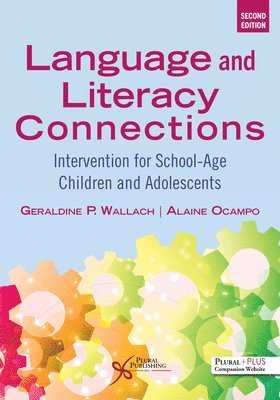
    Language and Literacy Connections

    Intervention for School-Age Children and Adolescents

    AvGeraldine P. Wallach,Alaine Ocampo

    Häftad, Engelska, 2025

    1 714 kr

    Beställningsvara. Skickas inom 5-8 vardagar. Fri frakt över 249 kr.

    Fler format och utgåvor

    Häftad

    1 714 kr

    Beskrivning

    Language and Literacy Connections: Intervention for School-Age Children and Adolescents, Second Edition takes readers on a path of knowledge steeped in principles and practical applications. Integrating language learning, disorders, and literacy together in a coherent and cohesive narrative, it covers the challenges facing school-age students from early elementary levels through high school. Using past and current research from speech-language pathology (SLP) and reading and literacy arenas, the authors present transcripts, cases, and detailed intervention sessions to provide a template for daily practice. The text provides some answers to one of the most complex, yet basic, questions: “Why am I doing this?” The text has four major goals: (1) to encourage readers to evaluate past and current clinical and educational practices in language intervention at school-age levels; (2) to present intervention goals and activities that are theoretically-sound but may require further research scrutiny; (3) to explore aspects of curriculum-relevant language intervention for students with language learning disabilities; (4) to provide guidelines for school-based practitioners that clarify how professionals with diverse backgrounds and roles share responsibility in language, literacy, and academic programming. With its strong focus on language and language disorders, this text serves as a valuable resource for teachers and other specialists who collaborate with school-based speech-language pathologists (SLPs) to support students with language learning disabilities (LLD).New to the Second EditionA new chapter, “Application Activities to Stretch Your Knowledge,” includes problems with possible answers and rationales that review significant concepts in language and literacy with a focus on adolescentsA road map to scenarios and reports and key information at the beginning of the text Application activities in Chapter 10 with icons that highlight easy access to key information and connections with understanding the “Whys”Key FeaturesQuestions at the beginning of each chapter that reflect concerns of SLPs and their teamsProjects and assignments that supplement and review the materialExamples of teaching modules with practical lesson plans that integrate the role of SLPs in Interprofessional Practices (IPP) while explicitly addressing the curriculum across a variety of subject areas

    Produktinformation

    • Utgivningsdatum:2025-06-20
    • Mått:178 x 254 x 23 mm
    • Vikt:668 g
    • Format:Häftad
    • Språk:Engelska
    • Antal sidor:351
    • Upplaga:2
    • Förlag:Plural Publishing Inc
    • ISBN:9781635507300

    Utforska kategorier

    • Tal- och språkstörningar inom Medicin
    • Sociala grupper och identitet inom Samhälle och politik

    Mer om författaren

    Geraldine P. Wallach, PhD, CCC-SLP, is Professor Emerita in the Department of Speech-Language Pathology at California State University, Long Beach. Her special area of expertise is language and literacy in school-age children and adolescents. An ASHA Fellow and ASHA Honoree, she has published and presented widely at national, state, local, and international levels.Alaine Ocampo, PhD, CCC-SLP, is an Associate Professor inthe Department of Speech-Language Pathology at California State University,Long Beach. Her areas of research are in language-based learning disorders inschool-age children, culturally responsive practices, collaboration, andschool-based issues. She has a long history of practice, administration andsupervision.

    Innehållsförteckning

    • ForewordPrefaceAcknowledgmentsQuick Reference: Road Map to Topics and Cases (Table A)Part I: Conceptual Frameworks for ConsiderationChapter 1. Innovative Language-Literacy Intervention, Principles and Strategies for Success: What It Takes to Get ThereSummary StatementQuestions for Chapter 1Forming a Framework for Language Intervention, Some Beginnings: What Is Your Definition of Language? Of Literacy?On LanguageOn LiteracyBrief Summary of Definitional IssuesAspects of Knowledge Needed in Clinicians’ Toolboxes: Peeling Away Some Misconceptions and Moving ForwardKeeping Definitional Issues in Mind: Language Has LayersKeeping a Broad-Based Perspective: The Forest Versus the TreesGetting Beneath Isolated Symptoms of Language Learning Problems: “Tip-of-the-Iceberg” PhenomenonAppreciating the Reciprocity Among Systems: Beware the One-Way Street InterpretationApproaching Assessment and Intervention With an “Inside” and “Outside” Perspective: External Factors MatterA Mini-SummaryGetting to Innovative Language-Literacy Intervention: Where Do We Go From Here?Language Roots Provide a Familiar Framework for Speech-Language Pathologists as They Embrace Roles in Literacy LearningTo Conclude and Move ForwardReflections and Projects for Chapter 1Chapter 2. The Continuum of Language Disorders and Learning Disabilities: Definitional and Eligibility Issues From Historical and Current PerspectivesSummary StatementQuestions for Chapter 2    Introductory ThoughtsDefinitions and Diagnostic Labels: Interesting Interactions for Clinicians to NoteLanguage Disorders TerminologyLearning Disabilities TerminologyRelated and Intersecting Terminology: Language at the Core?Additional Terminology: Alive and Well in Schools (and Other Places)Partial Summary: Language, Language Disorder, and Reading Along a ContinuumAn Introductory Road Map of Language Disorders and Language Learning Over TimeLabels Revisited: Disorders Viewed on a Continuum of ChangeLanguage Learning on a Continuum of Changing Styles, Contexts, and DemandsThe Path From Language Disorders to Learning DisabilitiesReciprocityIllusionary RecoveryPopulations Revisited: Alternatives in Our Midst?Statistics Suggest Some Patterns Within SchoolsThe Evolution of Response to InterventionSome Key Takeaways for Speech-Language Pathologist and CollaboratorsLooking AheadReflections and Projects for Chapter 2Scenarios: Language and Learning DisabilitiesScenario 1Scenario 2: Eligibility ConsiderationsReflections and Projects for Chapter 2Chapter 3. Integrating Spoken and Written Language: How Early Does Becoming Literate Begin?Summary StatementQuestions for Chapter 3Social/Communicative Language and Academic Language: A River and Highway Intersecting Across TimeThe Conversations in Early Reading Routines: A Social Experience Connected to Academic SuccessScenario 1Scenario 2Scenario 3What the Scenarios Say to UsPrint Awareness: Another Bridge to LiteracyScenario 4Language Intervention Within Literature-Based Frameworks: Pulling the Pieces Together by Linking the Forest and the TreesScenario 5Scenario 6Summary Points From the Scenarios: Early Reading Routines, Print Awareness, and Literature-Based Frameworks Meet on the Road to LiteracyThe Horizon Looms Large: Connecting Early and Later Literacy ExperiencesFast Forward to Grade 5The Continuum Revisited: Keeping the “Big Picture” in MindThe Early Stage (Preschool and Very Beginnings of School: Kindergarten and Grade 1)The Middle Stage (Grades 2–6)Advanced Stage (Grades 5–6 and Beyond)In Closing for NowReflections and Projects for Chapter 3Chapter 4. From Preliteracy to the Literacies of School: How Curriculum-Relevant InterventionBeginsSummary StatementQuestions for Chapter 4Curriculum-Based Intervention: Some BeginningsMath Is Language and a Symbol System on Top of an Existing Symbol SystemExamples From Grade 6 Provide Additional Insights Into the Complexity of Language in Curricula ContentOpportunities for Speech-Language Pathologists: What Language Do Our Students Need to Access and Acquire Curricular Knowledge?Reflections: What the Math Examples Say to UsCurriculum-Relevant Intervention Continued: A Historical ExampleReflections: Speech-Language Pathologists and HistoryCurriculum-Relevant Intervention Continued: A Look at ScienceA Closer Look at the Language of Science: What Speech-Language Pathologists Need to KnowIn Sum: The Importance of Understanding Disciplinary Literacy    For Speech-Language Pathologists, the Following Points Might Be HighlightedRoles and Responsibilities: Introduction to the Long Road to ClarificationRevisiting Clinicians’ Perceptions About Daily Practice: Roles in Literacy and BeyondThoughts on Shared Responsibilities in LiteracyEnding CommentsReflections and Projects for Chapter 4Content-Area ExcerptsPart II: A Bridge to Ongoing Practical ApplicationsChapter 5. Exploring Elements of Processing and Comprehension: Areas Often Misunderstood at School-Age LevelsSummary StatementQuestions for Chapter 5Second Language Learning Experiences: Do They Help Us Understand Language Disorders and Related Symptoms?Processing and Comprehension Challenges in French: Based on a True StoryThe Language ParticipantsFirst ScenarioSecond ScenarioLast ScenarioWhat the Scenarios Say to Clinicians: Factors to Consider When Creating Language Intervention GoalsCases in Point: Perceptual and Language Knowledge RevisitedAuditory Discrimination and New VocabularyAuditory Figure-Ground and Language ProficiencySome Classic MisstepsCase 1Case 2Case 3Case 4Where Do the Cases Take Us?Beware of Quick and Easy AnswersConcepts From Information Processing Theory Offer Insights Into Language Learning DisabilitiesThe Concept of Mental ModelsThe Idea of Competing ResourcesThe Role of AutomaticityFrom Information Processing Considerations to the Metalinguistic ComponentReflections and Projects for Chapter 5Chapter 6. What Language Intervention “Looks Like” at School-Age Levels: The Intervention –Assessment ConnectionSummary StatementKey Questions for Chapter SixWho Should Be Called “Language Disordered”? Selected Thoughts RevisitedPrinciples of Assessment at School-Age Levels: Broader Paths to InterventionConsider the Following Five Assessment PrinciplesFive Assessment TakeawaysSnapshots From Clinical Sessions That Demonstrate Aspects of What Language Intervention “Looks Like” at School-Age LevelsSnapshot #1Snapshot #2Snapshot #3Snap Shot #4 (Taking a More In-Depth Look at a Language Intervention Session)Snapshot Summary: A Review of Our Five Principles and BeyondAsking Additional Questions About School-Age InterventionLanguage Underlying Academic TasksThe Knowledge, Skills, and Strategies TriadQuestion SummaryTaking a Closer Look at What Intervention Goals Might Look LikeGoing Back to the Theoretical Base for Additional Examples of Intervention DirectionsSentence Comprehension: Some General PointsSentence Comprehension: Some Classics From the Psycholinguistic LiteratureFrom Theory to Practice: How Might We Bridge the Gap?A Phonemic Segmentation Cover SheetFrom the Student to the Context: Back to Classroom and Curricular ConcernsThe Culture of Schools Encased in Teacher Talk: More of What It TakesCurricular Issues Revisited: Even More “What It Takes” ExamplesSome Preliminary Closing Thoughts: What It Must Be Like to Have a Language DisorderIntervention Is a Complex Balance of Many Variables: Chewing Gum and Walking at the Same TimeIn ClosingReflections and Projects for Chapter 6Chapter 7. Seeing the World Through Connected Text: Bringing Structure and Content, Macroand Micro Pieces Together (Part 1)Summary StatementQuestions for Chapter 7What Written Language Samples May Tell UsDissection of the Mars Piece: Keep the Disciplinary Literacy of Science in MindMicrostructureDisciplinary Literacy Revisited: Keep Science in MindSummary: From Written Samples, to Textbooks, To Knowing Text RequirementsDiscourse Sampling and Additional Resources for ConsiderationA Useful Discourse ProtocolStudents With Language Learning Disabilities and the Hadley ProtocolNarrative and Expository Text: Taking an Even Closer LookAdditional Patterns in Connected Text: Selected Examples From the FieldRevisiting Some Generalities About Text and Text ProcessingMoving OnAcknowledgments for Chapter 7Reflections and Projects for Chapter 7Chapter 8. Seeing the World Through Connected Text: Bringing Structure and Selected Micro Pieces Together (Part 2)Summary StatementQuestions for Chapter 8Syntactic Skill and Word Knowledge: Moving Toward Successful Strategic Acquisition and UseSyntactic ConsiderationsHelping Students Appreciate, Recognize, and Use Literate FormsA Closer Look: Word Knowledge and SkillWord Savvy Summary: A Curriculum Connection Worth RepeatingWhat “Strategic” Language Intervention Looks LikeSelected Samples to Help Students Become More StrategicSchool’s Back in Session: An Integration of Components and Disciplinary Literacies of Science and Social StudiesScience RevisitedCreating Authenticity: A Pragmatic NotionUsing Accessible Text to Create Content KnowledgeUnderstanding the Text Itself: Matching Text Activities to Content-Area SubjectsHistory Repeats Itself: Some RemindersToward a Summary: Macro and Micro Components Come Together in a Backdrop Drawn From Classroom ContentStop Light OrganizationReally FinallyAcknowledgmentsReflections and Projects for Chapter 8        Part III: Toward a SummaryChapter 9. Back Into the Field: Starting to Pull the Missing Pieces TogetherSummary StatementQuestions for Chapter 9State-of-the-Art in Public Education: Finding a Collaborative BalanceBrief Thoughts as We Look BackState Standards: An Example of Keeping Language Functional and RelevantEnglish Language Arts ContentFrom Grades 7 and 8From Grade FiveLooking Across the State StandardsExplicit Common Core State Standards Connections With Disciplinary LiteracyExamples of an In-Class History Lesson for Middle School (Sixth Grade)Reading HistorySample LessonThe Middle KingdomKeep the Conversation GoingReflections and Projects for Chapter 9Chapter 10. The End Becomes a New Beginning: Evaluating Intervention Sessions and SequencesSummary StatementQuestions for Chapter 10Why Am I Doing This? A Meta-Exploration of Selected Cases and Strategic ActivitiesActivities: At-a-GlanceCase: Linking Strategies With “The Why’s”Activities Focused on Vocabulary/Word KnowledgeActivity 1: BrainstormingActivity 2: Rating ChecklistActivity 3: Predict-O-GramActivity 4: PoetryActivity 5: Sentence/Paragraph Completion TaskActivity 6: Curriculum-Based Cohesion TaskActivity 7: Multiple MeaningsActivity 8: Before/During/After Reading StrategiesActivities Focused on Literate-Style Forms in Both Reading and WritingActivity 9: Persuasive Writing FrameActivity 10: Understanding Passive FormsActivity 11: ParaphrasingEnding on a Positive NoteChapter 11. Application Activities to Stretch Your KnowledgeHow Would You Respond to Each Problem?Problem 1Problem 2Problem 3Problem 4Problem 5Problem 6Problem 7Problem 8Problem 9Problem 10Problem 11Problem 12Answer Options and Rationales for Problem 1Correct AnswerAnswer Options and Rationales for Problem 2Answer Options and Rationales for Problem 3    Answer Options and Rationales for Problem 4Answer Options and Rationales for Problem 5Answer Options and Rationales for Problem 6Answer Options and Rationales for Problem 7Answer Options and Rationales for Problem 8Answer Options and Rationales for Problem 9Answer Options and Rationales for Problem 10Answer Options and Rationales for Problem 11Answer Options and Rationales for Problem 12AppendicesReferences