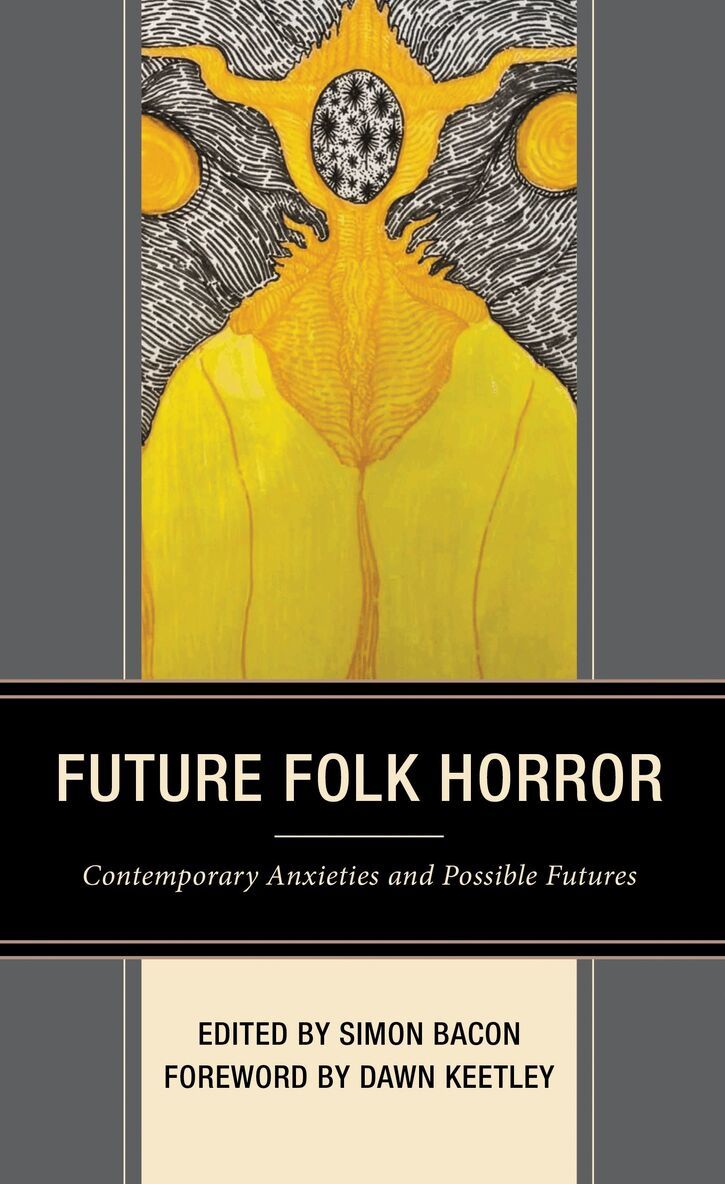
Inbunden, Engelska, 2023
Future Folk Horror
Contemporary Anxieties and Possible Futures
Av Simon Bacon
Del i serien Research in Horror Studies
1344 kr
Beställningsvara. Skickas inom 10-15 vardagar. Fri frakt över 249 kr.
Beskrivning
Produktinformation
- Utgivningsdatum: 2023-07-24
- Mått: 159 x 237 x 27 mm
- Vikt: 671 g
- Format: Inbunden
- Språk: Engelska
- Serie: Research in Horror Studies
- Antal sidor: 346
- Förlag: Bloomsbury Publishing Plc
- Medarbetare: Dawn Keetley
- ISBN: 9781666921236
Utforska kategorier
Mer om författaren
Simon Bacon is an independent scholar and film critic based in Poznan, Poland.
Recensioner i media
The popularity of such films as The Witch (2015) and Midsommar (2019) signaled the arrival of an era of folk horror. This subgenre found its initial cinematic manifestation in the UK-produced Blood on Satan’s Claw (1971), Witchfinder General (1968), and The Wicker Man (1973). In his introduction to this collection editor Simon Bacon writes that these films feature a “location (landscape), which ... causes isolation ... produces a skewed moral or religious perspective, and ... ultimately leads to summoning or happening” (p. 2). Bacon realizes that such a definition is limiting and does not accurately reflect the current state of contemporary or even future folk horror, and he is not content to simply cobble together considerations of previously surveyed films. Rather he presses at the limits of what constitutes a scholarly volume. Along with the expected essays on canonical films, the reader will find a new short story reflective of the subgenre and haunting images termed “visual interventions” that bring an unexpected quality to the project. With essays on haunted attractions, The Witcher video game series, Spanish fairy tales, and regional horror cinema, this unique, noteworthy contribution to horror scholarship not only expands understanding of the subgenre, but also serves to direct the future of folk horror studies. Highly recommended. Upper-division undergraduates through faculty; professionals.
Betyg & recensioner
0 recensioner
Inga recensioner tillgängliga.