Inbunden, Engelska, 2024
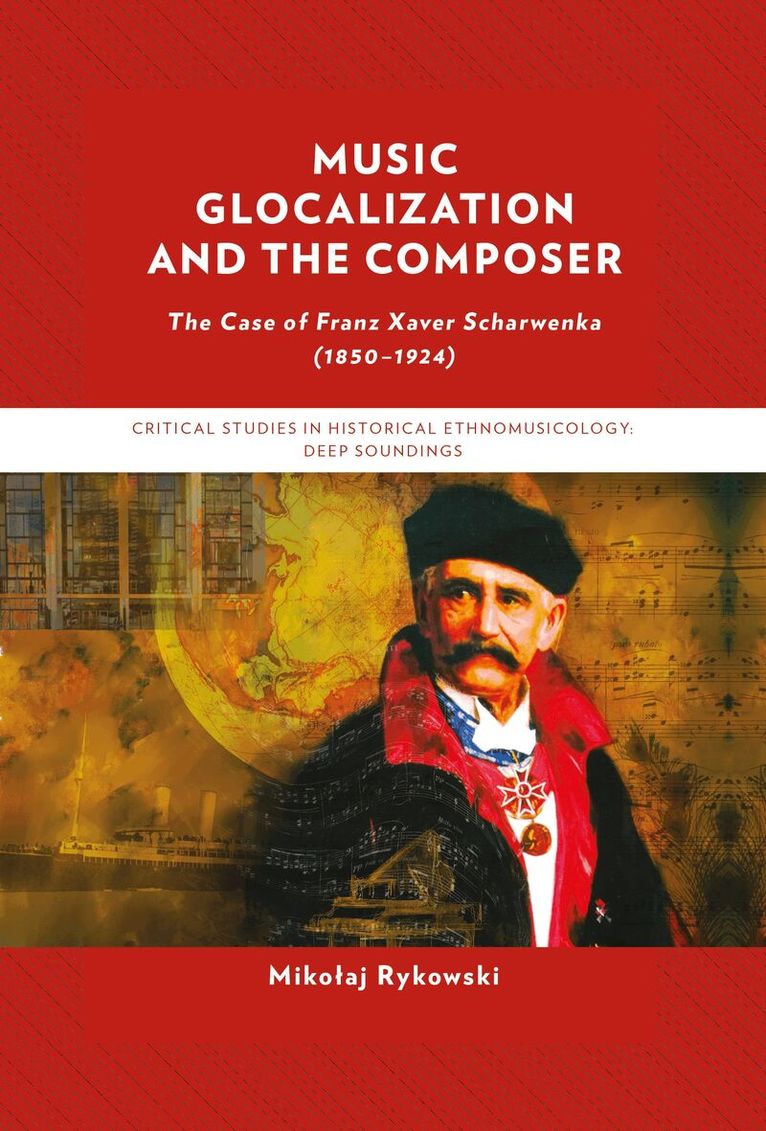
Music Glocalization and the Composer
The Case of Franz Xaver Scharwenka (1850-1924)
Del i serien Critical Studies in Historical Ethnomusicology: Deep Soundings
1094 kr
Beställningsvara. Skickas inom 10-15 vardagar. Fri frakt över 249 kr.
Beskrivning
Produktinformation
- Utgivningsdatum: 2024-02-27
- Mått: 158 x 236 x 19 mm
- Vikt: 426 g
- Format: Inbunden
- Språk: Engelska
- Serie: Critical Studies in Historical Ethnomusicology: Deep Soundings
- Antal sidor: 160
- Förlag: Bloomsbury Publishing Plc
- ISBN: 9781666936834
Utforska kategorier
Mer om författaren
Mikolaj Rykowski is a musicologist and musician, currently serving as vice-rector, and is the head of the Music Theory Department at The I.J. Paderewski Academy of Music in Poznan.
Recensioner i media
Music Glocalization and the Composer: The Case of Franz Xaver Scharwenka by Mikolaj Rykowski proposes a discussion of the relationship between artistic contexts of a different scale: the pan-European, supposedly ‘universal’ context of art music and the local circumstances of practicing music within a specific, historical community. The study skillfully connects the broad, theoretical approach of social sciences, mainly sociology and anthropology, with detailed historical and musicological analysis, to show how widely accepted general rules of music-making function in unique local environment. This book by Rykowski is then an important contribution both to conceptual discussion of the ‘glocalization’ phenomenon and to the theoretically informed history of musical practices in Europe. It also brings an insight into possibilities of interpretation of individual artistic output—Scharwenka’s one in this case—within the frame of broad socio-cultural processes.
Betyg & recensioner
0 recensioner
Inga recensioner tillgängliga.