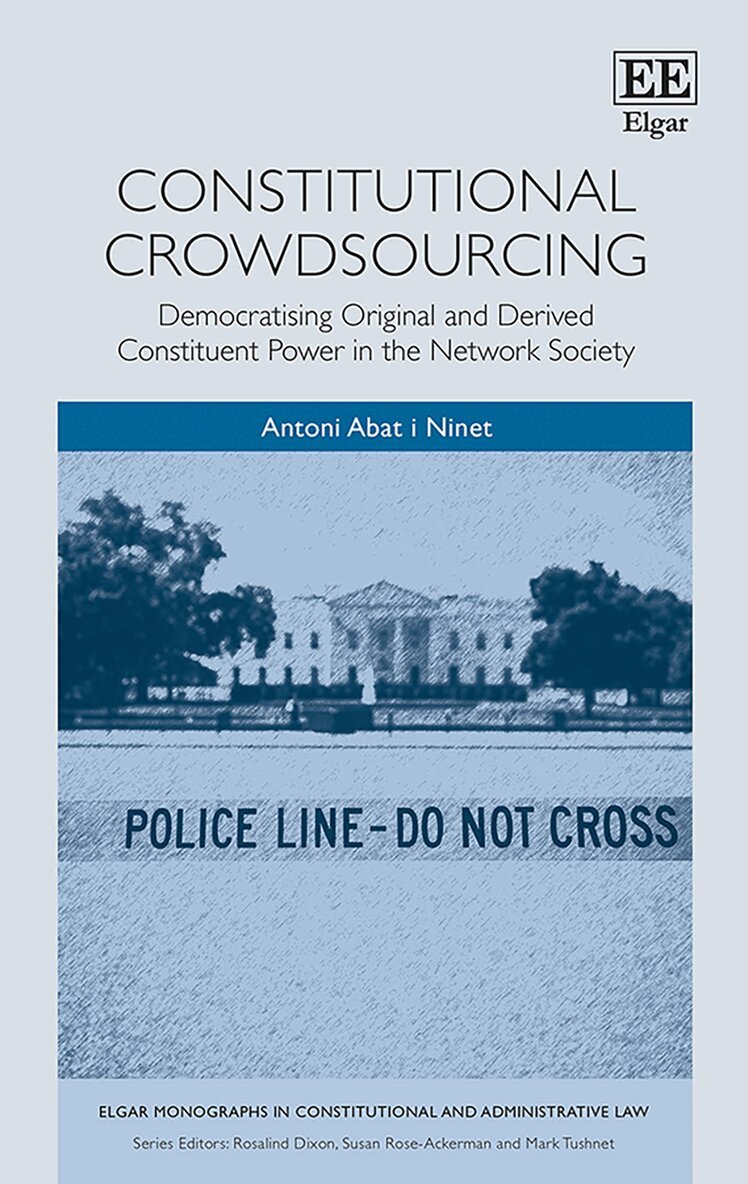
Inbunden, Engelska, 2021
Constitutional Crowdsourcing
Democratising Original and Derived Constituent Power in the Network Society
Del i serien Elgar Monographs in Constitutional and Administrative Law
1483 kr
Beställningsvara. Skickas inom 7-10 vardagar. Fri frakt över 249 kr.
Beskrivning
Produktinformation
- Utgivningsdatum: 2021-11-26
- Mått: 156 x 234 x undefined mm
- Format: Inbunden
- Språk: Engelska
- Serie: Elgar Monographs in Constitutional and Administrative Law
- Förlag: Edward Elgar Publishing Ltd
- ISBN: 9781786430502
Utforska kategorier
Mer om författaren
Antoni Abat i Ninet, Universitat autònoma de Barcelona, Spain
Recensioner i media
‘A fascinating meditation about the implications of the new technologically and digitally connected world we now all live in for such fundamental conceptions as the identity of “a singular ‘people’”in whose name sovereignty is claimed. At a more concrete level, should we welcome the genuine possibility that people connected to the modern internet could become the source of new constitutions and the legitimacy attached to them? Along the way, the author provides important discussions of the traditional animosity, in most political theory, to the demos, often described in terms of being a “mob,” or a “crowd,” resistant to the necessary leadership of wise elites. The tendencies identified by Professor Abat i Ninet are bound to be ever more important in the future, perhaps in ways we can scarcely envision at present.’
Betyg & recensioner
0 recensioner
Inga recensioner tillgängliga.