• Fri frakt över 249 kr
  • •
  • Snabba leveranser
  • •
  • Billiga böcker
Kundservice

Du är på sajten för privatpersoner.

Företag, bibliotek eller offentlig verksamhet?

Du handlar på classic.bokus.com, där alla dina funktioner finns intakta.
Till classic.bokus.com
Bokus logotyp. Gå till startsidan.
  • Erbjudanden
  • Nyheter
  • Student
  • Topplistor
  • Barn & ungdom
  • Bokus Play
  • E-böcker
  • Pocketböcker
  • Spel & pussel

10% rabatt på allt med kod: NYSTART10 →

Sidfot

Mina sidor

    Hjälp

    • Kundservice
    • Vanliga frågor och svar
    • Frakt och leverans
    • Retur vid ångerrätt
    • Reklamera vara
    • Betalning
    • Köpvillkor
    • Allmänna villkor
    • Information om webbplatsens tillgänglighet

    Om Bokus

    • Om oss
    • Pressrum
    • För studenter
    • För företag
    • För bibliotek och offentlig verksamhet
    • För leverantörer
    • Hållbarhet

    Populärt

    • Aktuella erbjudanden
    • Presentkort
    • Studentlitteratur
    • Nya böcker
    • Topplistor
    • Signerade böcker
    • Engelska böcker

    Inspiration

    • Boktips
    • BookTok
    • Populära bokserier
    • Barnbokskaraktärer
    • Populära författare
    Logotyp för Bokus
    Följ oss på Facebook (extern länk)Följ oss på Instagram (extern länk)Följ oss på YouTube (extern länk)Följ oss på TikTok (extern länk)
    bokus @ CookiesAnpassa cookiesIntegritetspolicyKöpvillkor
    Till Citymail hemsida (extern länk)Till Budbee hemsida (extern länk)Till Postnord hemsida (extern länk)Till Schenker hemsida (extern länk)Till Early Bird hemsida (extern länk)Till Walleys hemsida (extern länk)
    1. Språk och ordböcker
    2. Språkundervisning och språkinlärning

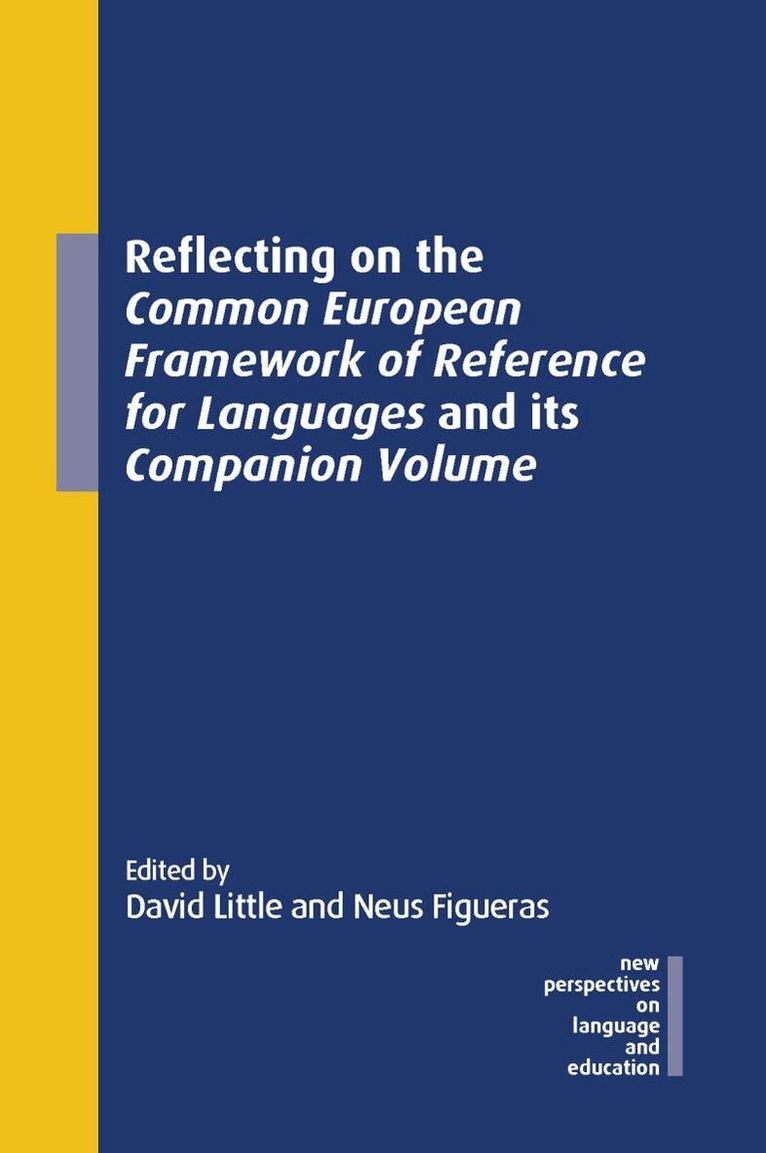
    Reflecting on the Common European Framework of Reference for Languages and its Companion Volume

    AvDavid Little,Neus Figueras

    Häftad, Engelska, 2022

    Del 104 i serien New Perspectives on Language and Education

    470 kr

    Beställningsvara. Skickas inom 5-8 vardagar. Fri frakt över 249 kr.

    Beskrivning

    The Common European Framework of Reference for Languages (CEFR) and its Companion Volume have established themselves as an indispensable reference point for all aspects of second and foreign language education. This book discusses the impact of the CEFR on curricula, teaching/learning and assessment in a wide range of educational contexts, identifies challenges posed by the Companion Volume and sheds light on areas that require further research and development. Particular attention is paid to three features of the two documents: their action-oriented approach, their focus on plurilingualism, and the potential of their scales and descriptors to support the alignment of curricula, teaching/learning and assessment. The book suggests a way forward for future engagement with the CEFR, taking account of new developments in applied linguistics and related disciplines.

    Produktinformation

    • Utgivningsdatum:2022-03-02
    • Mått:156 x 234 x 12 mm
    • Vikt:320 g
    • Format:Häftad
    • Språk:Engelska
    • Serie:New Perspectives on Language and Education
    • Antal sidor:208
    • Förlag:Multilingual Matters
    • ISBN:9781800410183

    Utforska kategorier

    • Språkundervisning och språkinlärning inom Språk och ordböcker
    • Examination och betygsättning inom Psykologi och pedagogik

    Mer om författaren

    David Little is a Fellow Emeritus of Trinity College Dublin, Ireland. He has been a regular contributor to the Council of Europe’s language education projects since the 1980s. In 2010, the National University of Ireland awarded him an honorary doctorate in recognition of his contribution to language education in Ireland and further afield.Neus Figueras coordinated the development of foreign language curricula and certificate examinations for adult language learners in the Catalan ministry of education in Spain for over 20 years. She has been involved in international projects and collaborated with the Council of Europe in the dissemination of the CEFR. She was one of the authors of the Manual for Relating Examinations to the CEFR (Council of Europe, 2009).

    Recensioner i media

    The authors of the different chapters are experienced users of the CEFR who provide a wide range of contrasting and complementary perspectives. Their contributions demonstrate the open, dynamic nature of the reference instrument, and while the book adopts a positive approach to the CEFR and the CV, the authors also point to issues that require further work. This publication is a timely reminder of the challenges in implementing plurilingual and intercultural education and the further potential of the CEFR and CV in that regard.

    Innehållsförteckning

    • AcknowledgementsContributorsDavid Little and Neus Figueras: IntroductionPart 1: The Common European Framework of Reference for Languages: Past, Present and FutureDavid Little: IntroductionChapter 1. Masashi Negishi: The Impact of The CEFR in JapanChapter 2. Margaret E. Malone: ACTFL and CEFR: Relationships, Influences and Looking ForwardChapter 3. Brian North: The CEFR Companion Volume Project: What Has Been Achieved Part 2: The Action-oriented Approach: A Change of Paradigm?David Little: IntroductionChapter 4. John H.A.L. de Jong: The Action-oriented Approach and Language Testing: A Critical ViewChapter 5. Mark Levy and Neus Figueras: The Action-Oriented Approach in The CEFR and The CEFR Companion Volume: A Change of Paradigm(s)? A Case Study from SpainChapter 6. Constant Leung: Action-oriented Plurilingual Mediation: A Search for Fluid FoundationsPart 3: Plurilingualism, Plurilingual Education and Mediation David Little: IntroductionChapter 7. Bessie Dendrinos: A Data-driven Curriculum with Mediation Descriptors for Plurilingual Education Chapter 8. Peter Lenz: Some Thoughts about the Testing of MediationChapter 9. Déirdre Kirwan and David Little: Implementing Plurilingual Education: The Experience of an Irish Primary SchoolPart 4: Descriptors, Scales and Constructive AlignmentDavid Little: IntroductionChapter 10. Armin Berger: Refining the Vertical Axis of the CEFR for Classroom Purposes: Local Reference PointsChapter 11. Elaine Boyd: Commonality versus Localization in CurriculaChapter 12. Elif Kantarcıoğlu: The CEFR Companion Volume and Mediation: An Assessment Perspective  Part 5: AfterwordChapter 13. Barry O’Sullivan: Making the CEFR Work: Considerations for a Future RoadmapIndex