• Fri frakt över 249 kr
  • •
  • Snabba leveranser
  • •
  • Billiga böcker
Kundservice

Du är på sajten för privatpersoner.

Företag, bibliotek eller offentlig verksamhet?

Du handlar på classic.bokus.com, där alla dina funktioner finns intakta.
Till classic.bokus.com
Bokus logotyp. Gå till startsidan.
  • Erbjudanden
  • Nyheter
  • Student
  • Topplistor
  • Barn & ungdom
  • Bokus Play
  • E-böcker
  • Pocketböcker
  • Spel & pussel

10% rabatt på allt med kod NYSTART10 →

Sidfot

Mina sidor

    Hjälp

    • Kundservice
    • Vanliga frågor och svar
    • Frakt och leverans
    • Retur vid ångerrätt
    • Reklamera vara
    • Betalning
    • Köpvillkor
    • Allmänna villkor
    • Information om webbplatsens tillgänglighet

    Om Bokus

    • Om oss
    • Pressrum
    • För studenter
    • För företag
    • För bibliotek och offentlig verksamhet
    • För leverantörer
    • Hållbarhet

    Populärt

    • Aktuella erbjudanden
    • Presentkort
    • Studentlitteratur
    • Nya böcker
    • Topplistor
    • Signerade böcker
    • Engelska böcker

    Inspiration

    • Boktips
    • BookTok
    • Populära bokserier
    • Barnbokskaraktärer
    • Populära författare
    Logotyp för Bokus
    Följ oss på Facebook (extern länk)Följ oss på Instagram (extern länk)Följ oss på YouTube (extern länk)Följ oss på TikTok (extern länk)
    bokus @ CookiesAnpassa cookiesIntegritetspolicyKöpvillkor
    Till Citymail hemsida (extern länk)Till Budbee hemsida (extern länk)Till Postnord hemsida (extern länk)Till Schenker hemsida (extern länk)Till Early Bird hemsida (extern länk)Till Walleys hemsida (extern länk)
    1. Filosofi och religion
    2. Filosofi
    3. Populärfilosofi

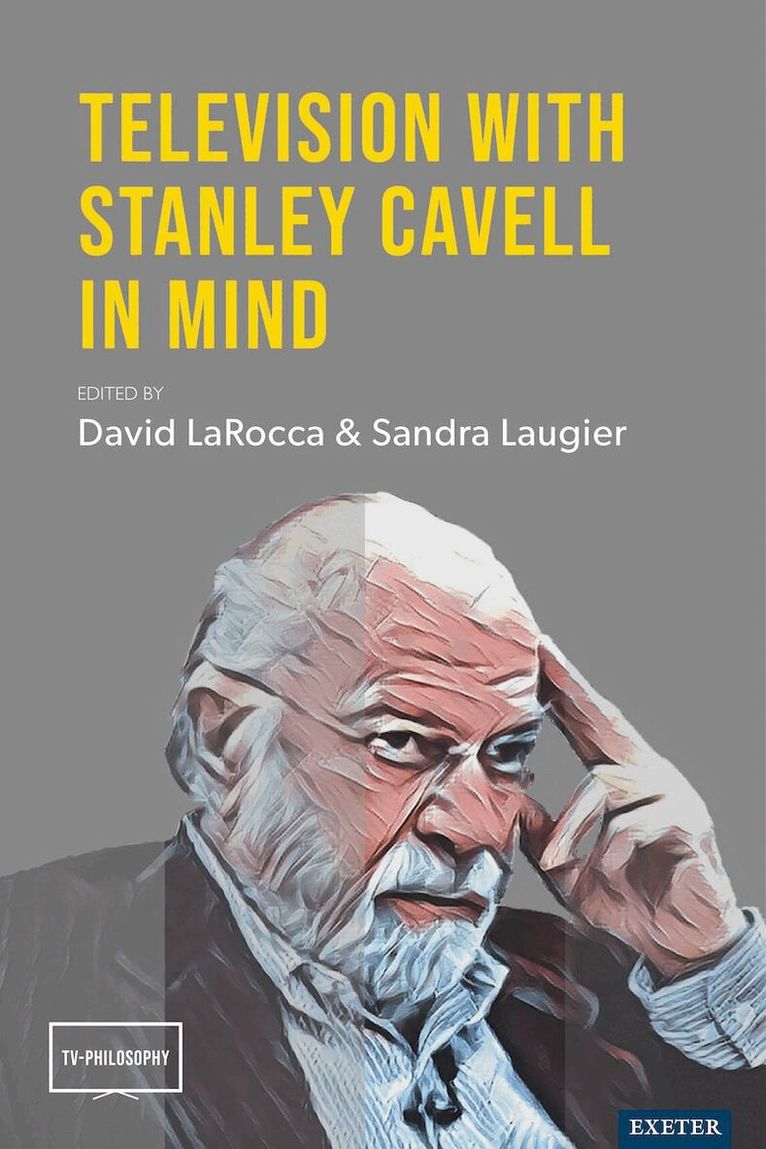
    Television with Stanley Cavell in Mind

    AvDavid LaRocca,Sandra Laugier

    Inbunden, Engelska, 2023

    Del i serien TV Philosophy

    1 741 kr

    Beställningsvara. Skickas inom 5-8 vardagar. Fri frakt över 249 kr.

    Beskrivning

    This collection of new work on the philosophical importance of television starts from a model for reading films proposed by Stanley Cavell, whereby film in its entirety—actors and production included—brings its own intelligence to its realization. In turn, this intelligence educates us as viewers, leading us to recognize and appreciate our individual cinephilic tastes, and to know ourselves and each other better. This reading is even more valid for TV series. Yet, in spite of the progress of film-philosophy, there has been a paucity of concurrent analysis of the ethical stakes, the modes of expressiveness, and the moral education involved in television series. Perhaps most conspicuously, there has been a lack of focus on the experience of the viewer. Cavell highlighted popular cinema's capacity to create a common culture for millions. This power has become dispersed across other bodies of work and practices, most notably TV series, which have largely appropriated the responsibility of widening the perspectives of their publics, a role once associated with the silver screen. Just as Cavell's reading of films involved moral perfectionism in its intent, this project is also perfectionist, extending a similar aesthetic and ethical method to readings of the small screen. Because TV series are works that are public and thus shared, and often global in reach, they fulfil an educational role—whether intended or not—and one that enables viewers to anchor and appreciate the value of their everyday experiences.Contributions from: William Rothman, Martin Shuster, Elisabeth Bronfen, Hugo Clémot, David LaRocca, Jeroen Gerrits, Stephen Mulhall, Michelle Devereaux, Thibaut de Saint-Maurice, Hent de Vries, Catherine Wheatley, Byron Davies, Sandra Laugier, Paul Standish, Robert Sinnerbrink.

    Produktinformation

    • Utgivningsdatum:2023-05-30
    • Mått:156 x 234 x 30 mm
    • Vikt:708 g
    • Format:Inbunden
    • Språk:Engelska
    • Serie:TV Philosophy
    • Antal sidor:348
    • Förlag:University of Exeter Press
    • ISBN:9781804130186

    Utforska kategorier

    • Populärfilosofi inom Filosofi och religion
    • Filosofiska discipliner inom Filosofi och religion
    • Television inom Kultur

    Mer om författaren

    David LaRocca studied philosophy, film, rhetoric, and religion at Buffalo, Berkeley, Vanderbilt, and Harvard. He is the author or contributing editor of more than a dozen books, including a suite of volumes in film-philosophy: The Philosophy of Charlie Kaufman (2011), The Philosophy of War Films (2014), The Philosophy of Documentary Film: Image, Sound, Fiction, Truth (2017). More recently he edited The Thought of Stanley Cavell and Cinema: Turning Anew to the Ontology of Film a Half-Century after The World Viewed (2020), Inheriting Stanley Cavell: Memories, Dreams, Reflections (2020), and Movies with Stanley Cavell in Mind (2021). Sandra Laugier, a former student at the Ecole normale supérieure and at Harvard University, is Professor of Philosophy at Université Paris 1 Panthéon Sorbonne. She has published extensively on ordinary language philosophy (Wittgenstein, Austin, Cavell), moral and political philosophy, gender studies and the ethics of care, popular film, and TV series, and is the author of over 30 books in total, including Why We Need Ordinary Language Philosophy (2013), and Politics of the Ordinary: Care, Ethics, and Forms of Life (2020). She is a columnist at the French Journal Libération, and is the translator of Stanley Cavell’s work in French.

    Innehållsförteckning

    • Introduction: The Fact and Fiction of Television: Stanley Cavell and the Terms of Television Philosophy DAVID LaROCCA and SANDRA LAUGIERDOI: 10.47788/KRMY5433PART I: NEW TELEVISION 1. Justifying Justified WILLIAM ROTHMANDOI: 10.47788/AGFC4945 2. ‘You Get Paid for Pain’: Kingdom and New Television MARTIN SHUSTERDOI: 10.47788/LUXS1638 3. To See and to Stop: The Problem of Abdication in Succession ELISABETH BRONFENDOI: 10.47788/ZIFG7093 4. When TV is on TV: Metatelevision and the Art of Watching TV with the Royal Family in The Crown DAVID LaROCCADOI: 10.47788/WIGS5588PART II: BIG PERFECTIONISM ON THE SMALL SCREEN 5. It’s My Party and I’ll Die Even If I Don’t Want To: Repetition, Acknowledgment, and Cavellian Perfectionism in Russian Doll MICHELLE DEVEREAUXDOI: 10.47788/XVUL5590 6. ‘Nobody’s Perfect’: Moral Imperfectionism in Ozark HENT de VRIESDOI: 10.47788/VCBJ3466 7. A Zigzag of a Hundred Tacks: Narrative Complexity in The Good Place CATHERINE WHEATLEYDOI: 10.47788/TTNJ9122 8. Im/Moral Perfectionism: On TV’s Two Worlds JEROEN GERRITSDOI: 10.47788/LPIC1465PART III: EVERYDAY EDUCATION 9. The Sublime and the American Dream in Fargo HUGO CLÉMOTDOI: 10.47788/FIVE2115 10. TV Time, Recurrence, and the Situation of the Spectator: An Approach via Stanley Cavell, Raúl Ruiz, and Ruiz’s Late Chilean Series Litoral (2008) BYRON DAVIESDOI: 10.47788/UUOB5662 11. Education about Trust in Homeland THIBAUT de SAINT MAURICEDOI: 10.47788/YQZP9599 12. Small Acts PAUL STANDISHDOI: 10.47788/UWMZ4497PART IV: POPULAR TV AND ITS GENRES 13. The Event of Television: Sitcoms, Superheroes, and WandaVision STEPHEN MULHALLDOI: 10.47788/ZDKW6571 14. Love, Remarriage, and The Americans SANDRA LAUGIERDOI: 10.47788/CWPQ2215 15. True Detective: Existential Scepticism and Television Crime Drama ROBERT SINNERBRINKDOI: 10.47788/WMOI4740Index