• Fri frakt över 249 kr
  • •
  • Snabba leveranser
  • •
  • Billiga böcker
Kundservice

Du är på sajten för privatpersoner.

Företag, bibliotek eller offentlig verksamhet?

Du handlar på classic.bokus.com, där alla dina funktioner finns intakta.
Till classic.bokus.com
Bokus logotyp. Gå till startsidan.
  • Erbjudanden
  • Student
  • Topplistor
  • Barn & ungdom
  • Bokus Play
  • E-böcker
  • Ljudböcker
  • Pocketböcker
  • Spel och pussel

Pocketfynda! Hundratals böcker för 49 kr/st →

Sidfot

Mina sidor

    Hjälp

    • Kundservice
    • Vanliga frågor och svar
    • Frakt och leverans
    • Retur vid ångerrätt
    • Reklamera vara
    • Betalning
    • Köpvillkor
    • Allmänna villkor
    • Information om webbplatsens tillgänglighet

    Om Bokus

    • Om oss
    • Pressrum
    • För studenter
    • För företag
    • För bibliotek och offentlig verksamhet
    • För leverantörer
    • Hållbarhet

    Populärt

    • Aktuella erbjudanden
    • Presentkort
    • Studentlitteratur
    • Nya böcker
    • Topplistor
    • Signerade böcker
    • Engelska böcker

    Inspiration

    • Boktips
    • BookTok
    • Barnbokskaraktärer
    • Populära författare
    Logotyp för Bokus
    Följ oss på Facebook (extern länk)Följ oss på Instagram (extern länk)Följ oss på YouTube (extern länk)Följ oss på TikTok (extern länk)
    bokus @ CookiesAnpassa cookiesIntegritetspolicyKöpvillkor
    Till Citymail hemsida (extern länk)Till Budbee hemsida (extern länk)Till Postnord hemsida (extern länk)Till Schenker hemsida (extern länk)Till Early Bird hemsida (extern länk)Till Walleys hemsida (extern länk)
    1. Kultur
    2. Konstböcker
    3. Konstformer
    4. Övriga konstformer

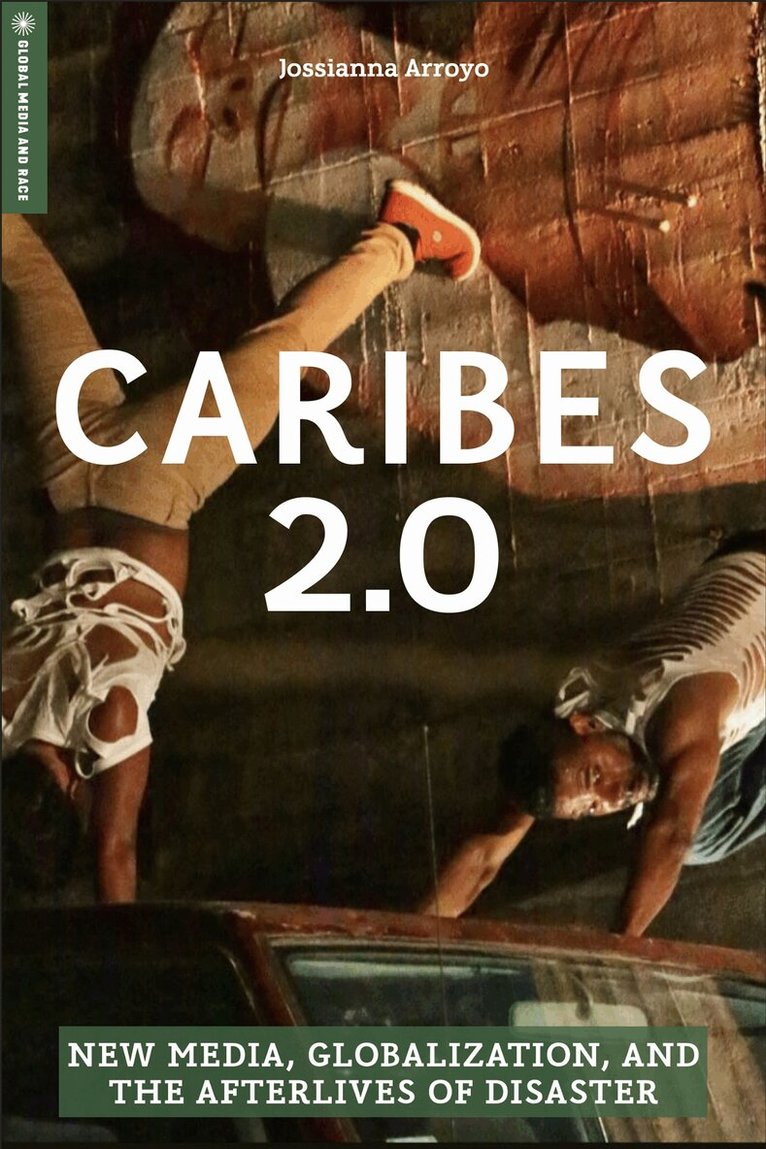
    Caribes 2.0

    New Media, Globalization, and the Afterlives of Disaster

    AvJossianna Arroyo

    Inbunden, Engelska, 2023

    1 747 kr

    Beställningsvara. Skickas inom 5-8 vardagar. Fri frakt över 249 kr.

    Fler format och utgåvor

    Häftad

    372 kr

    Beskrivning

    In Caribes 2.0, author Jossianna Arroyo looks at the Caribbean mediasphere in the twenty-first century. Arroyo argues that we have seen a return to tropes such as blackface, brownface, cultural and ethnic stereotypes, and violent representations of the poor, the marginalized, and the racialized. Caribes 2.0 looks at these tropes as well as the work of writers, vloggers, performers, and photographers that have become media figures or have used new media platforms to promote their work and examines how they are challenging and negotiating these media representations. It analyzes contemporary Caribbean cultures to discuss, taste, guides, and actions (social and virtual) that shape Caribbean global communities today. Departing from Edouard Glissant's insight that "Caribbean reality might not be accessed by remote control" the book considers what types of political and social agencies are created by mediation. Caribes 2.0 deviates from these historical-globalized views of subjected, colonized Caribbean bodies, and their material conditions, to examine the relationship between the local and the global in contemporary Caribbean cultures, and the role that media is playing in the invisibility or hyper-visibilty of Caribbean cultures in the islands and the U.S. diaspora.

    Produktinformation

    • Utgivningsdatum:2023-04-14
    • Mått:156 x 235 x 18 mm
    • Vikt:64 g
    • Format:Inbunden
    • Språk:Engelska
    • Antal sidor:198
    • Förlag:Rutgers University Press
    • ISBN:9781978819757

    Utforska kategorier

    • Övriga konstformer inom Kultur
    • Etnicitet inom Samhälle och politik
    • Medievetenskap inom Samhälle och politik

    Mer om författaren

    JOSSIANNA ARROYO is a professor in the Department of Spanish and Portuguese and the Department of African and African Diaspora at the University of Texas, Austin. She is author of Travestismos culturales: literatura y etnografía en Cuba y Brasil and Writing Secrecy in Caribbean Freemasonry.

    Recensioner i media

    "Jossianna Arroyo offers a magistral deconstruction of 21st-century forms of necropolitics insidiously wielded via Twitter, Youtube, Instagram, Facebook, TikTok, and other digital platforms; television; and literary and cinematic production. With sophisticated straightforwardness, Arroyo compels us to critically look at the too-familiar imagery accompanying the invention and reproduction of Caribbean otherness across centuries and nations."— Odette Casamayor-Cisneros, associate professor of Latin American and Caribbean Literatures and Cultures, University of Pennsylv"Caribes 2.0 is an invitation to understand the Caribbean beyond the notion of spectacle as entertainment and ruination. . . . It is a significant contribution to analyzing the Transnational Hispanic Caribbean through media, not only traditional hegemonic media but also emerging media and more participatory diffusion technologies such as the internet."— New West Indian Guide"A compelling collection for any scholar intrigued by the contemporary media landscape of the Caribbean. [It] offers a deep dive into the mediascapes and media flow within and across the Spanish Caribbean and its diasporas, enriching the reader's understanding of cultural interplay and communication more generally. Arroyo-Martínez's contribution stands out, too, for its foresight, competently laying the foundation around which future scholars will rally as they navigate the evolving narrative of a Caribes 3.0 engaged with burgeoning technologies like the metaverse and artificial intelligence. In sum, this book is an essential read for anyone invested in the intersection of Caribbean studies and visual culture."— Centro Journal"Caribes 2.0 offers canny insight into the logics of visibility, performance and politics that blossom in the mediascapes of a globalized Caribe. Refusing easy takes, the book tracks the afterlives of slavery and ongoing anti-Black racism as they morph and reassemble in twenty-first-century Caribbean media. Moving seamlessly between TikTok and Televisa, Santo Domingo and Orlando, Arroyo offers fascinating readings of what 'viral' racial images and outlaw performativity reveal about neoliberal codes for self-making—and their refusal."— Rachel Price, associate professor of Spanish and Portuguese, Princeton University"Focusing on the complexities behind Caribbean mediascapes, Jossianna Arroyo's Caribes 2.0 represents an important and timely contribution to Caribbean, Latin American, Latinx, Afro-diasporic, media, and cultural studies. This provocative study does not shy away from addressing controversial topics (such as blackface) or lesser-known figures and cultural products, thus offering us a blueprint for engaging in the critical analysis of various forms of cultural expression, even those that have not been traditionally considered 'worthy' of academic attention because of race or class origins."— Latino Studies"Breaks new theoretical and methodological ground in the study of new Latinx media and contemporary Caribbean culture. . . . Arroyo lucidly foregrounds the ways in which the body provides a means of self-affirmation, and alternately, defiance against disaster politics, pushing against racial, class, and gender boundaries. Richly illustrated with color photographs and frame grabs, her book delineates a new zone of media understanding, theorization, and appreciation."— Symposium: A Quarterly Journal in Modern Literatures"Jossianna Arroyo's Caribes 2.0 brings a variety of understudied sources to light, providing a fruitful addition to media scholarship and Caribbean studies. Most strikingly, her work forms part of a wave of Caribbean scholarship that regards the visual prominence of Black and brown death and precarity in processes of racialization. Caribes 2.0 will prove especially useful to researchers of contemporary Caribbean cultural production and virtual economies."— Film Quarterly

    Innehållsförteckning

    • 1 Caribbean Mediascapes: After the Image 2 Enacting Others: Blackface, Brownface, and Caribbean Selves3 Ratchetness and Vlogging the Self4 Cities of the Dead: Performing Life in the Caribbean5 Indebted Citizenships and Afterlives of DisasterAcknowledgmentsNotesWorks CitedIndex