• Fri frakt över 249 kr
  • •
  • Snabba leveranser
  • •
  • Billiga böcker
Kundservice

Du är på sajten för privatpersoner.

Företag, bibliotek eller offentlig verksamhet?

Du handlar på classic.bokus.com, där alla dina funktioner finns intakta.
Till classic.bokus.com
Bokus logotyp. Gå till startsidan.
  • Erbjudanden
  • Nyheter
  • Student
  • Topplistor
  • Barn & ungdom
  • Bokus Play
  • E-böcker
  • Pocketböcker
  • Spel & pussel

10% studentrabatt med kod TERM26

Sidfot

Mina sidor

    Hjälp

    • Kundservice
    • Vanliga frågor och svar
    • Frakt och leverans
    • Retur vid ångerrätt
    • Reklamera vara
    • Betalning
    • Köpvillkor
    • Allmänna villkor
    • Information om webbplatsens tillgänglighet

    Om Bokus

    • Om oss
    • Pressrum
    • För studenter
    • För företag
    • För bibliotek och offentlig verksamhet
    • För leverantörer
    • Hållbarhet

    Populärt

    • Aktuella erbjudanden
    • Presentkort
    • Studentlitteratur
    • Nya böcker
    • Topplistor
    • Signerade böcker
    • Engelska böcker

    Inspiration

    • Boktips
    • BookTok
    • Populära bokserier
    • Barnbokskaraktärer
    • Populära författare
    Logotyp för Bokus
    Följ oss på Facebook (extern länk)Följ oss på Instagram (extern länk)Följ oss på YouTube (extern länk)Följ oss på TikTok (extern länk)
    bokus @ CookiesAnpassa cookiesIntegritetspolicyKöpvillkor
    Till Citymail hemsida (extern länk)Till Budbee hemsida (extern länk)Till Postnord hemsida (extern länk)Till Schenker hemsida (extern länk)Till Early Bird hemsida (extern länk)Till Walleys hemsida (extern länk)
    1. Samhälle och politik
    2. Samhälle och kultur
    3. Kultur och medier
    4. Medievetenskap

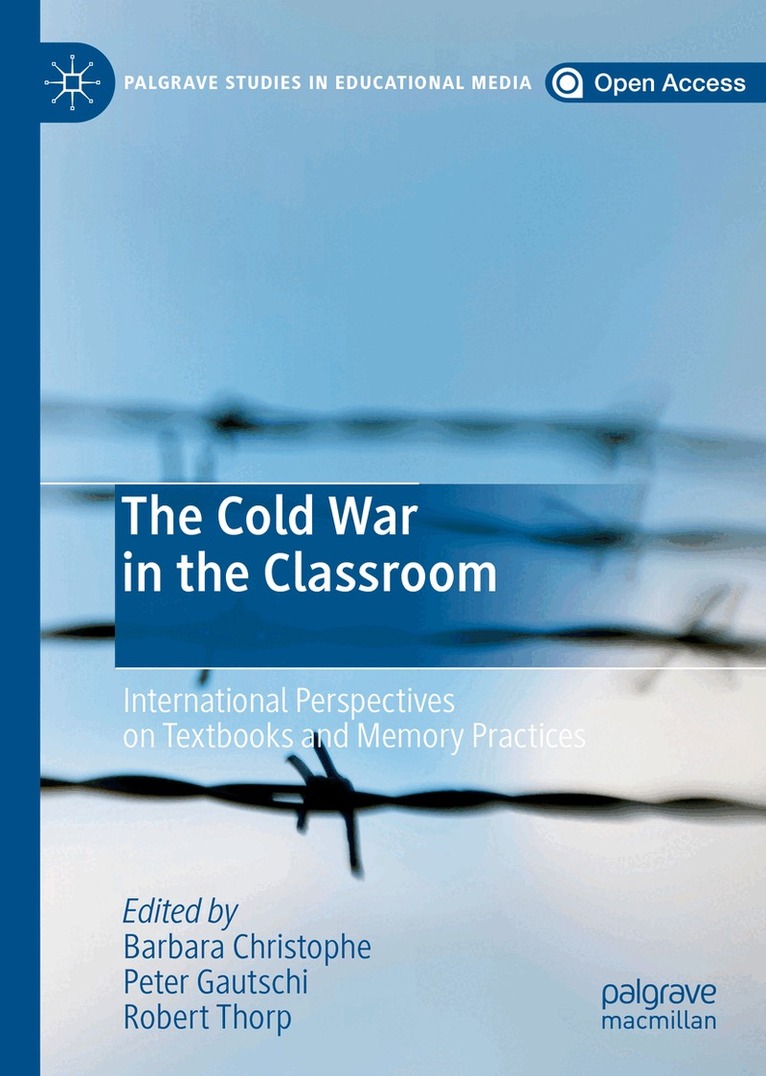
    Cold War in the Classroom

    International Perspectives on Textbooks and Memory Practices

    AvBarbara Christophe,Peter Gautschi

    Inbunden, Engelska, 2019

    Del i serien Palgrave Studies in Educational Media

    318 kr

    Beställningsvara. Skickas inom 10-15 vardagar. Fri frakt över 249 kr.

    Beskrivning

    This book is open access under a CC BY 4.0 license.This book explores how the socially disputed period of the Cold War is remembered in today’s history classroom. Applying a diverse set of methodological strategies, the authors map the dividing lines in and between memory cultures across the globe, paying special attention to the impact the crisis-driven age of our present has on images of the past. Authors analysing educational media point to ambivalence, vagueness and contradictions in textbook narratives understood to be echoes of societal and academic controversies. Others focus on teachers and the history classroom, showing how unresolved political issues create tensions in history education. They render visible how teachers struggle to handle these challenges by pretending that what they do is ‘just history’. The contributions to this book unveil how teachers, backgrounding the political inherent in all memory practices, often nourish the illusion that the history in which they are engaged is all about addressing the past with a reflexive and disciplined approach.

    Produktinformation

    • Utgivningsdatum:2019-11-06
    • Mått:148 x 210 x 32 mm
    • Vikt:750 g
    • Format:Inbunden
    • Språk:Engelska
    • Serie:Palgrave Studies in Educational Media
    • Antal sidor:459
    • Förlag:Springer Nature Switzerland AG
    • ISBN:9783030119980

    Utforska kategorier

    • Medievetenskap inom Samhälle och politik
    • Kalla krig och ombudskrig inom Historia och arkeologi
    • Pedagogik: historia inom Psykologi och pedagogik

    Mer om författaren

    Barbara Christophe is Senior Researcher at the Georg Eckert Institute, Germany and is Deputy Head of the Media Transformation department.Peter Gautschi is the Head of the Lucerne Institute of History Education and Memory Cultures at the University of Teacher Education Lucerne, Switzerland.Robert Thorp is Senior Lecturer of Education at Stockholm University, Sweden, and Lecturer of Education at The University of Newcastle in Australia.

    Innehållsförteckning

    • Chapter 1. Introduction; Barbara Christophe.- PART I. Textbook Memories.- Chapter 2. Textbook Memories of the Cold War: Introduction to Part I; Barbara Christophe.- Chapter 3. Manufacturing Coherence: How American textbooks incorporate diverse perspectives on the origins of the Cold War; Eva Fischer.- Chapter 4. Between radical shifts and Persistent Uncertainties: The Cold War in Russian history textbooks; Aleksandr Khodnev.- Chapter 5. The emergence of a multipolar world: Decentering the Cold War in Chinese history textbooks; Lisa Dyson.- Chapter 6. Americans and Russians as representatives of Us and Them. Contemporary Swedish school history textbooks and their portrayal of the central characters of the Cold War; Anders Persson.- Chapter 7. Images and Imaginings of the Cold War - with a focus on the Swiss view; Markus Furrer.- Chapter 8. Between non-human and individual agents: The attribution of agency in chapters on the Cold War in Flemish history textbooks; Karel Van Nieuwenhuyse.-Chapter 9. The Cold War and the Polish question; Joanna Wojdon.- Chapter 10. The Cold War in South African history textbooks; Linda Chisholm and David Fig.- Chapter 11. Dictatorship and the Cold War in official Chilean history textbooks; Teresa Oteiza and Claudia Castro.- PART II. Teachers' Memories.- Chapter 12. Teacher's memories and the Cold War: Introduction to Part II; Robert Thorp and Barbara Christophe.- Chapter 13. Ambivalence and the illusion of hegemony: Remembering the Cold War in Germany and Switzerland; Barbara Christophe.- Chapter 14. 1968 in German-speaking Switzerland: Controversies and interpretations; Nadine Ritzer.- Chapter 15. Reconciling opposing discourses: Narrating and teaching the Cold War in an East-German classroom; Eva Fischer.- PART III. Memory Practices in the Classroom.- Chapter 16. Introduction to Part III: Memory Practices in the Classroom; Peter Gautschi and Barbara Christophe.- Chapter 17. Selecting, stretching and missing the frame: Teachers and students from Germany and Switzerland make sense of the Cold War; Barbara Christophe.- Chapter 18. Learning from others: Considerations within history didactics on introducing the 'Cold War' in lessons in Germany, Sweden and Switzerland; Peter Gautschi and Hans Utz.- Chapter 19. Pedagogical entanglements and the Cold War: A comparative study on opening history lessons on the Cold War in Sweden and Switzerland.