• Fri frakt över 249 kr
  • •
  • Snabba leveranser
  • •
  • Billiga böcker
Kundservice

Du är på sajten för privatpersoner.

Företag, bibliotek eller offentlig verksamhet?

Du handlar på classic.bokus.com, där alla dina funktioner finns intakta.
Till classic.bokus.com
Bokus logotyp. Gå till startsidan.
  • Erbjudanden
  • Nyheter
  • Student
  • Topplistor
  • Barn & ungdom
  • Bokus Play
  • E-böcker
  • Pocketböcker
  • Spel & pussel

10% rabatt på allt med kod NYSTART10 →

Sidfot

Mina sidor

    Hjälp

    • Kundservice
    • Vanliga frågor och svar
    • Frakt och leverans
    • Retur vid ångerrätt
    • Reklamera vara
    • Betalning
    • Köpvillkor
    • Allmänna villkor
    • Information om webbplatsens tillgänglighet

    Om Bokus

    • Om oss
    • Pressrum
    • För studenter
    • För företag
    • För bibliotek och offentlig verksamhet
    • För leverantörer
    • Hållbarhet

    Populärt

    • Aktuella erbjudanden
    • Presentkort
    • Studentlitteratur
    • Nya böcker
    • Topplistor
    • Signerade böcker
    • Engelska böcker

    Inspiration

    • Boktips
    • BookTok
    • Populära bokserier
    • Barnbokskaraktärer
    • Populära författare
    Logotyp för Bokus
    Följ oss på Facebook (extern länk)Följ oss på Instagram (extern länk)Följ oss på YouTube (extern länk)Följ oss på TikTok (extern länk)
    bokus @ CookiesAnpassa cookiesIntegritetspolicyKöpvillkor
    Till Citymail hemsida (extern länk)Till Budbee hemsida (extern länk)Till Postnord hemsida (extern länk)Till Schenker hemsida (extern länk)Till Early Bird hemsida (extern länk)Till Walleys hemsida (extern länk)
    1. Djur och Natur
    2. Naturböcker
    3. Svampböcker

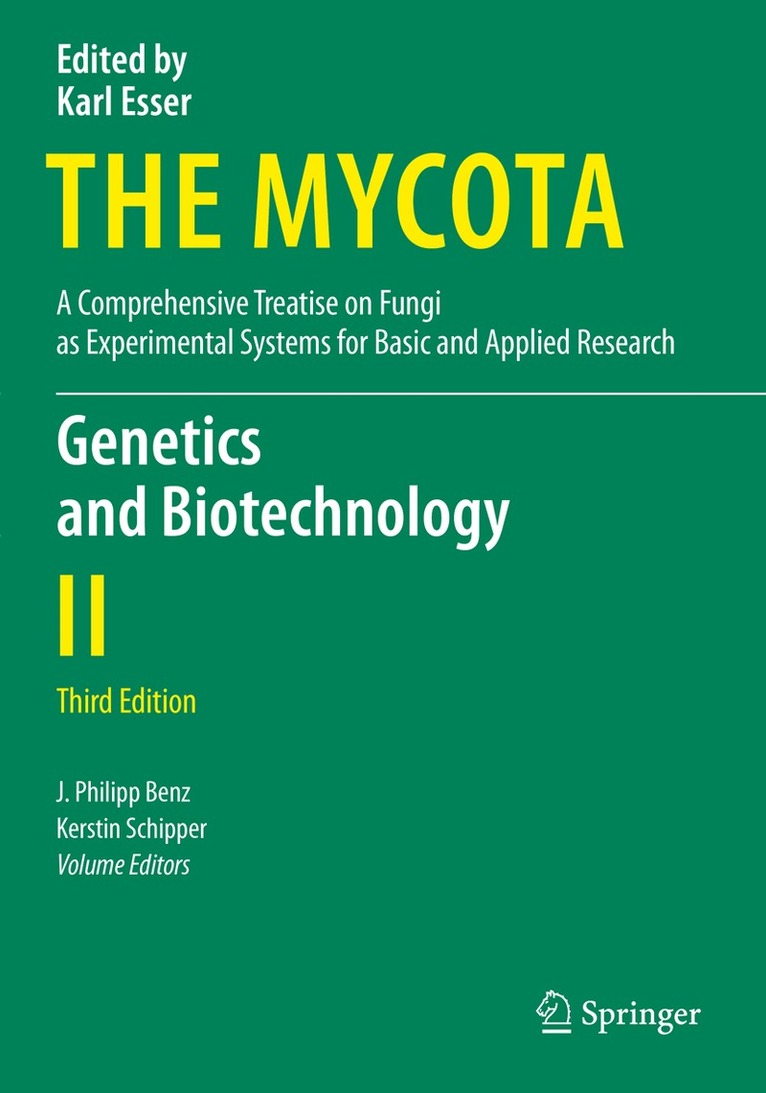
    Genetics and Biotechnology

    AvJ. Philipp Benz,Kerstin Schipper

    Häftad, Engelska, 2021

    Del 2 i serien Mycota

    1 947 kr

    Beställningsvara. Skickas inom 10-15 vardagar. Fri frakt över 249 kr.

    Beskrivning

    This fully revised third edition includes up-to-date topics and developments in the field, which has made tremendous strides since the publication of the second edition in 2004. Many novel techniques based on Next Generation Sequencing have sped up the analysis of fungi and major advances have been made in genome editing, leading to a deeper understanding of the genetics underlying cellular processes as well as their applicability. At the same time, the relevance of fungi is unbroken, both due to the serious threats to human health and welfare posed by fungal pests and pathogens, and to the many benefits that fungal biotechnology can offer for diverse emerging markets and processes that form the basis of the modern bioeconomy. With regard to these advances, the first section of this volume, Genetics, illustrates the basic genetic processes underlying inheritance, cell biology, metabolism and “lifestyles” of fungi. The second section, Biotechnology, addresses theapplied side of fungal genetics, ranging from new tools for synthetic biology to the biotechnological potential of fungi from diverse environments. Gathering chapters written by reputed scientists, the book represents an invaluable reference guide for fungal biologists, geneticists and biotechnologists alike.

    Produktinformation

    • Utgivningsdatum:2021-10-29
    • Mått:178 x 254 x 26 mm
    • Vikt:887 g
    • Format:Häftad
    • Språk:Engelska
    • Serie:Mycota
    • Antal sidor:452
    • Upplaga:3
    • Förlag:Springer Nature Switzerland AG
    • ISBN:9783030499266

    Utforska kategorier

    • Svampböcker inom Djur och Natur
    • Svampar inom Naturvetenskap och teknik
    • Biokemisk teknik inom Naturvetenskap och teknik

    Mer om författaren

    J. Philipp Benz (born 1977) studied biology at the TU Braunschweig (2003). The research work for his thesis was done in the laboratory of Nigel Crawford at UC San Diego (CA, USA). He subsequently performed his dissertation at the LMU Munich, working in the research group of Jürgen Soll (Department of Biochemistry and Physiology of Plants) (2009). He then returned to the USA to become a postdoctoral fellow in the laboratory of Chris Somerville at the Energy Biosciences Institute (UC Berkeley, CA, USA) where he started to work on filamentous fungi. In 2014, he was appointed assistant professor for Wood Bioprocesses at the Technical University of Munich (TUM School of Life Sciences Weihenstephan, Holzforschung München). His research group is studying the processes used by filamentous fungi to degrade lignocellulosic biomass. Central questions are how fungi perceive the composition of the plant biomass on a molecular level and how they adapt their metabolism to effectively degrade the substrate.Kerstin Schipper (born 1980) completed her studies in biology at Osnabrück University in 2005. For the research work of her Master thesis she moved to the laboratory of Heinrich Jung at LMU Munich. She then performed her dissertation and a short post-doctoral time under the supervision of Regine Kahmann at the Max Planck Institute for Terrestrial Microbiology in Marburg in the field of plant-pathogen interactions. Since 2011 she is a group leader at the Institute for Microbiology at Heinrich Heine University Düsseldorf. Her work focusses on fungal biotechnology using the basidiomycete Ustilago maydis. Her major interest is a novel unconventional protein secretion pathway and its exploitation for production of heterologous proteins.

    Recensioner i media

    “In such a rapidly moving area of mycology, it is not surprising that there is much new to report 16 years on. While badged as a third edition, it is more a collection of in-depth review articles, many on topics which have largely emerged in the years since the second. … a particularly valuable synopsis of the current state of fungal genomics. … and an especially exciting overview of the potential of anaerobic gut fungi.” (IMA Fungus, December 31, 2021)

    Innehållsförteckning

    • Chromatin Structure and Function in Neurospora crassa.- Origin, function and transmission of accessory chromosomes.- Genetics of the unfolded protein response in fungi.- From genetics to molecular oscillations: the circadian clock in Neurospora crassa.- small RNAs in fungi.- NLR function in fungi as revealed by the study of self/non-self recognition systems.- Genetics and genomics decipher partner biology in arbuscular mycorrhizas.- Coordination of fungal secondary metabolism and development.- Fungal Genomics.- Filamentous fungi as hosts for heterologous production of proteins and secondary metabolites in the post-genomic era.- New Avenues towards drug discovery in fungi.- Exploiting fungal photobiology as a source of novel bio-blocks for optogenetic systems.- Yeast cell factories.- Engineering Saccharomyces cerevisiae for production of fatty acids and their derivatives.- Fungi Involved in the Biodeterioration and Bioconversion of Lignocellulose Substrates.- Biotechnology of marine fungi: New workhorses and new uses - using marine fungal diversity as a source for biotechnology.- The biotechnological potential of anaerobic gut fungi.