Beställningsvara. Skickas inom 10-15 vardagar. Fri frakt över 249 kr.
Beskrivning
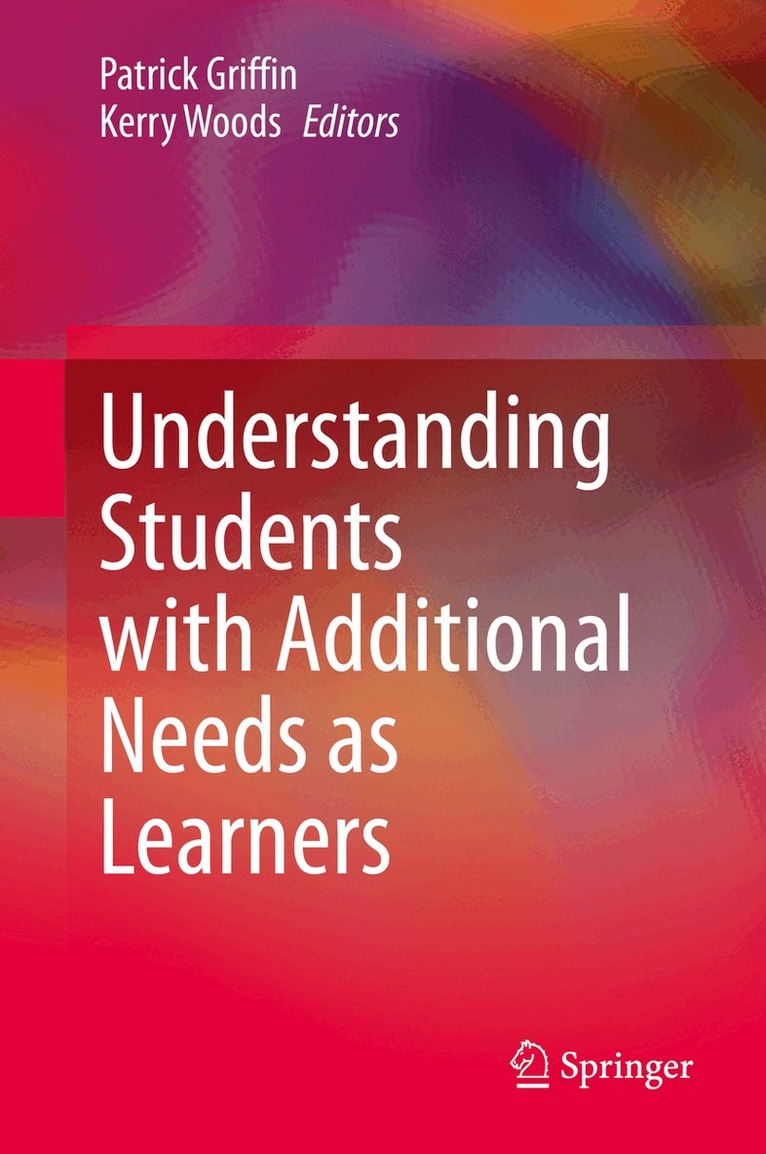
This book brings together a compendium of the collaborative research from eight PhD students and three researchers, addressing an existing problem for teachers of students with additional learning needs in mainstream classes.
Patrick Griffin held the Chair of Education (Assessment) at The University of Melbourne and was the founding director of the Assessment Research Centre. His work includes more than 40 years in teaching and research in education measurement. He focuses on item response modelling applications in interpretive frameworks for performance assessment, problem solving and higher order competency assessment and performance reporting. He was the measurement team leader for UNESCO in the SACMEQ project and a World Bank consultant in Vietnam, Philippines and China. He retired from university of Melbourne in 2015. He still leads several national and international studies of problem solving, literacy and numeracy and was the Executive Director of the Assessment and Teaching of 21st Century Skills project in which he pioneered the assessment of collaborative problem solving. His research into reliable rubrics is on display through the doctoral students’ work in this volume on the work with special needs students.Kerry Woods devoted 16 years to understanding how teachers observe their students and use formal and informal sources of assessment data to guide their classroom planning and teaching. Her doctoral research investigated the design and validation of criterion-referenced assessments of communication and literacy to support personalised learning for students with diverse additional needs. In collaboration with fellow academics and school and policy leaders, her research led to the development of an integrated program of advice and support for teachers of students with disability. She is currently an honorary Senior Fellow of the Assessment Research Centre, Melbourne Graduate School of Education at the University of Melbourne.
Innehållsförteckning
1. From little things: Introduction and background to the study; Patrick Griffin.- 2. Developing the SWANs constructs of communication, literacy, numeracy, digital literacy, thinking and learning skills, movement, and social and emotional understanding; Patrick Griffin.- 3. The SWANS research: A partnership between school leaders, teachers, researchers and the education system; Kerry Woods.- 4. Designing curriculum for all students; Karen Underwood and Kerry Woods.- 5. Observing problem-solving skills in students with additional needs; Toshiko Kamei.- 6. Making judgements about literacy skills for students with additional needs; Kerry Woods and Patrick Griffin.- 7. Mapping social learning for students with additional needs; Bernadette Coles-Janess and Patrick Griffin).- 8. Assessing and teaching thinking skills for students with additional needs; Toshiko Kamei).- 9. Developing a progression of early numeracy skills to guide instructional planning for students with additional needs; Jane Strickland and Masa Pavlovic.- 10. Tailoring digital literacy learning for students with additional needs; Emily White and Shiralee Poed.- 11. Motor learning for students with movement difficulties; Lindsey Gale).- 12. Differing Progressions of Cognitive Skill Development for Students with Additional: Learning Needs and Autism Spectrum Disorder; Eileen Roberts and Patrick Griffin.- 13. Assessing understanding of emotion for students with additional needs; Eileen Roberts and Patrick Griffin.- 14. Using an integrated system of assessment, curriculum, and pedagogical advice for instructional planning; Kerry Woods and Karen Underwood.- Appendix A: Accessing the SWANS instruments and interpretive reports online (ARCOTS).