• Fri frakt över 249 kr
  • •
  • Snabba leveranser
  • •
  • Billiga böcker
Kundservice

Du är på sajten för privatpersoner.

Företag, bibliotek eller offentlig verksamhet?

Du handlar på classic.bokus.com, där alla dina funktioner finns intakta.
Till classic.bokus.com
Bokus logotyp. Gå till startsidan.
  • Erbjudanden
  • Nyheter
  • Student
  • Topplistor
  • Barn & ungdom
  • Bokus Play
  • E-böcker
  • Pocketböcker
  • Spel & pussel

10% rabatt på allt med kod: NYSTART10 →

Sidfot

Mina sidor

    Hjälp

    • Kundservice
    • Vanliga frågor och svar
    • Frakt och leverans
    • Retur vid ångerrätt
    • Reklamera vara
    • Betalning
    • Köpvillkor
    • Allmänna villkor
    • Information om webbplatsens tillgänglighet

    Om Bokus

    • Om oss
    • Pressrum
    • För studenter
    • För företag
    • För bibliotek och offentlig verksamhet
    • För leverantörer
    • Hållbarhet

    Populärt

    • Aktuella erbjudanden
    • Presentkort
    • Studentlitteratur
    • Nya böcker
    • Topplistor
    • Signerade böcker
    • Engelska böcker

    Inspiration

    • Boktips
    • BookTok
    • Populära bokserier
    • Barnbokskaraktärer
    • Populära författare
    Logotyp för Bokus
    Följ oss på Facebook (extern länk)Följ oss på Instagram (extern länk)Följ oss på YouTube (extern länk)Följ oss på TikTok (extern länk)
    bokus @ CookiesAnpassa cookiesIntegritetspolicyKöpvillkor
    Till Citymail hemsida (extern länk)Till Budbee hemsida (extern länk)Till Postnord hemsida (extern länk)Till Schenker hemsida (extern länk)Till Early Bird hemsida (extern länk)Till Walleys hemsida (extern länk)
    1. Naturvetenskap och teknik
    2. Geovetenskap
    3. Miljövetenskap och miljöpolitik

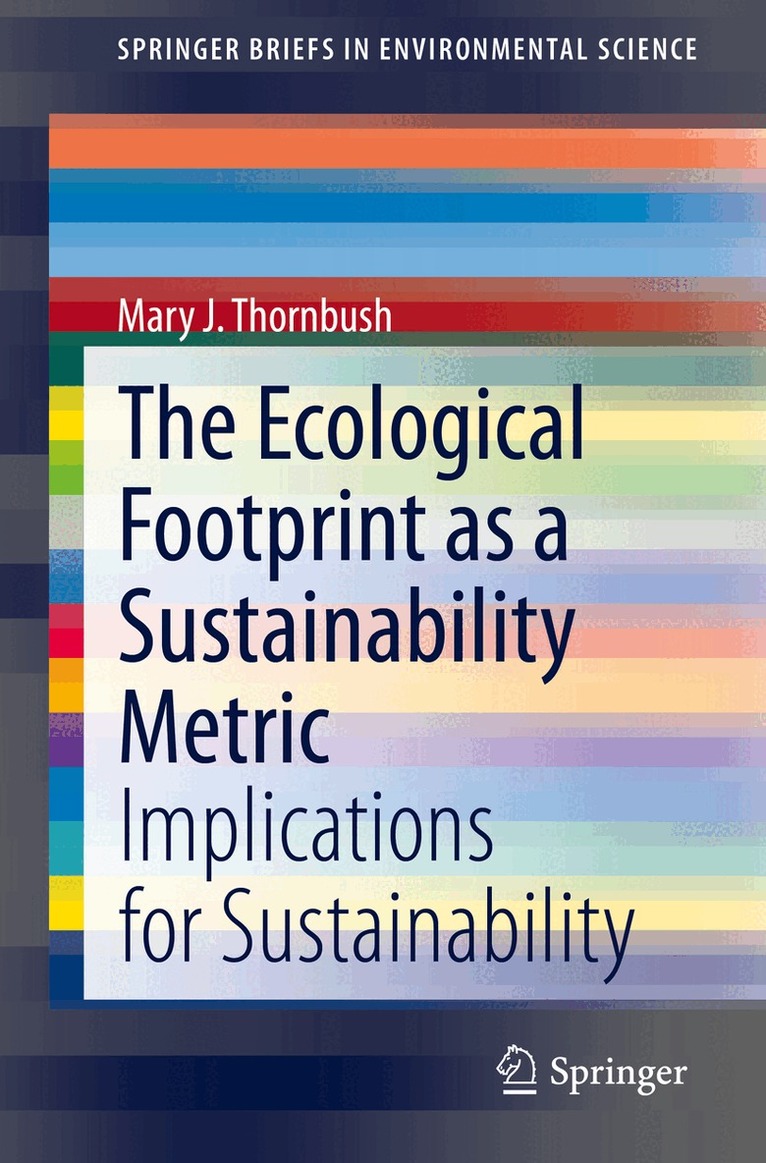
    Ecological Footprint as a Sustainability Metric

    Implications for Sustainability

    AvMary J. Thornbush

    Häftad, Engelska, 2021

    Del i serien SpringerBriefs in Environmental Science

    654 kr

    Beställningsvara. Skickas inom 10-15 vardagar. Fri frakt över 249 kr.

    Fler format och utgåvor

    E-bok

    868 kr

    Beskrivning

    This book examines the Ecological Footprint and biocapacity accounting within an applied development content  for Costa Rica. By doing so, it is possible to track changes as well as perhaps link these to overarching global issues, such as trade, globalization, and food security, among other emergent topics based findings stemming from this methodology. Based on a timeseries since 1961, it is possible to track cross-temporal changes of land-type categories (for crop land, grazing land, forest land, fishing ground, built-up land, and carbon) of the Ecological Footprint and biocapacity conveying whether a country is in ecological deficit and what may be contributing to such a trend

    Produktinformation

    • Utgivningsdatum:2021-01-28
    • Mått:155 x 235 x 7 mm
    • Vikt:221 g
    • Format:Häftad
    • Språk:Engelska
    • Serie:SpringerBriefs in Environmental Science
    • Antal sidor:107
    • Förlag:Springer Nature Switzerland AG
    • ISBN:9783030626655

    Utforska kategorier

    • Miljövetenskap och miljöpolitik inom Naturvetenskap och teknik
    • Biovetenskap inom Naturvetenskap och teknik
    • Geografi inom Naturvetenskap och teknik

    Mer om författaren

    Dr. Mary J. Thornbush is presently a researcher of the Ecological Footprint Initiative based in the Faculty of Environmental Studies at York University, Canada. She has over 80 publications in the areas of applied geomorphology and environmental and urban sustainability. Her doctoral thesis at the University of Oxford addressed urban sustainability through a study of air emissions from transport in central Oxford and investigated their impacts on the weathering of its historical limestone buildings. Her relevant publications include a special journal issue on Geography, Urban Geomorphology and Sustainability in Area (2015) as well as books such as Vehicular Air Pollution and Urban Sustainability: An Assessment from Central Oxford, UK (2015, Springer) and a volume on Urban Geomorphology: Landforms and Processes in Cities (2018, Elsevier).

    Innehållsförteckning

    • Chapter 1: Introduction – overview and relevant background, including published (cross-disciplinary) research that provides a context and justification for the study.- Chapter 2: The Ecological Footprint – tracking the evolution of this sustainability metric.- Chapter 3: Biocapacity accounting – used to develop a context for carrying capacity set against the Ecological Footprint.- Chapter 4: Case study – national scale case consideration of Costa Rica as an example of a developing country set amid the contemporary context of sustainable development.- Chapter 5: Implications – examines the contribution for sustainable development, using the Sustainable Development Goals as a springboard for discussion.- Chapter 6: Quality Analysis – presents caveats of the methodology based on the National Footprint Accounts.- Chapter 7: Conclusion – summary of the findings and contribution of the brief, including address of path dependency and final consideration given to sustainability metrics and sustainable development.