• Fri frakt över 249 kr
  • •
  • Snabba leveranser
  • •
  • Billiga böcker
Kundservice

Du är på sajten för privatpersoner.

Företag, bibliotek eller offentlig verksamhet?

Du handlar på classic.bokus.com, där alla dina funktioner finns intakta.
Till classic.bokus.com
Bokus logotyp. Gå till startsidan.
  • Erbjudanden
  • Nyheter
  • Student
  • Topplistor
  • Barn & ungdom
  • Bokus Play
  • E-böcker
  • Pocketböcker
  • Spel & pussel

10% studentrabatt med kod TERM26

Sidfot

Mina sidor

    Hjälp

    • Kundservice
    • Vanliga frågor och svar
    • Frakt och leverans
    • Retur vid ångerrätt
    • Reklamera vara
    • Betalning
    • Köpvillkor
    • Allmänna villkor
    • Information om webbplatsens tillgänglighet

    Om Bokus

    • Om oss
    • Pressrum
    • För studenter
    • För företag
    • För bibliotek och offentlig verksamhet
    • För leverantörer
    • Hållbarhet

    Populärt

    • Aktuella erbjudanden
    • Presentkort
    • Studentlitteratur
    • Nya böcker
    • Topplistor
    • Signerade böcker
    • Engelska böcker

    Inspiration

    • Boktips
    • BookTok
    • Populära bokserier
    • Barnbokskaraktärer
    • Populära författare
    Logotyp för Bokus
    Följ oss på Facebook (extern länk)Följ oss på Instagram (extern länk)Följ oss på YouTube (extern länk)Följ oss på TikTok (extern länk)
    bokus @ CookiesAnpassa cookiesIntegritetspolicyKöpvillkor
    Till Citymail hemsida (extern länk)Till Budbee hemsida (extern länk)Till Postnord hemsida (extern länk)Till Schenker hemsida (extern länk)Till Early Bird hemsida (extern länk)Till Walleys hemsida (extern länk)
    1. Samhälle och politik
    2. Samhälle och kultur
    3. Kultur och medier
    4. Kulturvetenskap

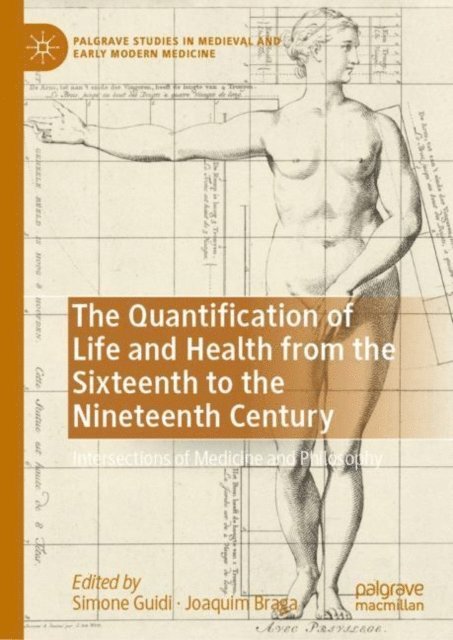
    Quantification of Life and Health from the Sixteenth to the Nineteenth Century

    Intersections of Medicine and Philosophy

    AvSimone Guidi,Joaquim Braga

    Häftad, Engelska, 2024

    Del i serien Palgrave Studies in Medieval and Early Modern Medicine

    1 634 kr

    Beställningsvara. Skickas inom 10-15 vardagar. Fri frakt över 249 kr.
    Beskrivning

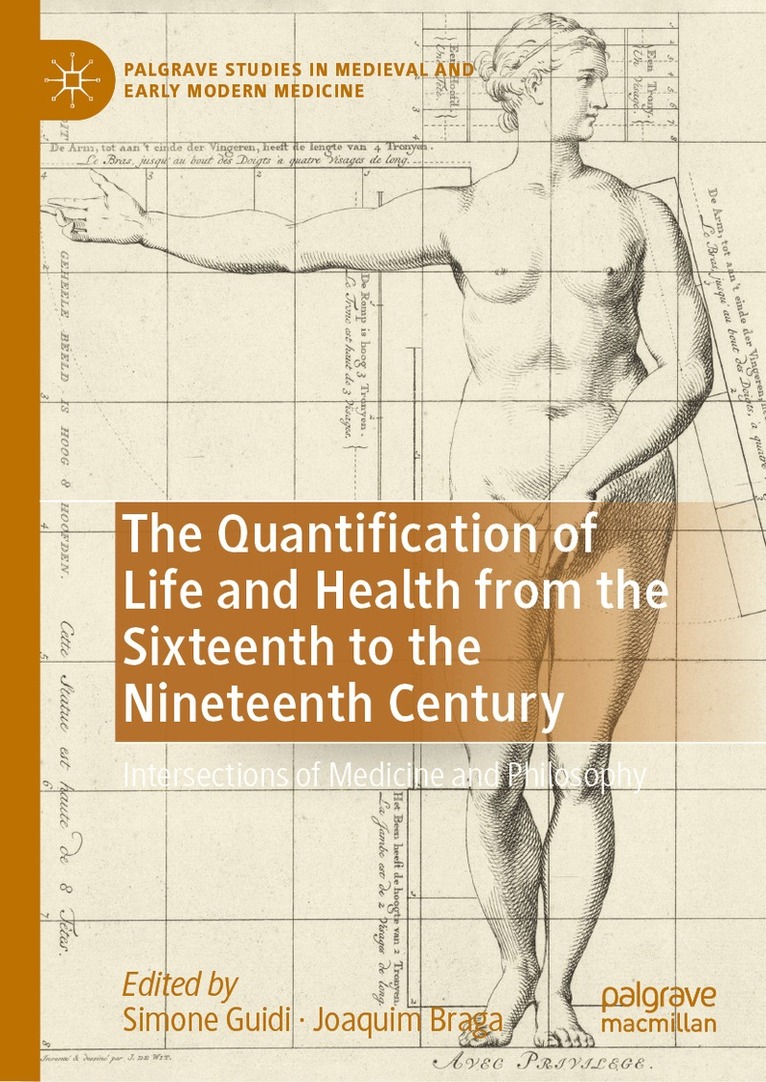
    This edited volume explores the intersection of medicine and philosophy throughout history, calling attention to the role of quantification in understanding the medical body. Retracing current trends and debates to examine the quantification of the body throughout the early modern, modern and early contemporary age, the authors contextualise important issues of both medical and philosophical significance, with chapters focusing on the quantification of temperaments and fluids, complexions, functions of the living body, embryology, and the impact of quantified reasoning on the concepts of health and illness. With insights spanning from the sixteenth century to the nineteenth century, this book provides a wide-ranging overview of attempts to ‘quantify’ the human body at various points. Arguing that medicine and philosophy have been constantly in dialogue with each other, the authors discuss how this provided a strategic opportunity both for medical thought and philosophy to refine andfurther develop. Given today’s fascination with the quantification of the body, represented by the growing profusion of self-tracking devices logging one’s sleep, diet or mood, this collection offers an important and timely contribution to an emerging and interdisciplinary field of study.

    Produktinformation

    • Utgivningsdatum:2024-11-11
    • Mått:148 x 210 x 19 mm
    • Vikt:436 g
    • Format:Häftad
    • Språk:Engelska
    • Serie:Palgrave Studies in Medieval and Early Modern Medicine
    • Antal sidor:323
    • Förlag:Springer International Publishing AG
    • ISBN:9783031157271

    Utforska kategorier

    • Kulturvetenskap inom Samhälle och politik
    • Medicinhistoria inom Medicin
    • Europas historia inom Historia och arkeologi

    Mer om författaren

    Simone Guidi is a Researcher in the Institute for the European Intellectual Lexicon and History of Ideas (CNR-ILIESI) at the Italian National Research Council. He teaches at the Roma Tre University in Italy. Previously, he was Assistant Professor of Philosophy in the University of Coimbra’s Faculty of Arts and Humanities, Portugal. Simone's work focuses on the history of early modern philosophy, with special attention to the thought of Descartes, his sources and legacy.Joaquim Braga is a Researcher and Teacher in the Department of Philosophy of the University of Coimbra, Portugal. He is a member of the Research Unit, Institute for Philosophical Studies. Joaquim's research covers the aesthetics of the body, philosophy of technology, philosophy of culture, modern and contemporary philosophy, and symbolic thought.

    Innehållsförteckning

    • Chapter 1: Introduction, Simone Guidi and Joaquim Braga.- Chapter 2: The More the Years the Less the Food: Alvise Cornaro on The Sober Life (1558), Laura Madella.-Chapter 3: The Quantification of Talents: Education, Galenic Humoralism, and Classification of Wits in Early Modern Culture, Luana Salvarani.- Chapter 4: Quali-Quantitative Measurement in Francis Bacon’s Medicine. Towards a New Branch of Mixed Mathematics, Silvia Manzo.- Chapter 5: Sanctorius’s Weighing Chair: Measurement, Metabolism, and Mind, Jan Purnis.- Chapter 6: The Rise of Quantitative Biology in the Cartesian Age: the Theories of Preformation, Mariangela Priarolo.- Chapter 7: “Nature is more subtle than any mathematician”: Giorgio Baglivi on Fluids in the Human Body, Luca Tonetti.- Chapter 8: “The Human Body Should Be Investigated in All Its Details to The Most Precise Degree…”. Leibniz on Quantification in Medicine, Osvaldo Ottaviani.- Chapter 9: Data vs Mathesis: Contrasting Epistemologies in some Mechanizations and Quantifications of Medicine, Simone Guidi.- Chapter 10: The Pulse Watch and the Physician’s Senses: John Floyer on the Quantification of the Body, Marco Storni.- Chapter 11: Against the Quantification of the Living: Hegel’s Critique of Romantic Naturphilosophie in the Phenomenology of Spirit, Gaetano Basileo.- Chapter 12: Measuring the Mind: The French Debate on Fechner’s Psychophysics in the Late 19th Century, Denise Vincenti.