• Fri frakt över 249 kr
  • •
  • Snabba leveranser
  • •
  • Billiga böcker
Kundservice

Du är på sajten för privatpersoner.

Företag, bibliotek eller offentlig verksamhet?

Du handlar på classic.bokus.com, där alla dina funktioner finns intakta.
Till classic.bokus.com
Bokus logotyp. Gå till startsidan.
  • Erbjudanden
  • Nyheter
  • Student
  • Topplistor
  • Barn & ungdom
  • Bokus Play
  • E-böcker
  • Pocketböcker
  • Spel & pussel

10% rabatt på allt med kod: NYSTART10 →

Sidfot

Mina sidor

    Hjälp

    • Kundservice
    • Vanliga frågor och svar
    • Frakt och leverans
    • Retur vid ångerrätt
    • Reklamera vara
    • Betalning
    • Köpvillkor
    • Allmänna villkor
    • Information om webbplatsens tillgänglighet

    Om Bokus

    • Om oss
    • Pressrum
    • För studenter
    • För företag
    • För bibliotek och offentlig verksamhet
    • För leverantörer
    • Hållbarhet

    Populärt

    • Aktuella erbjudanden
    • Presentkort
    • Studentlitteratur
    • Nya böcker
    • Topplistor
    • Signerade böcker
    • Engelska böcker

    Inspiration

    • Boktips
    • BookTok
    • Populära bokserier
    • Barnbokskaraktärer
    • Populära författare
    Logotyp för Bokus
    Följ oss på Facebook (extern länk)Följ oss på Instagram (extern länk)Följ oss på YouTube (extern länk)Följ oss på TikTok (extern länk)
    bokus @ CookiesAnpassa cookiesIntegritetspolicyKöpvillkor
    Till Citymail hemsida (extern länk)Till Budbee hemsida (extern länk)Till Postnord hemsida (extern länk)Till Schenker hemsida (extern länk)Till Early Bird hemsida (extern länk)Till Walleys hemsida (extern länk)
    1. Samhälle och politik
    2. Samhälle och kultur
    3. Kultur och medier
    4. Kulturvetenskap

    Handbook of Beauty and Inequality

    AvGiselinde Kuipers,Outi Sarpila

    Inbunden, Engelska, 2026

    Del i serien Handbooks of Sociology and Social Research

    547 kr

    Beställningsvara. Skickas inom 10-15 vardagar. Fri frakt över 249 kr.

    Beskrivning

    This open access handbook offers a state-of-the-art overview of theoretical perspectives, empirical insights and scholarly debates into the relationship between beauty and inequality: how does beauty shape and reproduce social inequalities, and how does social inequality shape appearance and beauty standards? This comprehensive review emerges out of the burgeoning research on appearance and inequality in recent years. The handbook brings together under one volume the widely dispersed research on this topic which uses different concepts, approaches and methods, often without reference to one another. It does so by pulling together knowledge on appearance and inequality from different subfields of sociology, cultural studies, anthropology, gender studies, philosophy, management studies, communication and media studies, economics, legal studies, gerontology, psychology and evolutionary psychology, and creates talking points between and within disciplines. It presents different conceptualizations of beauty, including beauty as morality, capital, stigma, asset, merit and fashion. It also focuses on mechanisms linking beauty to inequality, drawing mainly on quantitative and analytical approaches, and looks at intersections between beauty and various axes of inequality. Finally, the work highlights institutional approaches to various fields in which beauty standards are created and reproduced. The chapters are written by established scholars from a range of disciplines and countries and discuss the literature, while also presenting original empirical research. This is a highly useful and handy resource for anyone interested in learning more about the field. This exemplary and ambitious Handbook of Beauty and Inequality is a timely contribution to our understanding of how beauty operates in our social world. The introduction offers a sharp analytical framework to organize what is a multi-layered interdisciplinary field, while the contributions carefully parse how beauty shapes inequality in fields of activity ranging from teaching, to politics and fashion. This book is certain to become a classic reference for everyone intrigued by the power of beauty.  -  Michèle Lamont, Harvard UniversityBeauty has emerged in recent years as a key arena for social scientists interested in inequality. This invaluable volume brings together cutting-edge thinkers from different disciplines to think about the myriad ways beauty is related to various forms of advantage and exclusion in contemporary societies.  Timely, comprehensive, and asking important, provocative questions, this volume demonstrates that beauty and inequality represents a distinct and urgent field of emerging social science research. -  Sam Friedman, The London School of Economics and Political Science Beauty may be in the eye of the beholder, but vision is socially structured along quite unequal lines. This original, timely and rich handbook looks at the intersection of beauty and social inequality and compiles a wealth of interdisciplinary research into how beauty both creates, maintains and sometimes capsizes inequality.-   Roberta Sassatelli, University of Bologna

    Produktinformation

    • Utgivningsdatum:2026-02-13
    • Mått:178 x 254 x 28 mm
    • Vikt:974 g
    • Format:Inbunden
    • Språk:Engelska
    • Serie:Handbooks of Sociology and Social Research
    • Antal sidor:394
    • Förlag:Springer Nature Switzerland AG
    • ISBN:9783032080349

    Utforska kategorier

    • Kulturvetenskap inom Samhälle och politik
    • Genusvetenskap inom Samhälle och politik
    • Etnicitet inom Samhälle och politik

    Mer om författaren

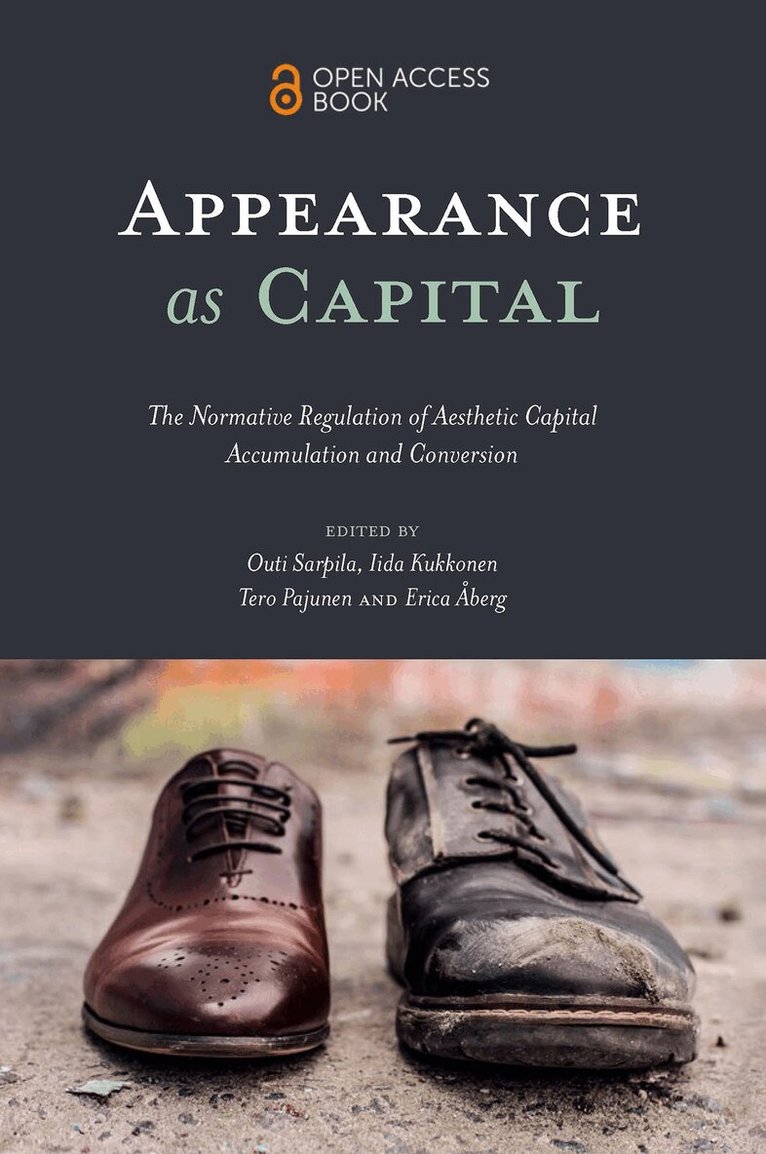
    Giselinde Kuipers is a Research Professor of Sociology at the KU Leuven in Leuven, Belgium. She is a pioneer of research on beauty and inequality, and has expertise in cultural and media sociology, visual methods and mixed-methods designs. Her innovative ERC-funded mixed-methods project on the sociology of beauty and inequality was one of the first sociological studies on the topic. In 2022, she received her second ERC grant for her project Beauty and Inequality: Physical Appearance, Symbolic Boundaries and Social Dis/advantage in Five Global Cities. She has published extensively on beauty and inequality. She has also served as editor-in-chief for scientific journals and co-edited edited volumes, including the Handbook of Humour Studies. Outi Sarpila is a Senior Research Fellow at INVEST Research Flagship Centre, University of Turku, Finland. Sarpila’s areas of expertise include physical appearance-based social inequalities, economic sociology, and quantitative research. She has led two national research projects related to physical appearance and inequalities. She has published widely on the topic both in Finnish and English. She is a co-author of the book Ulkonäköyhteiskunta [Appearance society] which was nominated for the Scientific Book of the Year 2019 in Finland. From 2019 to 2023 she served as a co-editor-in-chief of the Finnish Journal of Social Research, and in 2021 she co-edited the book Appearance as Capital.

    Innehållsförteckning

    • Introduction. Beauty and Inequality: New Questions for a Fragmented Field.- Part I: Beauty.- Beauty as Subordinate Capital.- Beauty and Morality.- Sexual Capital.- Evolutionary Approaches to Beauty.- Beauty as Gendered Inequality.- Beauty as Evaluation.- Beauty and Meritocracy.- Part II: Mechanisms.- Beauty and Romantic Outcomes.- Beauty and Romantic Outcomes.- Beauty and Hiring Discrimination.- Beauty and Social Capital.- How Beauty Impacts Life Satisfaction: Objective, Subjective and Mediating Effects.- Beauty, Media Representations and Body Image.- Looking Right for the Job: Appearances, Unequal Chances, and Gatekeeping in the Labor Market.- Part III: Intersections.- Beauty, Gender, and Ageing.- Beauty, Race/Ethnicity, and Gender Inequalities.- Beauty, Bodies and Elites.- Body Size and Social Class: Beauty and Stigma in a Tale of Two Habitus.- Clothing, Beauty and Inequality.- Beauty, Gender and Parenthood.- Beauty Regimes and Global Inequalities.- Part IV: Fields.- Cosmetic Surgery.- Beauty and Work: Continuity and Change in the Analysis of Aesthetic Labour.- Sexual Fields and Women’s Sexual Capital: Online Challenges and Insights.- Beauty and Teaching.- Beauty, Dating, and Desirability.- Beautyvism: Beauty as a Political Tool.- Beauty and Fashion.- Lookism: the Morality of Appearance Discrimination.