• Fri frakt över 249 kr
  • •
  • Snabba leveranser
  • •
  • Billiga böcker
Kundservice

Du är på sajten för privatpersoner.

Företag, bibliotek eller offentlig verksamhet?

Du handlar på classic.bokus.com, där alla dina funktioner finns intakta.
Till classic.bokus.com
Bokus logotyp. Gå till startsidan.
  • Erbjudanden
  • Nyheter
  • Student
  • Topplistor
  • Barn & ungdom
  • Bokus Play
  • E-böcker
  • Pocketböcker
  • Spel & pussel

10% rabatt på allt med kod: NYSTART10 →

Sidfot

Mina sidor

    Hjälp

    • Kundservice
    • Vanliga frågor och svar
    • Frakt och leverans
    • Retur vid ångerrätt
    • Reklamera vara
    • Betalning
    • Köpvillkor
    • Allmänna villkor
    • Information om webbplatsens tillgänglighet

    Om Bokus

    • Om oss
    • Pressrum
    • För studenter
    • För företag
    • För bibliotek och offentlig verksamhet
    • För leverantörer
    • Hållbarhet

    Populärt

    • Aktuella erbjudanden
    • Presentkort
    • Studentlitteratur
    • Nya böcker
    • Topplistor
    • Signerade böcker
    • Engelska böcker

    Inspiration

    • Boktips
    • BookTok
    • Populära bokserier
    • Barnbokskaraktärer
    • Populära författare
    Logotyp för Bokus
    Följ oss på Facebook (extern länk)Följ oss på Instagram (extern länk)Följ oss på YouTube (extern länk)Följ oss på TikTok (extern länk)
    bokus @ CookiesAnpassa cookiesIntegritetspolicyKöpvillkor
    Till Citymail hemsida (extern länk)Till Budbee hemsida (extern länk)Till Postnord hemsida (extern länk)Till Schenker hemsida (extern länk)Till Early Bird hemsida (extern länk)Till Walleys hemsida (extern länk)
    1. Psykologi och pedagogik
    2. Pedagogik
    3. Skolväsen och utbildningssystem
    4. Examination och betygsättning

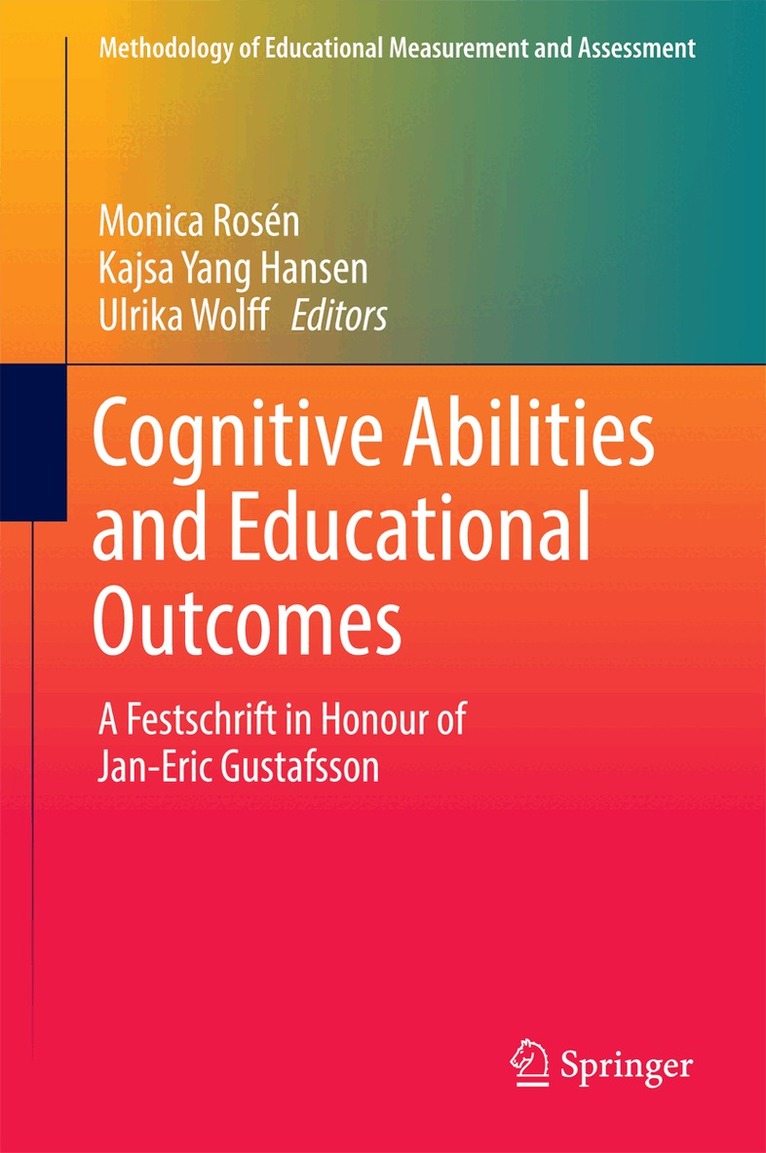
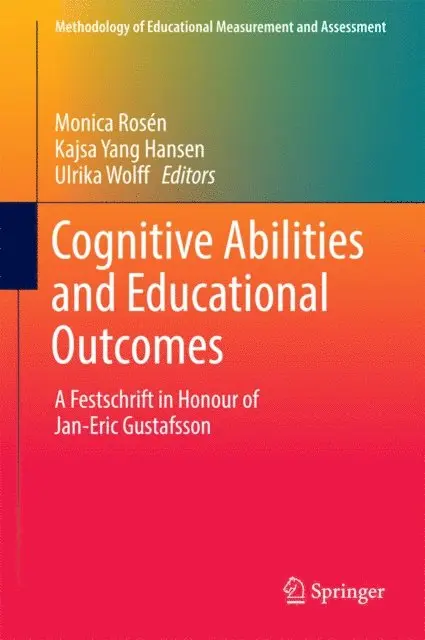
    Cognitive Abilities and Educational Outcomes

    A Festschrift in Honour of Jan-Eric Gustafsson

    AvMonica Rosén,Kajsa Yang Hansen

    Häftad, Engelska, 2018

    Del i serien Methodology of Educational Measurement and Assessment

    1 370 kr

    Beställningsvara. Skickas inom 10-15 vardagar. Fri frakt över 249 kr.

    Beskrivning

    This book addresses problems and challenges that face educational measurement at a time when multipurpose usage of observational data from educational assessments, tests and international surveys has become a growing global trend. While the construction of educational measures and use of educational data offer many opportunities, they also require awareness of the numerous threats to validity and methods of reducing such threats. Written by leading international scholars, the book demonstrates the complexity of educational measurement by addressing three broad and interrelated topics. The first part discusses cognitive abilities, including studies on fluid intelligence, its improvement and its links to aptitude tests for admission to higher education. The second part focuses on the effects of school and teacher-related factors on school outcomes at individual and group levels, and uses international studies to analyze causes. The third part presents analytical techniques and measurement methods to improve reliability, for example factor analysis using Bayesian estimators, bi-factor analysis, model misfit and solutions, and discusses balance issues in reporting test results.The book provides examples of state-of-the-art analytical techniques for pursuing fundamental research problems, and the latest advances in measurement methods, with a focus on validity improvement. Eminent researchers discuss and provide insights into questions such as: Is it possible to train individuals to think at a higher level than normal for their age? What determines prospective preschool teachers’ skill to perceive mathematics-related preschool situations? Can international indicator design and instruments be improved to use trends and national context variables more efficiently? Can indicator data at national, school and class levels be compared easier? Are value-added measures of teacher effectiveness valid when it comes to hiring and promoting teachers? Is money better spenton teacher training than on smaller class-size? How do theory and empirical statistical data intertwine in building structures of understanding? This book is inspired by the career and personal influence of the Swedish scholar Professor Jan-Eric Gustafsson, renowned for his research on individual differences, especially the structure of cognitive abilities, and on the effects of education on knowledge and skills.

    Produktinformation

    • Utgivningsdatum:2018-06-14
    • Mått:155 x 235 x 20 mm
    • Vikt:552 g
    • Format:Häftad
    • Språk:Engelska
    • Serie:Methodology of Educational Measurement and Assessment
    • Antal sidor:327
    • Förlag:Springer International Publishing AG
    • ISBN:9783319828343

    Utforska kategorier

    • Examination och betygsättning inom Psykologi och pedagogik
    • Sociologi inom Samhälle och politik
    • Psykologisk metod inom Psykologi och pedagogik

    Innehållsförteckning

    • Preface.- 1. Introduction.- PART I: Cognitive Abilities.- 2. What is Fluid Intelligence? Can it be Improved?.- 3. Mind and Intelligence: Integrating Developmental, Psychometric, and Cognitive Theories of Human Mind.- 4. Gender Differences in Broad and Narrow Ability Dimensions. A Confirmatory Factor Analytic Approach.- 5. Exploring Effects of Following Different Tracks of Study in Upper Secondary Education on Performance on a Cognitive Test.- 6. Reflections on (Bi) Factor Analysis.- PART II: Causes and Effects of Educational Achievement.- 7. Searching for Causality to Develop and Test Theoretical Models of Educational Effectiveness Research.- 8. Countries’ Strive towards More Quality and Equity in Education: Success or Failure? Evidence from TIMSS 2003 and 2011, Grade 4.- 9. School Resources and Student Achievement: A Review of Cross-country Economic Research.- 10. A Question of Validity: Clarifying the Hierarchical Nature of Teacher Cognition.- 11. Empirical Puzzles on Effective Teachers: U.S. Research.- PART III: Modelling Measurement Properties.- 12. Measuring Changing Educational Contexts in a Changing World: Evolution of the TIMSS and PIRLS Questionnaires.- 13. General and Specific Factors in Selection Modeling.- 14. CTT and no DIF and ? = (almost) Rasch Model.- 15. Balance: A Neglected Aspect of Reporting Test Results.- 16. Views on Classical Statistical Modelling in Competition with Rasch Methodology.- Appendices.