• Fri frakt över 249 kr
  • •
  • Snabba leveranser
  • •
  • Billiga böcker
Kundservice

Du är på sajten för privatpersoner.

Företag, bibliotek eller offentlig verksamhet?

Du handlar på classic.bokus.com, där alla dina funktioner finns intakta.
Till classic.bokus.com
Bokus logotyp. Gå till startsidan.
  • Erbjudanden
  • Nyheter
  • Student
  • Topplistor
  • Barn & ungdom
  • Bokus Play
  • E-böcker
  • Pocketböcker
  • Spel & pussel

10% studentrabatt med kod TERM26

Sidfot

Mina sidor

    Hjälp

    • Kundservice
    • Vanliga frågor och svar
    • Frakt och leverans
    • Retur vid ångerrätt
    • Reklamera vara
    • Betalning
    • Köpvillkor
    • Allmänna villkor
    • Information om webbplatsens tillgänglighet

    Om Bokus

    • Om oss
    • Pressrum
    • För studenter
    • För företag
    • För bibliotek och offentlig verksamhet
    • För leverantörer
    • Hållbarhet

    Populärt

    • Aktuella erbjudanden
    • Presentkort
    • Studentlitteratur
    • Nya böcker
    • Topplistor
    • Signerade böcker
    • Engelska böcker

    Inspiration

    • Boktips
    • BookTok
    • Populära bokserier
    • Barnbokskaraktärer
    • Populära författare
    Logotyp för Bokus
    Följ oss på Facebook (extern länk)Följ oss på Instagram (extern länk)Följ oss på YouTube (extern länk)Följ oss på TikTok (extern länk)
    bokus @ CookiesAnpassa cookiesIntegritetspolicyKöpvillkor
    Till Citymail hemsida (extern länk)Till Budbee hemsida (extern länk)Till Postnord hemsida (extern länk)Till Schenker hemsida (extern länk)Till Early Bird hemsida (extern länk)Till Walleys hemsida (extern länk)
    1. Hälsa och familj
    2. Hälsa

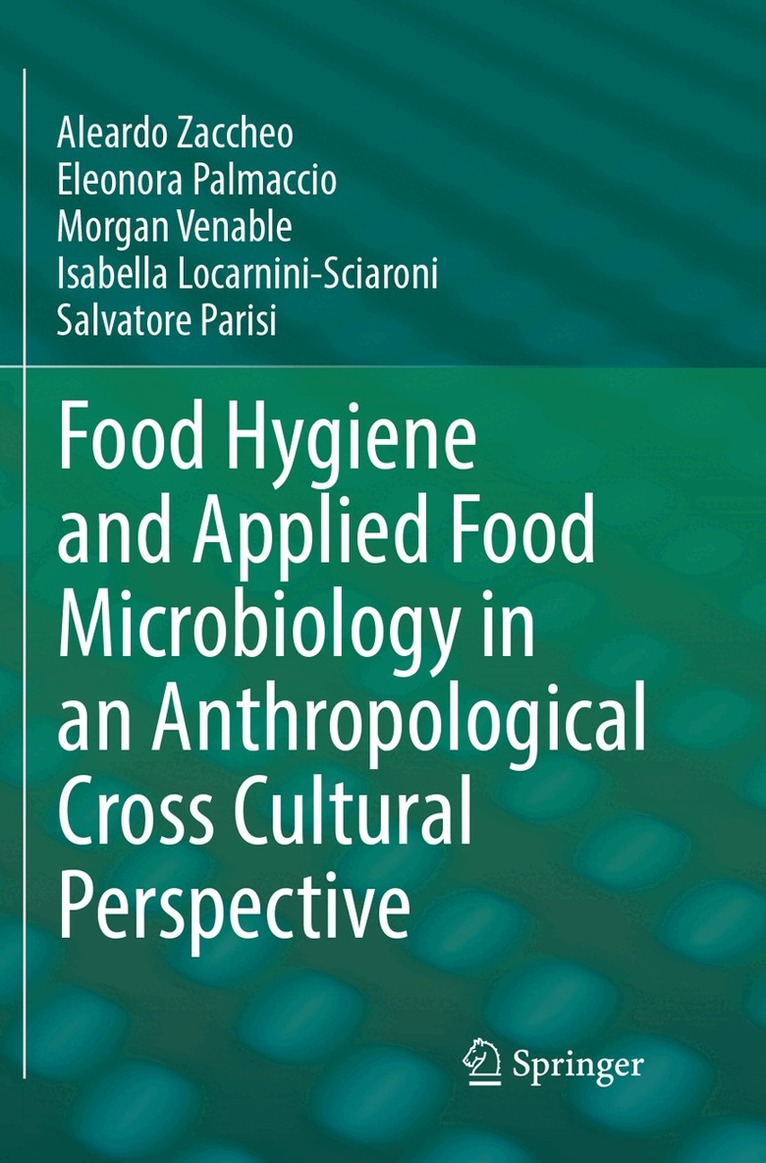
    Food Hygiene and Applied Food Microbiology in an Anthropological Cross Cultural Perspective

    AvAleardo Zaccheo,Eleonora Palmaccio

    Häftad, Engelska, 2018

    1 124 kr

    Beställningsvara. Skickas inom 10-15 vardagar. Fri frakt över 249 kr.

    Fler format och utgåvor

    Inbunden

    1 124 kr

    Beskrivning

    ­The book demonstrates that food safety is a multidisciplinary scientific discipline thatis specifically designed to prevent foodborne illness to consumers. It is generally assumedto be an axiom by both nonprofessionals and professionals alike, that the mostdeveloped countries, through their intricate and complex standards, formal trainingsand inspections, are always capable of providing much safer food items and beveragesto consumers as opposed to the lesser developed countries and regions of the world. Clearly, the available data regarding the morbidity and the mortality in different areasof the world confirms that in developing countries, the prevalence and the incidence ofpresumptive foodborne illness is much greater. However, other factors need to be takeninto consideration in this overall picture: First of all, one of the key issues in developingcountries appears to be the availability of safe drinking water, a key element in anyfood safety strategy. Second, the availability of healthcare facilities, care providers, andmedicines in different parts of the world makes the consequences of foodborne illnessmuch more important and life threatening in lesser developed countries than in mostdeveloped countries.  It would be therefore ethnocentric and rather simplistic to statethat the margin of improvement in food safety is only directly proportional to thelevel of development of the society or to the level of complexity of any given nationalor international standard. Besides standards and regulations, humans as a whole haveevolved and adapted different strategies to provide and to ensure food and water safetyaccording to their cultural and historical backgrounds. Our goal is to discuss and tocompare these strategies in a cross-cultural and technical approach, according to the realities of different socio-economic, ethnical and social heritages.

    Produktinformation

    • Utgivningsdatum:2018-09-11
    • Mått:155 x 235 x 8 mm
    • Vikt:201 g
    • Format:Häftad
    • Språk:Engelska
    • Antal sidor:109
    • Förlag:Springer International Publishing AG
    • ISBN:9783319831763

    Utforska kategorier

    • Hälsa inom Hälsa och familj
    • Samhällsmedicin och preventiv medicin inom Medicin
    • Tillverkningsteknik inom Naturvetenskap och teknik

    Mer om författaren

    Aleardo Zaccheo is plant pathologist and a food microbiologist trained in Switzerland and California. Has received a Bachelor Degree at Fresno State University, Master Degree and Post Graduate in Genetic Engineering at San Francisco State University. In 1992 has cofounded and he is the CEO of bioethica food safety engineering.Eleonora Palmaccio is from Formia, Italy. She received her Master Degree in Biology and Postgraduate Diploma at the University La Sapienza in Rome.  She has worked for the Italian National Institute of Health in food safety.  She is currently a senior assistant at bioethica food safety engineering.Morgan Venable is from San Rafael, California. She received her Bachelor of Science in Nutrition from the University of Connecticut and continued her post graduate studies at East Carolina University. She currently works as a Consulting Registered Dietitian providing medical nutritiontherapy.Isabella Locarnini-Sciaroni is from Monte Carasso Switzerland.  She received her Bachelor and Master Degree at the Institute of Food, Nutrition and Health of the Swiss Federal Institute of Technology Zurich (ETHZ). After conducting her thesis in at bioethica food safety engineering, she became the quality manager of the family’s company.Salvatore Parisi, Msc, PhD, is a research chemist working as an expert consultant, reviewer and academic lecturer in different fields, including food chemistry and technology, food packaging chemistry and technology, and quality certification systems. Dr. Parisi serves as Series Editor for the SpringerBriefs in Molecular Science: Chemistry of Foods.

    Innehållsförteckning

    • ​Foreword.- Preface.- 1. The Complex Relationships Between Humans, Food, Water and Hygiene.- 2. A Brief History of Food, Food Safety and Hygiene.- 3. Food Microbiology Seen from Different Angles.- 4. The Viruses.- 5. The Bacteria.- 6. The Fungi and Other Eukaryotic Microbes.- 7. The Human Behavior and Food Resources.- 8. The Human Microbiomes.- 9. The Global Microbial Environments.- 10. The Local Food Environments.- 11. Biocides and “Superbugs”.- 12. Food Safety Considerations About Selected Causative Agents.- 13. Conclusions and Recommendations for those outside or inside the “Global Village”.- References.- Index.