• Fri frakt över 249 kr
  • •
  • Snabba leveranser
  • •
  • Billiga böcker
Kundservice

Du är på sajten för privatpersoner.

Företag, bibliotek eller offentlig verksamhet?

Du handlar på classic.bokus.com, där alla dina funktioner finns intakta.
Till classic.bokus.com
Bokus logotyp. Gå till startsidan.
  • Erbjudanden
  • Nyheter
  • Student
  • Topplistor
  • Barn & ungdom
  • Bokus Play
  • E-böcker
  • Pocketböcker
  • Spel & pussel

10% rabatt på allt med kod: NYSTART10 →

Sidfot

Mina sidor

    Hjälp

    • Kundservice
    • Vanliga frågor och svar
    • Frakt och leverans
    • Retur vid ångerrätt
    • Reklamera vara
    • Betalning
    • Köpvillkor
    • Allmänna villkor
    • Information om webbplatsens tillgänglighet

    Om Bokus

    • Om oss
    • Pressrum
    • För studenter
    • För företag
    • För bibliotek och offentlig verksamhet
    • För leverantörer
    • Hållbarhet

    Populärt

    • Aktuella erbjudanden
    • Presentkort
    • Studentlitteratur
    • Nya böcker
    • Topplistor
    • Signerade böcker
    • Engelska böcker

    Inspiration

    • Boktips
    • BookTok
    • Populära bokserier
    • Barnbokskaraktärer
    • Populära författare
    Logotyp för Bokus
    Följ oss på Facebook (extern länk)Följ oss på Instagram (extern länk)Följ oss på YouTube (extern länk)Följ oss på TikTok (extern länk)
    bokus @ CookiesAnpassa cookiesIntegritetspolicyKöpvillkor
    Till Citymail hemsida (extern länk)Till Budbee hemsida (extern länk)Till Postnord hemsida (extern länk)Till Schenker hemsida (extern länk)Till Early Bird hemsida (extern länk)Till Walleys hemsida (extern länk)
    1. Naturvetenskap och teknik
    2. Matematik och naturvetenskap
    3. Biologi
    4. Biokemi

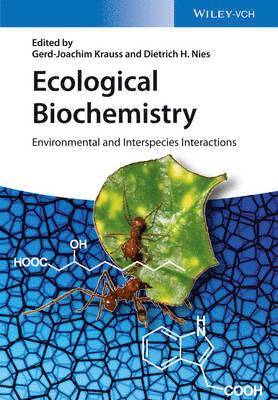
    Ecological Biochemistry

    Environmental and Interspecies Interactions

    AvGerd-Joachim Krauss,Dietrich H. Nies

    Inbunden, Engelska, 2014

    910 kr

    Tillfälligt slut

    Beskrivning

    The first stand-alone textbook for at least ten years on this increasingly hot topic in times of global climate change and sustainability in ecosystems.Ecological biochemistry refers to the interaction of organisms with their abiotic environment and other organisms by chemical means. Biotic and abiotic factors determine the biochemical flexibility of organisms, which otherwise easily adapt to environmental changes by altering their metabolism. Sessile plants, in particular, have evolved intricate biochemical response mechanisms to fit into a changing environment. This book covers the chemistry behind these interactions, bottom up from the atomic to the system's level.An introductory part explains the physico-chemical basis and biochemical roots of living cells, leading to secondary metabolites as crucial bridges between organisms and the respective ecosystem. The focus then shifts to the biochemical interactions of plants, fungi and bacteria within terrestrial and aquatic ecosystems with the aim of linking biochemical insights to ecological research, also in human-influenced habitats.A section is devoted to methodology, which allows network-based analyses of molecular processes underlying systems phenomena.A companion website offering an extended version of the introductory chapter on Basic Biochemical Roots is available athttp://www.wiley.com/go/Krauss/Nies/EcologicalBiochemistry

    Produktinformation

    • Utgivningsdatum:2014-10-08
    • Mått:213 x 282 x 28 mm
    • Vikt:1 520 g
    • Format:Inbunden
    • Språk:Engelska
    • Antal sidor:440
    • Förlag:Wiley-VCH Verlag GmbH
    • ISBN:9783527316502

    Utforska kategorier

    • Biokemi inom Naturvetenskap och teknik
    • Biovetenskap inom Naturvetenskap och teknik

    Mer om författaren

    Gerd-Joachim Krauss is full Professor Emeritus for Ecological and Plant Biochemistry at the Martin-Luther-University of Halle, Germany, where he gained his PhD in plant biochemistry. He was responsible for research projects at the University of Sackville, Canada, the Bulgarian Academy of Sciences, Sofia, and Université de Pau/CNRS, Pau, France. His research interests are focused on metal stress response in plants and fungi, and the development of HPLC and coupling techniques.Dietrich H. Nies is full Professor for Molecular Microbiology at the Martin-Luther-University of Halle, Germany. He began his academic career in Göttingen, carrying out his postdoc in Berlin and at the University of Illinois at Chicago. Professor Nies`s research centers on the interaction of bacteria with transition metals.

    Recensioner i media

    "I recommend this book for students of ecology and plant physiology, although it would be a crime to exclude other disciplines because the authors' explanations of how biochemistry makes ecology work are fascinating." (Ecology, 1 December 2015)

    Innehållsförteckning

    • List of Contributors XVIIForeword XXIPreface XXIIICompanionWebsite XXVPart I: Basics of Life 11 Basic Biochemical Roots 3Dietrich H. Nies1.1 Chemistry and Physics of Life 31.2 Energy and Transport 31.3 Basic Biochemistry 42 Specialized PlantMetabolites: Diversity and Biosynthesis 15Alain Tissier, Jörg Ziegler, and Thomas Vogt2.1 Metabolite Diversity 152.2 Major Classes of Plant Specialized Compounds 162.3 Sites of Biosynthesis and Accumulation 332.4 Evolution of Specialized Pathway Genes 343 Evolution of SecondaryMetabolism in Plants 39MichaelWink3.1 Origins of Plant Secondary Metabolism 393.2 Evolutionary Alternatives 413.3 Endophytes, Symbiotic, and Ectomycorrhizal Fungi 45Part II: Ecological Signatures of Life 494 Systematics of Life, Its Early Evolution, and Ecological Diversity 51Dietrich H. Nies4.1 Cellular Life Forms and Subcellular Parasites 514.2 Superkingdom Archaea 514.3 Superkingdom Bacteria 554.4 Superkingdom Eukaryota 595 Communities and Ecosystem Functioning 77Heinz Rennenberg5.1 Competition for, and Distribution of, Limiting Resources as a Means of Ecosystem Functioning 775.2 Joint Exploitation of Limiting Resources by Symbioses 795.3 Avoidance of Competition 895.4 Facilitation Mechanisms in Communities and Ecosystem Functioning 906 Food Chains and Nutrient Cycles 93Felix Bärlocher and Heinz Rennenberg6.1 Basic Concepts 936.2 Aquatic Systems 976.3 Terrestrial Systems 109Part III: Biochemical Response to Physiochemical Stress (Abiotic Stress) 1237 Information Processing and Survival Strategies 125Ingo Heilmann7.1 The Stress Concept--Plants and Their Environment 1257.2 Plant Signal Transduction and the Induction of Stress Responses 1267.3 Phytohormones 1307.4 Other Signaling Molecules 1417.5 Signal Transduction by Protein Phosphorylation 1487.6 The Calcium Signaling Network 1497.7 Stress-Induced Modulation of Gene Expression by microRNAs 1508 Oxygen 155Karl-Josef Dietz8.1 Chemical Nature of Oxygen and Reactive Oxygen Species 1558.2 Oxygen Metabolism 1568.3 Oxygen Sensing 1608.4 Antioxidant Defense 1618.5 Reactive Oxygen Species in Abiotic Stresses 1628.6 Reactive Oxygen Species in Biotic Interactions 1648.7 Cell Signaling Function of Reactive Oxygen Species 1659 Light 171Thomas Kretsch9.1 Principles of Light Detection and Photoreceptor Function 1719.2 Sensing of UV-B Light 1759.3 The LOV Domain: A Variable Molecular Building Block of Many Blue and UV-A Light Sensors 1769.4 Cryptochromes 1799.5 Phytochromes 1809.6 Other Photoreceptor Systems 1859.7 Flavonoid Biosynthesis in Plants -- a Model for a Light-Regulated Adaptation Process 18510 Water 191Wiebke Zschiesche and Klaus Humbeck10.1 Water: the Essence of Life 19110.2 Water Balance in Plants 19210.3 Drought Stress 19410.4 Cold Stress and Freezing 20010.5 Salinity 20110.6 Flooding Stress 20511 Mineral Deficiencies 20911.1 Mineral Requirement and Insufficiencies 209Edgar Peiter11.2 Carnivorous Plants and Fungi 224Gerd-Joachim Krauss and Gudrun Krauss12 Excess of Metals 237Dietrich H. Nies, Eva Freisinger, and Gerd-Joachim Krauss12.1 Properties of Transition Metals 23712.2 Metal Transport through Cell Membranes 23812.3 Biochemistry of the Minor Biometals: Essential, Desired, but Also Toxic 24012.4 Biochemistry of Chemical ElementsWithout Known Biological Functions 24412.5 Metal-Binding Peptides and Proteins Involved in Transition Metal Homeostasis 24612.6 Interaction of Plants and Fungi with Metals 25113 Xenobiotics from Human Impacts 259Magali Solé and Dietmar Schlosser13.1 Xenobiotics: from Emission to Cellular Uptake 25913.2 Adverse Effects of Xenobiotics: from Cells to Ecosystems 26513.3 Organismal Responses: Biochemical Elimination of Xenobiotics 268Part IV: Organismal Interactions (Biotic Stress) 27714 The Biofilm Mode of Life 279Hans-Curt Flemming14.1 What are Biofilms? 27914.2 Environmental Roles of Biofilms 28014.3 Life Cycle of Biofilms 28114.4 Investigation of Biofilms 28314.5 The Matrix: Extracellular Polymeric Substances 28414.6 Communication in Biofilms 28714.7 Enhanced Resistance of Biofilm Organisms 28814.8 Emergent Properties of the Biofilm Mode of Life 29015 Rhizosphere Interactions 293Silvia D. Schrey, Anton Hartmann, and Rüdiger Hampp15.1 Bacterial Communities in the Rhizosphere 29415.2 Fungi of the Rhizosphere 30315.3 Plant--Plant Interactions 30616 Plant-Animal Dialogues 313Susanne Preiß, Jörg Degenhardt, and Jonathan Gershenzon16.1 The Flower Pollinator System 31316.2 Ant--Plant--Fungus Mutualism, a Three-Way Interaction 31916.3 Phenolics in the Interaction between Plant and Animals 32016.4 Alkaloids in the Interaction between Plants and Animals 32116.5 Terpenes in Plant Defense 325Part V: The Methodological Platform 33117 Sensing of Pollutant Effects and Bioremediation 333Gerd-Joachim Krauss and Dietmar Schlosser17.1 Pollutant Effect and Approaches to Characterize Exposure 33317.2 Ecological Restoration and Bioremediation 33517.2.1 Biological Ecosystem Components Mitigating Environmental Pollution 33517.2.2 Present and Future Directions 33818 The -Omics Tool Box 343Dirk Schaumlöffel18.1 Genomics 34318.2 Transcriptomics 34518.3 Proteomics 34618.4 Metabolomics 35618.5 Metallomics 36019 Microscope Techniques and Single Cell Analysis 367Bettina Hause and Gerd Hause19.1 Visualization Principles 36719.2 Preparation of Biological Materials 37319.3 Detection Methods -- from Macromolecules to Ions 37519.4 Single Cell Technologies 380References 382Further Reading 382Glossary 383Index 397