• Fri frakt över 249 kr
  • •
  • Snabba leveranser
  • •
  • Billiga böcker
Kundservice

Du är på sajten för privatpersoner.

Företag, bibliotek eller offentlig verksamhet?

Du handlar på classic.bokus.com, där alla dina funktioner finns intakta.
Till classic.bokus.com
Bokus logotyp. Gå till startsidan.
  • Erbjudanden
  • Nyheter
  • Student
  • Topplistor
  • Barn & ungdom
  • Bokus Play
  • E-böcker
  • Pocketböcker
  • Spel & pussel

10% rabatt på allt med kod NYSTART10 →

Sidfot

Mina sidor

    Hjälp

    • Kundservice
    • Vanliga frågor och svar
    • Frakt och leverans
    • Retur vid ångerrätt
    • Reklamera vara
    • Betalning
    • Köpvillkor
    • Allmänna villkor
    • Information om webbplatsens tillgänglighet

    Om Bokus

    • Om oss
    • Pressrum
    • För studenter
    • För företag
    • För bibliotek och offentlig verksamhet
    • För leverantörer
    • Hållbarhet

    Populärt

    • Aktuella erbjudanden
    • Presentkort
    • Studentlitteratur
    • Nya böcker
    • Topplistor
    • Signerade böcker
    • Engelska böcker

    Inspiration

    • Boktips
    • BookTok
    • Populära bokserier
    • Barnbokskaraktärer
    • Populära författare
    Logotyp för Bokus
    Följ oss på Facebook (extern länk)Följ oss på Instagram (extern länk)Följ oss på YouTube (extern länk)Följ oss på TikTok (extern länk)
    bokus @ CookiesAnpassa cookiesIntegritetspolicyKöpvillkor
    Till Citymail hemsida (extern länk)Till Budbee hemsida (extern länk)Till Postnord hemsida (extern länk)Till Schenker hemsida (extern länk)Till Early Bird hemsida (extern länk)Till Walleys hemsida (extern länk)
    1. Ekonomi och Ledarskap
    2. Industrier och branscher
    3. Servicesektorn

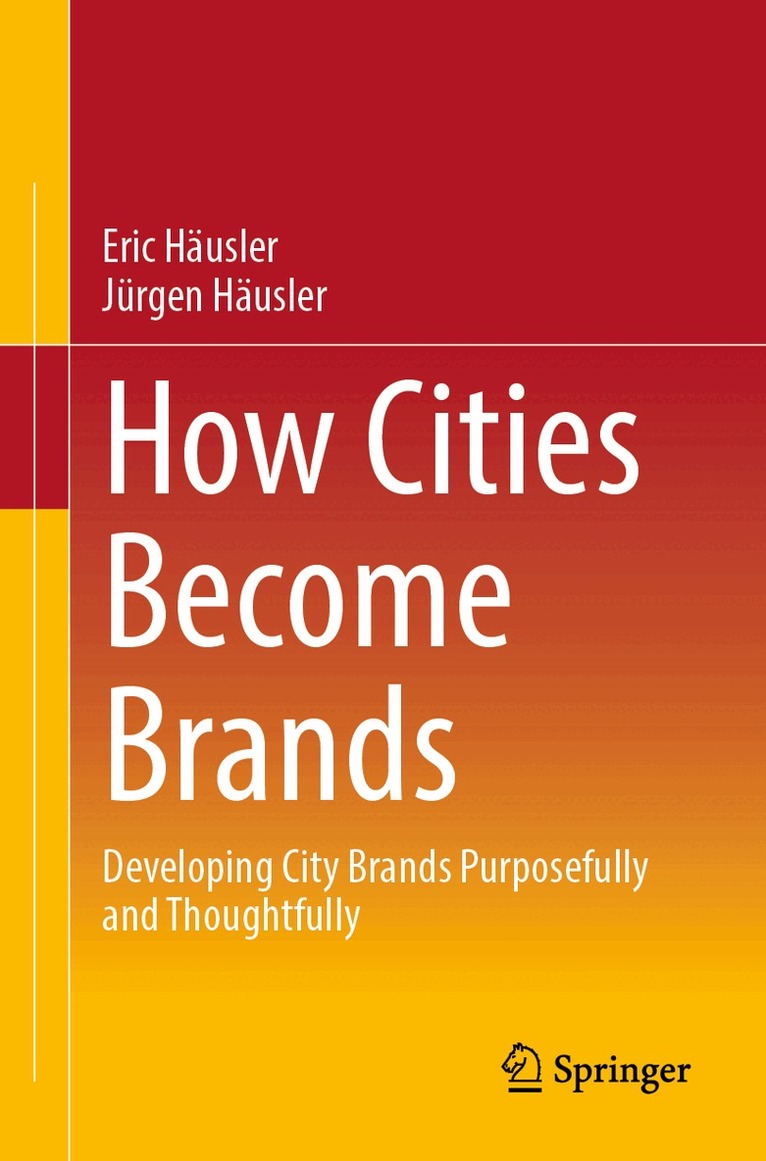
    How Cities Become Brands

    Developing City Brands Purposefully and Thoughtfully

    AvEric Häusler,Jürgen Häusler

    Häftad, Engelska, 2024

    815 kr

    Beställningsvara. Skickas inom 10-15 vardagar. Fri frakt över 249 kr.

    Beskrivning

    This book explores how the fragile and lengthy process of developing a city brand can be carefully managed. Necessary background information is explained, numerous experiences are reported, and targeted city branding is inspired in a variety of ways.The dream of every brand maker: to develop a city into a strong city brand - perhaps even a myth. The creation of myths remains a curiosity. Is it targeted, are there relevant recipes for success, and can those responsible be identified? Above all: Can the process be replicated? How do brand makers deal with the complexity of the phenomena of cities and city brands? How do they give the arduous process of creating a city brand a reasonable chance of success? How do brand makers deal with the often biting criticism from outside and the nagging self-doubt?Successful cityscapes arise from the trials and tribulations of complex and sometimes random processes. In the course of global city competition, this evolutionaryprocess is enriched with the achievements of the craft of branding. This is not a guarantee of success. Success depends on numerous prerequisites, which are discussed in detail. Finally, craft rules for good and at the same time sensitive city branding are mentioned.The translation was done with the help of artificial intelligence. A subsequent human revision was done primarily in terms of content.nal criticism and self-doubts?City images emerge from complex and random processes. In global urban competition, this process is enriched with brand making achievements. Success isn't guaranteed, depending on discussed conditions. Lastly, rules for effective city branding are outlined.nal criticism and self-doubts?City images emerge from complex and random processes. In global urban competition, this process is enriched with brand making achievements. Success isn't guaranteed, depending on discussed conditions. Lastly, rules foreffective city branding are outlined.nal criticism and self-doubts?City images emerge from complex and random processes. In global urban competition, this process is enriched with brand making achievements. Success isn't guaranteed, depending on discussed conditions. Lastly, rules for effective city branding are outlined.nal criticism and self-doubts?City images emerge from complex and random processes. In global urban competition, this process is enriched with brand making achievements. Success isn't guaranteed, depending on discussed conditions. Lastly, rules for effective city branding are outlined.nal criticism and self-doubts?City images emerge from complex and random processes. In global urban competition, this process is enriched with brand making achievements. Success isn't guaranteed, depending on discussed conditions. Lastly, rules for effective city branding are outlined.nal criticism and self-doubts?City images emergefrom complex and random processes. In global urban competition, this process is enriched with brand making achievements. Success isn't guaranteed, depending on discussed conditions. Lastly, rules for effective city branding are outlined.nal criticism and self-doubts?City images emerge from complex and random processes. In global urban competition, this process is enriched with brand making achievements. Success isn't guaranteed, depending on discussed conditions. Lastly, rules for effective city branding are outlined.City images emerge from complex and random processes. In global urban competition, this process is enriched with brand making achievements. Success isn't guaranteed, depending on discussed conditions. Lastly, rules for effective city branding are outlined.City images emerge from complex and random processes. In global urban competition, this process is enriched with brand making achievements. Success isn't guaranteed, depending on discussedconditions. Lastly, rules for effective city branding are outlined.City images emerge from complex and random processes. In global urban competition, this process is enriched with brand making achievements. Success isn't guaranteed, depending on discussed conditions. Lastly, rules for effective city branding are outlined.City images emerge from complex and random processes. In global urban competition, this process is enriched with brand making achievements. Success isn't guaranteed, depending on discussed conditions. Lastly, rules for effective city branding are outlined.City images emerge from complex and random processes. In global urban competition, this process is enriched with brand making achievements. Success isn't guaranteed, depending on discussed conditions. Lastly, rules for effective city branding are outlined.City images emerge from complex and random processes. In global urban competition, this process is enriched with brand makingachievements. Success isn't guaranteed, depending on discussed conditions. Lastly, rules for effective city branding are outlined.City images emerge from complex and random processes. In global urban competition, this process is enriched with brand making achievements. Success isn't guaranteed, depending on discussed conditions. Lastly, rules for effective city branding are outlined.City images emerge from complex and random processes. In global urban competition, this process is enriched with brand making achievements. Success isn't guaranteed, depending on discussed conditions. Lastly, rules for effective city branding are outlined.City images emerge from complex and random processes. In global urban competition, this process is enriched with brand making achievements. Success isn't guaranteed, depending on discussed conditions. Lastly, rules for effective city branding are outlined.City images emerge from complex and random processes. In global urban competition, this process is enriched with brand making achievements. Success isn't guaranteed, depending on discussed conditions. Lastly, rules for effective city branding are outlined.City images emerge from complex and random processes. In global urban competition, this process is enriched with brand making achievements. Success isn't guaranteed, depending on discussed conditions. Lastly, rules for effective city branding are outlined.

    Produktinformation

    • Utgivningsdatum:2024-03-27
    • Mått:155 x 235 x 13 mm
    • Vikt:365 g
    • Format:Häftad
    • Språk:Engelska
    • Antal sidor:226
    • Förlag:Springer Fachmedien Wiesbaden
    • ISBN:9783658437756
    • Originaltitel:Wie Städte zu Marken werden

    Utforska kategorier

    • Servicesektorn inom Ekonomi och Ledarskap
    • Sociologi inom Samhälle och politik
    • Sociala grupper och identitet inom Samhälle och politik

    Mer om författaren

    Eric Häusler is a historian with a keen interest in social science concepts. Currently, he is conducting a habilitation project on urbanization processes in Tokyo, New York, and Zurich in the 1960s. Extended research stays have taken him to Sophia University in Tokyo and presently to The New School and New York University in New York City. His most recent publication is his dissertation titled "Ökonomisches Scheitern. Solidarische Praktiken in Bern 1750-1900" (published by transcript Verlag).Jürgen Häusler is retired. At the beginning of his career, he engaged in social science research and later assumed leadership responsibilities for many years at a globally leading consulting firm specializing in brand development. Additionally, he taught at the University of Leipzig and published on the topic.Both authors share a passion for a multidisciplinary, theory-guided, and practice-oriented exploration of the phenomena of the city and city branding.Jürgen Häusler is retired. At the beginning of his career, he engaged in social science research and later assumed leadership responsibilities for many years at a globally leading consulting firm specializing in brand development. Additionally, he taught at the University of Leipzig and published on the topic.Both authors share a passion for a multidisciplinary, theory-guided, and practice-oriented exploration of the phenomena of the city and city branding.Jürgen Häusler is retired. At the beginning of his career, he engaged in social science research and later assumed leadership responsibilities for many years at a globally leading consulting firm specializing in brand development. Additionally, he taught at the University of Leipzig and published on the topic.Both authors share a passion for a multidisciplinary, theory-guided, and practice-oriented exploration of the phenomena of the city and city branding.Jürgen Häusler is retired. At the beginning of his career, he engaged in social science research and later assumed leadership responsibilities for many years at a globally leading consulting firm specializing in brand development. Additionally, he taught at the University of Leipzig and published on the topic.Both authors share a passion for a multidisciplinary, theory-guided, and practice-oriented exploration of the phenomena of the city and city branding.Jürgen Häusler is retired. At the beginning of his career, he engaged in social science research and later assumed leadership responsibilities for many years at a globally leading consulting firm specializing in brand development. Additionally, he taught at the University of Leipzig and published on the topic.Both authors share a passion for a multidisciplinary, theory-guided, and practice-oriented exploration of the phenomena of the city and city branding.Jürgen Häusler is retired. At the beginning of his career, he engaged in social science research and later assumed leadership responsibilities for many years at a globally leading consulting firm specializing in brand development. Additionally, he taught at the University of Leipzig and published on the topic.Both authors share a passion for a multidisciplinary, theory-guided, and practice-oriented exploration of the phenomena of the city and city branding.Jürgen Häusler is retired. At the beginning of his career, he engaged in social science research and later assumed leadership responsibilities for many years at a globally leading consulting firm specializing in brand development. Additionally, he taught at the University of Leipzig and published on the topic.Both authors share a passion for a multidisciplinary, theory-guided, and practice-oriented exploration of the phenomena of the city and city branding.Both authors share a passion for a multidisciplinary, theory-guided,and practice-oriented exploration of the phenomena of the city and city branding.Both authors share a passion for a multidisciplinary, theory-guided, and practice-oriented exploration of the phenomena of the city and city branding.Both authors share a passion for a multidisciplinary, theory-guided, and practice-oriented exploration of the phenomena of the city and city branding.Both authors share a passion for a multidisciplinary, theory-guided, and practice-oriented exploration of the phenomena of the city and city branding.Both authors share a passion for a multidisciplinary, theory-guided, and practice-oriented exploration of the phenomena of the city and city branding.Both authors share a passion for a multidisciplinary, theory-guided, and practice-oriented exploration of the phenomena of the city and city branding.Both authors share a passion for a multidisciplinary, theory-guided, and practice-oriented exploration of the phenomena of the city and city branding.Both authors share a passion for a multidisciplinary, theory-guided, and practice-oriented exploration of the phenomena of the city and city branding.Both authors share a passion for a multidisciplinary, theory-guided, and practice-oriented exploration of the phenomena of the city and city branding.Both authors share a passion for a multidisciplinary, theory-guided, and practice-oriented exploration of the phenomena of the city and city branding.Both authors share a passion for a multidisciplinary, theory-guided, and practice-oriented exploration of the phenomena of the city and city branding.Both authors share a passion for a multidisciplinary, theory-guided, and practice-oriented exploration of the phenomena of the city and city branding.

    Innehållsförteckning

    • Area of influence: Design.- Area of influence: Material purchasing.- Area of influence: Materials.- Area of influence: Production before heat treatment.- Area of influence: Heat treatment.- Area of influence: Production after heat treatment.- Area of influence: Operating conditions.