• Fri frakt över 249 kr
  • •
  • Snabba leveranser
  • •
  • Billiga böcker
Kundservice

Du är på sajten för privatpersoner.

Företag, bibliotek eller offentlig verksamhet?

Du handlar på classic.bokus.com, där alla dina funktioner finns intakta.
Till classic.bokus.com
Bokus logotyp. Gå till startsidan.
  • Erbjudanden
  • Nyheter
  • Student
  • Topplistor
  • Barn & ungdom
  • Bokus Play
  • E-böcker
  • Pocketböcker
  • Spel & pussel

10% rabatt på allt med kod NYSTART10 →

Sidfot

Mina sidor

    Hjälp

    • Kundservice
    • Vanliga frågor och svar
    • Frakt och leverans
    • Retur vid ångerrätt
    • Reklamera vara
    • Betalning
    • Köpvillkor
    • Allmänna villkor
    • Information om webbplatsens tillgänglighet

    Om Bokus

    • Om oss
    • Pressrum
    • För studenter
    • För företag
    • För bibliotek och offentlig verksamhet
    • För leverantörer
    • Hållbarhet

    Populärt

    • Aktuella erbjudanden
    • Presentkort
    • Studentlitteratur
    • Nya böcker
    • Topplistor
    • Signerade böcker
    • Engelska böcker

    Inspiration

    • Boktips
    • BookTok
    • Populära bokserier
    • Barnbokskaraktärer
    • Populära författare
    Logotyp för Bokus
    Följ oss på Facebook (extern länk)Följ oss på Instagram (extern länk)Följ oss på YouTube (extern länk)Följ oss på TikTok (extern länk)
    bokus @ CookiesAnpassa cookiesIntegritetspolicyKöpvillkor
    Till Citymail hemsida (extern länk)Till Budbee hemsida (extern länk)Till Postnord hemsida (extern länk)Till Schenker hemsida (extern länk)Till Early Bird hemsida (extern länk)Till Walleys hemsida (extern länk)
    1. Samhälle och politik
    2. Samhälle och kultur
    3. Kultur och medier
    4. Kulturvetenskap

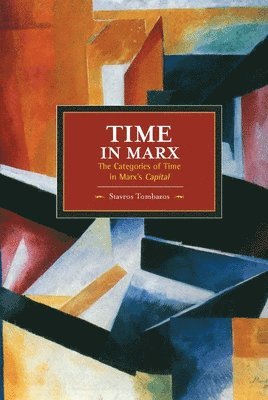
    Time in Marx

    The Categories of Time in Marx’s Capital

    AvStavros Tombazos

    Inbunden, Engelska, 2013

    Del 61 i serien Historical Materialism Book Series

    2 729 kr

    Beställningsvara. Skickas inom 5-8 vardagar. Fri frakt över 249 kr.

    Beskrivning

    This book demonstrates that the basic concepts of the three volumes of Capital come under different categories of time: "time of production" in the first volume is linear, “time of circulation” in the second is circular, while in the third volume “organic time” is the unity of the two. Capitalist relations emerge as a definite organisation of social time that obeys its own intrinsic criteria and operates as an autonomous, social subject. Reading Capital from this perspective, it becomes possible to restore its dialectical (Hegelian) logic – not in order to reveal the “real” Marx, but as a means to contribute to the understanding of the real, capitalist world with its present-day fetishes, its explosive contradictions and its ever deeper crises.

    Produktinformation

    • Utgivningsdatum:2013-11-25
    • Mått:155 x 235 x 26 mm
    • Vikt:680 g
    • Format:Inbunden
    • Språk:Engelska
    • Serie:Historical Materialism Book Series
    • Antal sidor:328
    • Förlag:Brill
    • ISBN:9789004217263

    Utforska kategorier

    • Kulturvetenskap inom Samhälle och politik
    • Sociologi och antropologi inom Samhälle och politik
    • Marxism och kommunism inom Samhälle och politik

    Mer om författaren

    Stavros Tombazos, Ph.D. (1991), Université Paris 8, is Assistant Professor of Political Economy at the University of Cyprus. He has published numerous books and articles on the thought of Hegel and Marx, on Globalisation, the European Integration and Capitalist Crises. His latest book, published in Greek, is titled: Centrifugal Times, The World Economic Crisis 2007, 2008, 2009… (Papazisis, 2010). He is a regular contributor to the French journals Contretemps and Lignes.

    Recensioner i media

    “With time as his starting point, Stavros Tombazos sheds light on the general intelligibility of Capital and the originality of its own logic… A frequent critique directed at Marx is that he remains tributary of the determinist epistemology of his time. This work draws our attention to an opposite tendency of his thought, ready to welcome the contemporary developments of fuzzy logic, chaos theory, the unity between chance and necessity.” Daniel Bensaïd “The title of this book could have been Reading Capital, had this title not already been used: reading the whole of Capital, with a scrupulous loyalty to the order of its reasons… ‘Time’ appears as the most adequate consideration with respect to this aim, to be precise the successive times intersecting and over-determining each other… The exposition of the theory of fetishism forms the core of Tombazos’s work. I believe that, of the entire literature dedicated to this issue, Tombazos’s elucidation is the best.”George Labica

    Innehållsförteckning

    • Introduction to the English Edition The Missile’s Load, Georges LabicaRearguard Seasonals Postface to the French edition by Daniel BensaïdTranslator’s Note Introduction PART I: THE TIME OF PRODUCTIONIntroduction Section 1: The Commodity and Labour Time1.Labour Time as a Transhistorical Economic Law2.Abstract Labour Time: Form and Content3.Socially Necessary Labour Time 4.The Hegelian Theory of Measure and Value as ‘Essence’Section 2: From Simple Circulation to Capital5.The Process of Exchange: Historical Time and Logical Time5.1Historical time 5.2Logical time 6.Simple Circulation as a Moment of the Notion 6.1The great triad of Hegelian logic 6.2Simple circulation as a ‘chemical process’ 7.The Hidden Time of the CommoditySection 3: The Time of the Process of Production8.The Time of Surplus-Labour or Absolute Surplus-Value8.1Constant and variable capital, mass and rate of surplus-value 8.2 The working day 9.The Time of Surplus Labour or Relative Surplus-Value9.1Simple co-operation and the saving of time 9.2 The manufacture and the saving of time 9.3 Large-scale industry as a clock-making system .PART II: THE TIME OF CIRCULATIONIntroduction.Section 1: The Organic Movement of Capital10.The Three Cycles/Circuits of Capital10.1The circuit of money capital .10.2The circuit of productive capital 10.3The circuit of commodity capital 11.Capital as Syllogism12.Capital in Marx, or ‘Life’ in Hegel12.1The Hegelian ‘Idea’ (generalities) 12.2Hegelian ‘Life’ and the circuits of capital 12.3‘The living individual’ or ‘Shape’ and the circuit of productive capital12.4The ‘life process’ or ‘Assimilation’ and the circuit of commodity capital12.5 The ‘Genus-process’ and the circuit of money capital Section 2: The Turnover Times of Capital13.Value, Real Wealth and Circulation Time14.Turnover Time and Fixed and Circulating Capital15.The Labour, Production and Circulation Periods15.1Definition of the three periods 15.2The turnover time and the quantitative relation between the different fractions of capital 16.The Annual Turnover of Social Capital (The Schemas of Reproduction)16.1Presentation of the schemas of reproduction 16.2Interpretation of the schemas of reproduction PART III: ORGANIC TIME: THE UNITY OF THE TIME OF PRODUCTION AND THE TIME OF CIRCULATIONIntroduction Section 1: Surplus Value, Profit and Time17.Cost, Wages, Profit and Illusions of Time18.Value and Prices of Production (A Logical Interpretation)18.1Marx and the transformation of values into prices of production 18.2The transformation as a syllogism Section 2: The Sub-Divisions of Profit or Fetishism Completely Realised19.The Derived Forms of Industrial Capital19.1Merchant’s capital (Handelskapital) 19.2Interest-bearing capital (Das zinstragende Kapital) 20.Ground Rent21.The Trinity FormulaSection 3: The Contradictions of the Capitalist Organisation of Time22.The Law of the Tendency of the Rate of Profit to Fall23. The Periodical Crises23.1Periodical crises and the industrial cycle 23.2The long-term tendency of the rate of profit 24. The Structural Crises24.1 Appendix to Chapter 24 Conclusion BibliographyIndex