• Fri frakt över 249 kr
  • •
  • Snabba leveranser
  • •
  • Billiga böcker
Kundservice

Du är på sajten för privatpersoner.

Företag, bibliotek eller offentlig verksamhet?

Du handlar på classic.bokus.com, där alla dina funktioner finns intakta.
Till classic.bokus.com
Bokus logotyp. Gå till startsidan.
  • Erbjudanden
  • Nyheter
  • Student
  • Topplistor
  • Barn & ungdom
  • Bokus Play
  • E-böcker
  • Pocketböcker
  • Spel & pussel

10% studentrabatt med kod TERM26

Sidfot

Mina sidor

    Hjälp

    • Kundservice
    • Vanliga frågor och svar
    • Frakt och leverans
    • Retur vid ångerrätt
    • Reklamera vara
    • Betalning
    • Köpvillkor
    • Allmänna villkor
    • Information om webbplatsens tillgänglighet

    Om Bokus

    • Om oss
    • Pressrum
    • För studenter
    • För företag
    • För bibliotek och offentlig verksamhet
    • För leverantörer
    • Hållbarhet

    Populärt

    • Aktuella erbjudanden
    • Presentkort
    • Studentlitteratur
    • Nya böcker
    • Topplistor
    • Signerade böcker
    • Engelska böcker

    Inspiration

    • Boktips
    • BookTok
    • Populära bokserier
    • Barnbokskaraktärer
    • Populära författare
    Logotyp för Bokus
    Följ oss på Facebook (extern länk)Följ oss på Instagram (extern länk)Följ oss på YouTube (extern länk)Följ oss på TikTok (extern länk)
    bokus @ CookiesAnpassa cookiesIntegritetspolicyKöpvillkor
    Till Citymail hemsida (extern länk)Till Budbee hemsida (extern länk)Till Postnord hemsida (extern länk)Till Schenker hemsida (extern länk)Till Early Bird hemsida (extern länk)Till Walleys hemsida (extern länk)
    1. Samhälle och politik
    2. Samhälle och kultur
    3. Kultur och medier
    4. Kulturvetenskap

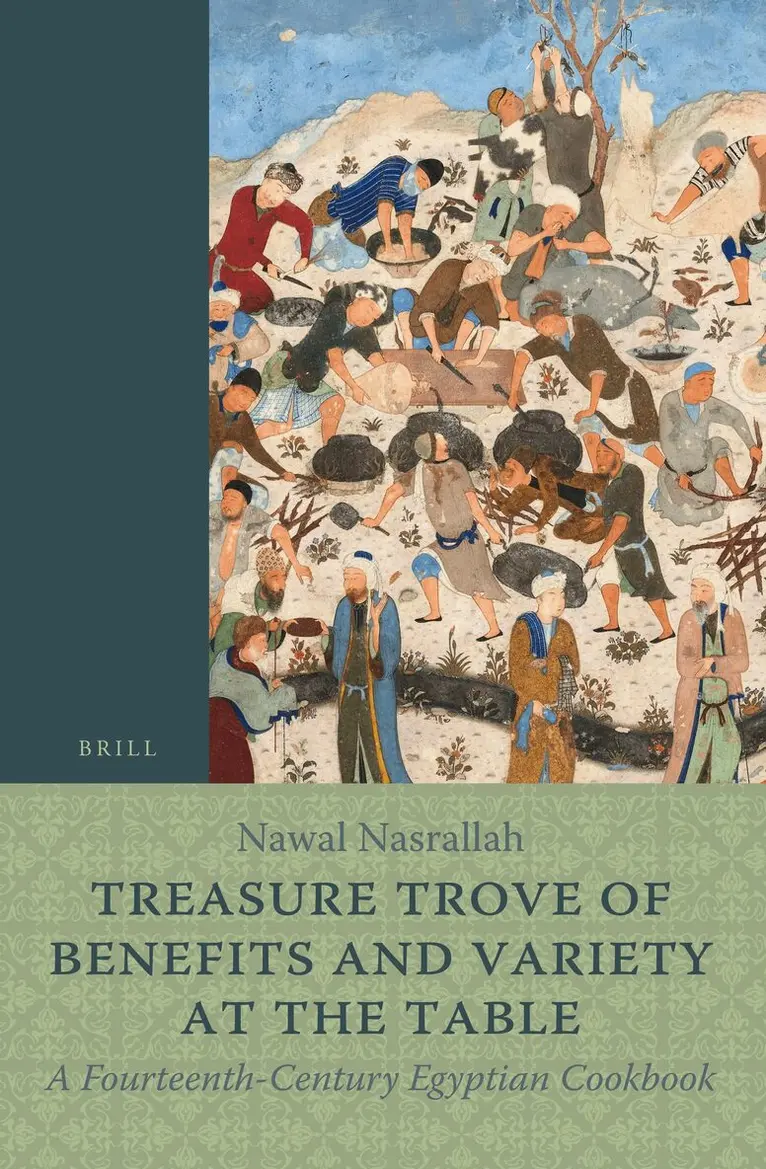
    Treasure Trove of Benefits and Variety at the Table: A Fourteenth-Century Egyptian Cookbook

    English Translation, with an Introduction and Glossary

    AvNawal Nasrallah

    Inbunden, Engelska, 2017

    Del 148 i serien Islamic History and Civilization

    2 706 kr

    Beställningsvara. Skickas inom 5-8 vardagar. Fri frakt över 249 kr.

    Beskrivning

    The Kanz al-fawāʾid fī tanwīʿ al-mawāʾid, a fourteenth-century cookbook, is unique for its variety and comprehensive coverage of contemporary Egyptian cuisine. It includes, in addition to instructions for the cook, a treasure trove of 830 recipes of dishes, digestives, refreshing beverages, and more.It is the only surviving cookbook from a period when Cairo was a flourishing metropolis and a cultural haven for people of diverse ethnicities and nationalities. Now available for the first time in English, it has been meticulously translated and supplemented with a comprehensive introduction, glossary, and 117 color illustrations to initiate readers into the world of the Kanz al-fawāʾid. The twenty-two modern adaptations of Kanz recipes will inspire further experimentations. It is a valuable resource for scholars of medieval material culture, and for all lovers of good food and cookbooks.

    Produktinformation

    • Utgivningsdatum:2017-11-09
    • Mått:155 x 235 x 48 mm
    • Vikt:1 247 g
    • Format:Inbunden
    • Språk:Engelska
    • Serie:Islamic History and Civilization
    • Antal sidor:704
    • Förlag:Brill
    • ISBN:9789004347298
    • Översättare:Nawal Nasrallah

    Utforska kategorier

    • Kulturvetenskap inom Samhälle och politik
    • Mellanösterns historia inom Historia och arkeologi
    • Socialhistoria och kulturhistoria inom Historia och arkeologi

    Mer om författaren

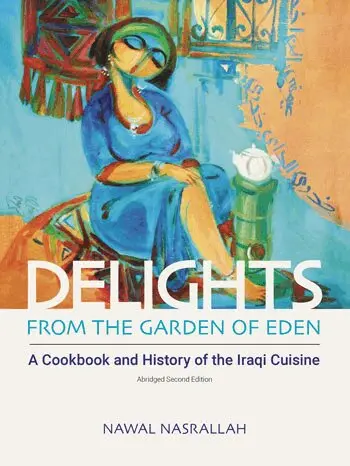
    Nawal Nasrallah is an independent scholar, previously professor of English literature at the universities of Baghdad and Mosul. She has published books and articles on the history and culture of Arab food, including the Gourmand World Cookbook Award Winner of 2007 for best translated cookbook Annals of the Caliphs’ Kitchens (Brill, 2007), and Delights from the Garden of Eden (Equinox, 2013).

    Recensioner i media

    Winner of the Sheikh Hamad Award for Translation and International Understanding (1st Prize, Translation from Arabic into English.) click here.Shortlisted for the Gourmand World Cookbook Awards 2018 in the categories Translation and Culinary History click here."Historians are quite fortunate that Nawal Nasrallah has continued to gift us with her edited translations of Arabic cookbooks from the medieval Islamic world.Overall, Nasrallah’s edition is a pleasure to read. The organization is easy to follow, the notes full of important information, and the color pictures suitable and complementary. Kanz al-fawāʾid brings medieval Cairene and Egyptian history to life and will serve as a critical primary source not only for food historians but also those interested in medieval Islamic trade, agricultural, consumption, andsocial history." - Febe Armanios in: Journal of the American Oriental Society 141.1 (2021)."A formidable intertwined offering from a historian, translator, cook, cooking instructor and writer... Nasrallah succeeds in giving a clear, simple and practical text in English to many of the 830 recipes which are difficult to understand and use, even for an Arabic speaker with culinary experience... After the full translated text, Nasrallah adds a helpful alphabetical glossary with an explanation of terms, methods and general commentaries, translations and correlations with dishes known today. Nasrallah ends her book with a fantastic contribution of 22 modern adaptations of some recipes from Kanz. All recipes were tried and photographed by the author. They are well written, easy to follow, and the outcome, as tested by this author, is delicious." - Hala N. Barakat, in: Madamasr (August 25, 2018) click here."For culinary enthusiasts as well as for those fascinated by Egypt’s heritage, the very first English-language translation of a mediaeval Egyptian cookbook entitled Treasure Trove of Benefits and Variety at the Table. A Fourteenth Century Egyptian Cookbook will come as a thrilling revelation." - Aziza Sami, in: Al-Ahram Weekly (August 31, 2018) click here."Nasrallah provides her readers not only with an annotated translation, but also details of texts and manuscripts, and excellent and detailed glossaries, helpfully divided into classes of food such as vegetables and legumes, fruits and nuts and so forth, as well as kitchen and cooking implements and culinary terms." Susan Weingarten, in: Mediterranean Historical Review, 33:2 (2018)"The tremendous linguistic and contextual expertise that has gone into the preparation of this book has paid off. It is not only an invaluable historical document for the better understanding of the material culture and foodways of pre-modern Egyptian society, but also a fine example of thorough research and scholarly responsibility to one's material." - Leyla Rouhi, in: Al-Masāq, 30/3 (2018)"Cet ouvrage contient tout ce que l’on peut attendre de la traduction d’un livre de cuisine médiéval : une traduction sérieuse (...), une présentation qui permette au lecteur, même non spécialiste, d’apprécier l’originalité du texte, des glossaires efficaces et une petite touche de gourmandise." - Audrey Caire, in: Arabica 65 (2018)"N. Nasrallah nous propose ici un travail exceptionnel. Sa minutie et son expérience passée de la traduction d’ouvrages culinaires confère à ce livre une valeur scientifique indéniable, mais aussi une dimension sociale, vivante de ce que fut la cuisine arabe médiévale. Cette oeuvre réjouira tout autant le chercheur en quête d’informations que l’amateur curieux de mettre en pratique une cuisine riche, variée et colorée, nous rappelant que, contrairement à la cuisine occidentale, la cuisine arabe sut conserver les goûts, les produits et les modes de cuisson médiévaux et que l’on peut toujours, à une table de Tunis, du Caire ou de Damas, se faire une idée assez précise des plaisirs culinaires qu’éprouvaient les mangeurs pour qui l’auteur du Kanz rédigea son livre." - Veronique Pitchon, in: BCAI 33 (2019)Read an interview about the book with the author on Marcia Lynx Qualey's blog ArabLit: click here.

    Innehållsförteckning

    • PREFACENOTES ON TRANSLATING THE TEXTINTRODUCTIONPART I: THE MAKING OF KANZ AL-FAWĀʾID1. The Text2. The Provenance3. Date and Sources4. A Case of Abridged Borrowing: Kanz al-fawāʾid and Zahr al-ḥadīqaPART II: MEDIEVAL EGYPTIAN FOOD CULTURE5. Diet and Formation of a Cuisine6. What was Cooking in Medieval Cairo?7. The Culture of Food and Cooking8. Shopping and Eating outPART III9. Medieval Egyptian Cooking as Reflected in Kanz al-fawāʾid10. Eating in Good HealthINFINITE BENEFITS OF VARIETY AT THE TABLE (ENGLISH TRANSLATION)Chapter 1: Indispensable Instructions for CooksChapter 2: How to Knead Bread Dough and Bake It; and Making Varieties of Bread: Enhanced (muṭayyab), Seeded (mubazzar), Salted (mamlūḥ), and MoreChapter 3: Measures Taken When Drinking Water: muzammal, and Chilled with Ice (thalj maḍrūb)Chapter 4: Qualities of Air-Cooled Water and What the Physicians Said About ItChapter 5: Miscellany of Dishes Chapter 6: Making murrī (Liquid Fermented Sauce), and Preserving Juice of Sour Unripe Grapes (māʾ al- ḥiṣrim) and Lemon Juice (māʾ al-laymūn)Chapter 7: Eggs Cooked as Omelets and Other DishesChapter 8: Vegetarian Dishes (muzawwarāt al-buqūl) for the Nourishment of the SickChapter 9: All Kinds of Dishes Made with Different Varieties of FishChapter 10: Making All Kinds of Sweets (ḥalwā)Chapter 11: Digestive Stomachics (juwārishnāt), Electuaries (maʿājīn), and Drinks (ashriba) Offered Before and After the MealChapter 12: Making fuqqāʿ (Foamy Beer), and Other DrinksChapter 13: Dried-Apricot Compote (naqūʿ al-mishmish)Chapter 14: Making Preparations Which Relieve Nausea (adwiyat al-qaraf)Chapter 15: Making Mustard [Condiments], Mild and Pungent-HotChapter 16: Making Table Sauces (ṣulūṣāt)Chapter 17: Dishes Made with Dairy (albān): kawāmikh (Fermented Condiments), jājaq (Drained-Yogurt Condiment), Condiments with kabar (Capers) and zaʿtar (Thyme); bīrāf (Clotted Cream); and the LikeChapter 18: All Kinds of Pickled Turnip and Onion, Pickling Fruits and Vegetables of All Kinds, and Preserving Lemon, Damascus Citron and the Like, in SaltChapter 19: Making Cold Dishes (bawārid)Chapter 20: On Aromatics (ṭīb), and Properties of Toothpicks (khilāl) Made from Willow Wood (ṣafṣāf) and Egyptian-Willow Twigs (ʿīdān al-khilāf)Chapter 21: Varieties of Aroma-Diffusing Incense Which Fortify Spirit and Heart; Aromatizing Pills; Deodorants; and Other PreparationsChapter 22: Top Quality Perfumed Powders (dharāʾir mulūkiyya) and Other PreparationsChapter 23: Storing Fresh Fruits and Keeping Them to Use After Their SeasonGLOSSARY1. Beverages for Pleasure and Health2. Breads, Grains, Pasta, Noodles, and Sweet and Savory Pastries3. Dairy4. Desserts, Sweeteners, and Conserves; for Pleasure and Health5. Dishes and Prepared Foods: Main and Side Dishes, Snacks, Condiments, Pickles, Dips, and Table Sauces6. Fats and Oils7. Fruits and Nuts8. Ingredients Used in Foods and Medicinal Preparations: Herbs, Spices, Aromatics, Minerals, Food Colors, and Seasoning Sauces9. Kitchen and Cooking Implements, and Culinary Techniques and Terms10. Meat11. Medical Terms, Medicinal Preparations, and Personal Hygiene and Perfumes12. Vegetables and Legumes13. Weights and MeasuresAPPENDIX: A TASTE OF TIME: MODERN ADAPTATIONS OF TWENTY-TWO RECIPES FROM THE KANZ AL-FAWĀʾIDWORKS CITEDINDICES