• Fri frakt över 249 kr
  • •
  • Snabba leveranser
  • •
  • Billiga böcker
Kundservice

Du är på sajten för privatpersoner.

Företag, bibliotek eller offentlig verksamhet?

Du handlar på classic.bokus.com, där alla dina funktioner finns intakta.
Till classic.bokus.com
Bokus logotyp. Gå till startsidan.
  • Erbjudanden
  • Nyheter
  • Student
  • Topplistor
  • Barn & ungdom
  • Bokus Play
  • E-böcker
  • Pocketböcker
  • Spel & pussel

Må bättre, för mindre! Upp till 50% rabatt på hälsoböcker

Sidfot

Mina sidor

    Hjälp

    • Kundservice
    • Vanliga frågor och svar
    • Frakt och leverans
    • Retur vid ångerrätt
    • Reklamera vara
    • Betalning
    • Köpvillkor
    • Allmänna villkor
    • Information om webbplatsens tillgänglighet

    Om Bokus

    • Om oss
    • Pressrum
    • För studenter
    • För företag
    • För bibliotek och offentlig verksamhet
    • För leverantörer
    • Hållbarhet

    Populärt

    • Aktuella erbjudanden
    • Presentkort
    • Studentlitteratur
    • Nya böcker
    • Topplistor
    • Signerade böcker
    • Engelska böcker

    Inspiration

    • Boktips
    • BookTok
    • Populära bokserier
    • Barnbokskaraktärer
    • Populära författare
    Logotyp för Bokus
    Följ oss på Facebook (extern länk)Följ oss på Instagram (extern länk)Följ oss på YouTube (extern länk)Följ oss på TikTok (extern länk)
    bokus @ CookiesAnpassa cookiesIntegritetspolicyKöpvillkor
    Till Citymail hemsida (extern länk)Till Budbee hemsida (extern länk)Till Postnord hemsida (extern länk)Till Schenker hemsida (extern länk)Till Early Bird hemsida (extern länk)Till Walleys hemsida (extern länk)
    1. Samhälle och politik
    2. Sociologi och antropologi
    3. Sociologi

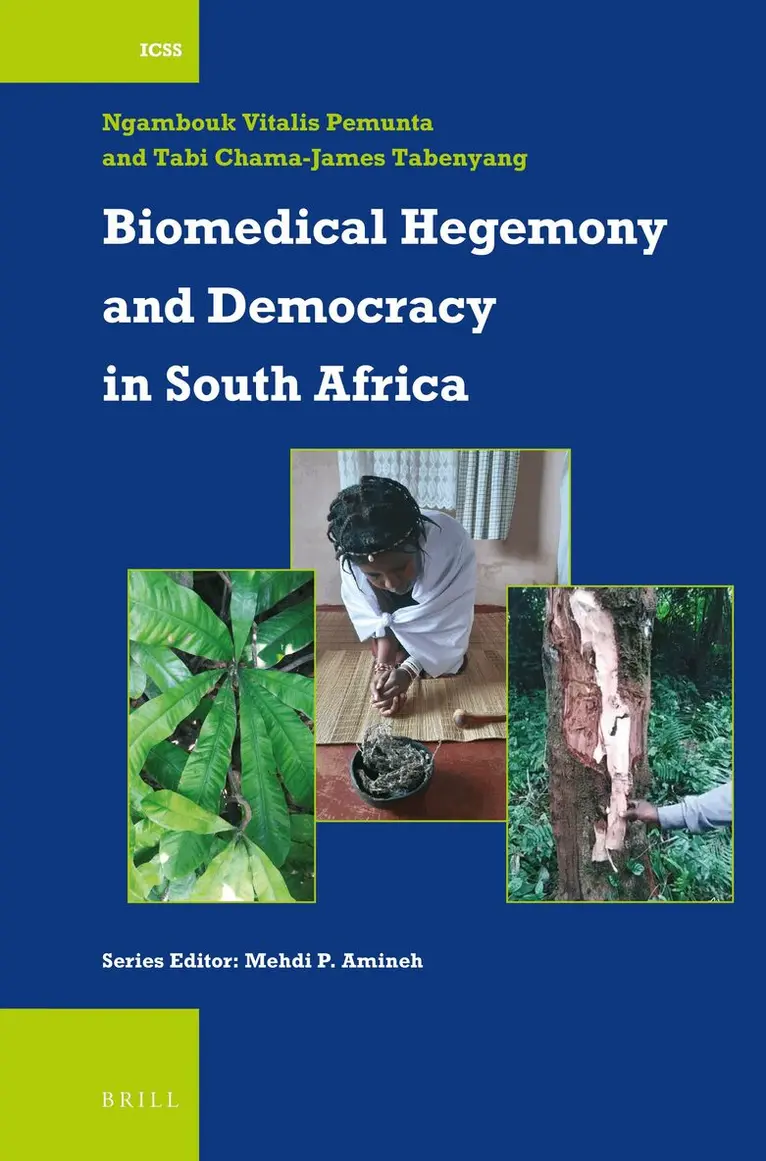
    Biomedical Hegemony and Democracy in South Africa

    AvNgambouk Vitalis Pemunta,Tabi Chama-James Tabenyang

    Inbunden, Engelska, 2020

    Del 51 i serien International Comparative Social Studies

    2 433 kr

    Beställningsvara. Skickas inom 5-8 vardagar. Fri frakt över 249 kr.

    Fler format och utgåvor

    Häftad

    1 094 kr

    Beskrivning

    In Biomedical Hegemony and Democracy in South Africa Ngambouk Vitalis Pemunta and Tabi Chama-James Tabenyang unpack the contentious South African government’s post-apartheid policy framework of the ‘‘return to tradition policy’’. The conjuncture between deep sociopolitical crises, witchcraft, the ravaging HIV/AIDS pandemic and the government’s initial reluctance to adopt antiretroviral therapy turned away desperate HIV/AIDS patients to traditional healers.Drawing on historical sources, policy documents and ethnographic interviews, Pemunta and Tabenyang convincingly demonstrate that despite biomedical hegemony, patients and members of their therapy-seeking group often shuttle between modern and traditional medicine, thereby making both systems of healthcare complementary rather than alternatives. They draw the attention of policy-makers to the need to be aware of ‘‘subaltern health narratives’’ in designing health policy.

    Produktinformation

    • Utgivningsdatum:2020-12-10
    • Mått:155 x 235 x 25 mm
    • Vikt:636 g
    • Format:Inbunden
    • Språk:Engelska
    • Serie:International Comparative Social Studies
    • Antal sidor:288
    • Förlag:Brill
    • ISBN:9789004436411

    Utforska kategorier

    • Sociologi inom Samhälle och politik
    • Antropologi inom Samhälle och politik
    • Statsvetenskap och politisk teori inom Samhälle och politik

    Mer om författaren

    Ngambouk Vitalis Pemunta, Ph.D, (2009), Central European University, is lecturer of Global Health at the School of Public Health and Community Medicine, University of Gothenburg. He has (co-)authored three monographs and scholarly articles on sexual and reproductive health, and environmental governance.Tabi Chama-James Tabenyang holds an MA in Social Anthropology from Walters Sisulu University, South Africa and is a doctoral candidate in the same field at the University of Bayreuth, Germany.

    Innehållsförteckning

    • ForewordAcknowledgementsList of IllustrationsAbbreviationsLocal Words and Expressions1 Prelude: the Globalization of Traditional Knowledge Systems1.1 Introduction1.2 Definition of Concepts1.3 The International Context of TCAM Practices1.4 Different but Complimentary?1.5 Lay Out of Work2 Subject Matter, Method and Theoretical Framework2.1 Introduction2.2 Choice of Study Area2.3 Methodological and Theoretical Framework2.4 Data Analysis2.5 Ethical Considerations and Reflexivity2.6 Theoretical Framework2.7 Conclusion3 Traditional Medicine, Colonialism and Apartheid in South Africa3.1 Introduction3.2 Biomedical Capitalism3.3 Colonialism, Biomedical Hegemony and Alternative Healthcare3.4 The Pre-Colonial Era3.5 The Colonial Era3.6 The Post-Colonial Era3.7 Conclusion4 Democracy, Witchcraft and Traditional Medicine4.1 Introduction4.2 The HIV/AIDS Policy Context, Traditional Medicine and Democracy4.3 The Lingering Socioeconomic Inequalities of the Apartheid Era4.4 The “Return to Tradition” Policy4.5 Shortages of Human Resources for Health4.6 The Adoption of Democracy and the Promotion of Cultural Rights4.7 Traditional Medicine as Cure and a Curse for HIV/AIDS4.8 The Preference for Traditional Healers4.9 Biomedical Hegemony?4.10 Conclusion5 The Sociocultural Context of HIV/AIDS in the Eastern Cape Region5.1 Introduction5.2 The Eastern Cape Region and the Legacy of Apartheid Era Policies5.3 The Sociocultural Context of HIV/AIDS5.3.1 Labour-related Migration5.3.2 Gender Identity and Unprotected Sex5.3.3 Multiple Partnering and Intergenerational Relationships5.3.4 Gender Inequality and Gender-based Violence5.3.5 Teenage Pregnancies5.3.6 Substance Abuse5.3.7 Cultural Factors: Initiation Rituals5.3.7.1 Ukuthwala5.3.7.2 Virginity Testing5.4 Conclusion6 The Debate on the Integration of Traditional Medicine into the Mainstream Healthcare Delivery System in South Africa6.1 Introduction6.2 The Debate for and against Traditional Medicine6.3 Primary Healthcare and the Changing Pattern of Disease6.4 Traditional Medicine and the HIV/AIDS Pandemic6.5 Conclusion7 “African Diseases” and the Epistemology of South African Healers’ Knowledge7.1 Introduction7.2 The African Concept of Health7.3 The Process of Becoming a Healer7.4 Typology of African Traditional Healers7.4.1 Disease as Prelude to Divinership7.5 Prospects for the Integration of Traditional Medicine into Official Healthcare7.6 Enhancing Cooperation between Traditional Healers and Biomedicine7.7 Conclusion8 The Integration of Modern and Traditional Medicine in Qokolweni Location8.1 Introduction8.2 Respondents’ Opinions on Traditional Medicine8.3 Opinions on Traditional Medicine8.3.1 Case Study 1: Vuyo (Fictitious Name)8.3.2 Case Study 2: Bate (Fictious Name)8.3.3 Case Study 3: Monde (Fictious Name)8.4 Perception of Nurses and Traditional Healers8.5 Conclusion9 The Daily Use of Traditional Medicine in Qokolweni Location9.1 Introduction9.2 The African Concept of Health9.3 The Concept of Traditional Medicine in Qokolweni9.4 The Use of Traditional Medicine in Qokolweni9.5 Attitudes and Perceptions towards African Traditional Medicine in Qokolweni9.6 Users of African Traditional Medicine9.7 Recommendations9.8 ConclusionBibliographyIndex