• Fri frakt över 249 kr
  • •
  • Snabba leveranser
  • •
  • Billiga böcker
Kundservice

Du är på sajten för privatpersoner.

Företag, bibliotek eller offentlig verksamhet?

Du handlar på classic.bokus.com, där alla dina funktioner finns intakta.
Till classic.bokus.com
Bokus logotyp. Gå till startsidan.
  • Erbjudanden
  • Nyheter
  • Student
  • Topplistor
  • Barn & ungdom
  • Bokus Play
  • E-böcker
  • Pocketböcker
  • Spel & pussel

10% studentrabatt med kod TERM26

Sidfot

Mina sidor

    Hjälp

    • Kundservice
    • Vanliga frågor och svar
    • Frakt och leverans
    • Retur vid ångerrätt
    • Reklamera vara
    • Betalning
    • Köpvillkor
    • Allmänna villkor
    • Information om webbplatsens tillgänglighet

    Om Bokus

    • Om oss
    • Pressrum
    • För studenter
    • För företag
    • För bibliotek och offentlig verksamhet
    • För leverantörer
    • Hållbarhet

    Populärt

    • Aktuella erbjudanden
    • Presentkort
    • Studentlitteratur
    • Nya böcker
    • Topplistor
    • Signerade böcker
    • Engelska böcker

    Inspiration

    • Boktips
    • BookTok
    • Populära bokserier
    • Barnbokskaraktärer
    • Populära författare
    Logotyp för Bokus
    Följ oss på Facebook (extern länk)Följ oss på Instagram (extern länk)Följ oss på YouTube (extern länk)Följ oss på TikTok (extern länk)
    bokus @ CookiesAnpassa cookiesIntegritetspolicyKöpvillkor
    Till Citymail hemsida (extern länk)Till Budbee hemsida (extern länk)Till Postnord hemsida (extern länk)Till Schenker hemsida (extern länk)Till Early Bird hemsida (extern länk)Till Walleys hemsida (extern länk)
    1. Historia och arkeologi
    2. Historia
    3. Europas historia
    4. Medeltiden

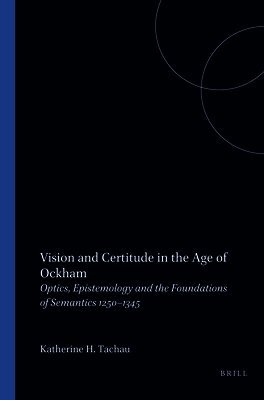
    Mechanization of Nature: Matter, Body, and Motion in Blasius of Parma’s Physics

    AvHenrik Lagerlund,Sylvain Roudaut

    Inbunden, Engelska, 2025

    Del 140 i serien Studien und Texte zur Geistesgeschichte des Mittelalters

    2 049 kr

    Beställningsvara. Skickas inom 3-6 vardagar. Fri frakt över 249 kr.

    Beskrivning

    This book presents a groundbreaking study of the Italian philosopher and scientist, Blasius of Parma (1350-1416). For the first time in English, it presents key elements of his commentary on Aristotle’s Physics both through interpretive analysis and edited texts.The main interpretive claim is that Blasius is an early mechanical philosopher. It shows this by studying six carefully selected aspects of his physics. These six aspects are Blasius’ (1) use of mechanics (science of weights), (2) analysis of causality, (3) account of motion, (4) analysis of rarefaction and condensation, (5) view of artifacts, and (6) the use of a new analytical language in physics.Authors of the interpretive essays are Erik Åkerlund, Joël Biard, Henrik Lagerlund, and Sylvain Roudaut.

    Produktinformation

    • Utgivningsdatum:2025-07-17
    • Mått:155 x 235 x 26 mm
    • Vikt:663 g
    • Format:Inbunden
    • Språk:Engelska
    • Serie:Studien und Texte zur Geistesgeschichte des Mittelalters
    • Antal sidor:314
    • Förlag:Brill
    • ISBN:9789004734272

    Utforska kategorier

    • Medeltiden inom Historia och arkeologi
    • Filosofiska discipliner inom Filosofi och religion
    • Naturvetenskapens historia inom Naturvetenskap och teknik

    Mer om författaren

    Henrik Lagerlund, Ph.D. (1999), Uppsala University, is Professor of the History of Philosophy at Stockholm University. He has published several books and articles on Medieval and Renaissance philosophy, including Interpreting Buridan: Critical Essays (2024) and Skepticism in Philosophy: A Comprehensive, Historical Introduction (2020).Sylvain Roudaut, Ph.D. (2017), University of Rennes, is Senior Researcher at the CNRS (SPHERE, Paris). His research focuses on the interaction between philosophy, science, and mathematics in the Latin and Arabic traditions in the Middle Ages. He published La mesure de l’être (2021) and Hylomorphism into Pieces: Elements, Atoms, and Corpuscles in Natural Philosophy and Medicine, 1400–1600 (2024).Erik Åkerlund, Ph.D. (2011), Uppsala University, is Lecturer in Philosophy at The Newman Institute, Uppsala (Sweden). He has a research focus on 15th to 17th century philosophy, especially natural philosophy but also extending to political philosophy. His articles include “Chrysostom Javellus and Francis Silvestri on Final Causation” (2024) and “Models of Finality: Aristotle, Buridan, and Averroes” (2023).Robert Andrews, Ph.D. (1988), Cornell University, was Associate Professor at The Franciscan Institute of St. Bonaventure University and is now associate of the Centre for Medieval Studies, Stockholm University. Published volumes include Robert Greystones on Certainty and Skepticism with Mark Henninger and Jennifer Ottman (2020) and several co-edited volumes of B. Ioannis Duns Scoti Opera philosophica (1997-2004).

    Innehållsförteckning

    • List of FiguresPrefaceIntroductionInterpretive Essays1 Scales and Weights: Introducing Mechanics in Natural PhilosophySylvain Roudaut2 Causality and Causal Powers in Blasius of Parma’s PhysicsJoël Biard3 Blasius of Parma on Motion in the Sublunary WorldHenrik Lagerlund, Sylvain Roudaut and Erik Åkerlund4 Condensation and Rarefaction in Blasius’ PhysicsErik Åkerlund5 Blasius of Parma’s Account of Artifacts in the PhysicsHenrik Lagerlund6 The Role and Scope of Analytical Languages in Blasius’ Natural PhilosophySylvain RoudautEdition: Blasius Pelacanus de Parma Quaestiones super VIII libros PhysicorumDescription of the ManuscriptsRobert Andrews1 Liber II q. 1: Utrum domificator in faciendo domum faciat aliquid rebus naturalibus condistinctum2 Liber II q. 2: Utrum quodlibet res naturalis habeat in se principium motus et quietis3 Liber II q. 7 Utrum ad cuiuscumque rei naturalis generationem praeter particulare agens requiratur influxus causae universalis, quae causa universalis dicitur sol4 Liber II q. 8 Utrum inter agentia particularia, supposita semper generali influentia superiorum, possit qualitas una vel plures formam substantialem producere5 Liber IV q. 2 Utrum entia naturalia distantia ab eorum locis naturalibus moveantur ad illa impedimentis subtractis6 Liber IV q. 3 Utrum corpora naturalia appetant moveri ad eorum loca naturalia per lineas breviores7 Liber IV q. 7 Utrum rarefactio sit possibilis8 Liber V, q. 1 Utrum agens naturale, hora qua agit in passum, agat in ipsum secundum se totum et quamlibet eius partemBibliographyIndex