• Fri frakt över 249 kr
  • •
  • Snabba leveranser
  • •
  • Billiga böcker
Kundservice

Du är på sajten för privatpersoner.

Företag, bibliotek eller offentlig verksamhet?

Du handlar på classic.bokus.com, där alla dina funktioner finns intakta.
Till classic.bokus.com
Bokus logotyp. Gå till startsidan.
  • Erbjudanden
  • Nyheter
  • Student
  • Topplistor
  • Barn & ungdom
  • Bokus Play
  • E-böcker
  • Pocketböcker
  • Spel & pussel

10% rabatt på allt med kod NYSTART10 →

Sidfot

Mina sidor

    Hjälp

    • Kundservice
    • Vanliga frågor och svar
    • Frakt och leverans
    • Retur vid ångerrätt
    • Reklamera vara
    • Betalning
    • Köpvillkor
    • Allmänna villkor
    • Information om webbplatsens tillgänglighet

    Om Bokus

    • Om oss
    • Pressrum
    • För studenter
    • För företag
    • För bibliotek och offentlig verksamhet
    • För leverantörer
    • Hållbarhet

    Populärt

    • Aktuella erbjudanden
    • Presentkort
    • Studentlitteratur
    • Nya böcker
    • Topplistor
    • Signerade böcker
    • Engelska böcker

    Inspiration

    • Boktips
    • BookTok
    • Populära bokserier
    • Barnbokskaraktärer
    • Populära författare
    Logotyp för Bokus
    Följ oss på Facebook (extern länk)Följ oss på Instagram (extern länk)Följ oss på YouTube (extern länk)Följ oss på TikTok (extern länk)
    bokus @ CookiesAnpassa cookiesIntegritetspolicyKöpvillkor
    Till Citymail hemsida (extern länk)Till Budbee hemsida (extern länk)Till Postnord hemsida (extern länk)Till Schenker hemsida (extern länk)Till Early Bird hemsida (extern länk)Till Walleys hemsida (extern länk)
    1. Samhälle och politik
    2. Samhälle och kultur
    3. Kultur och medier
    4. Medievetenskap

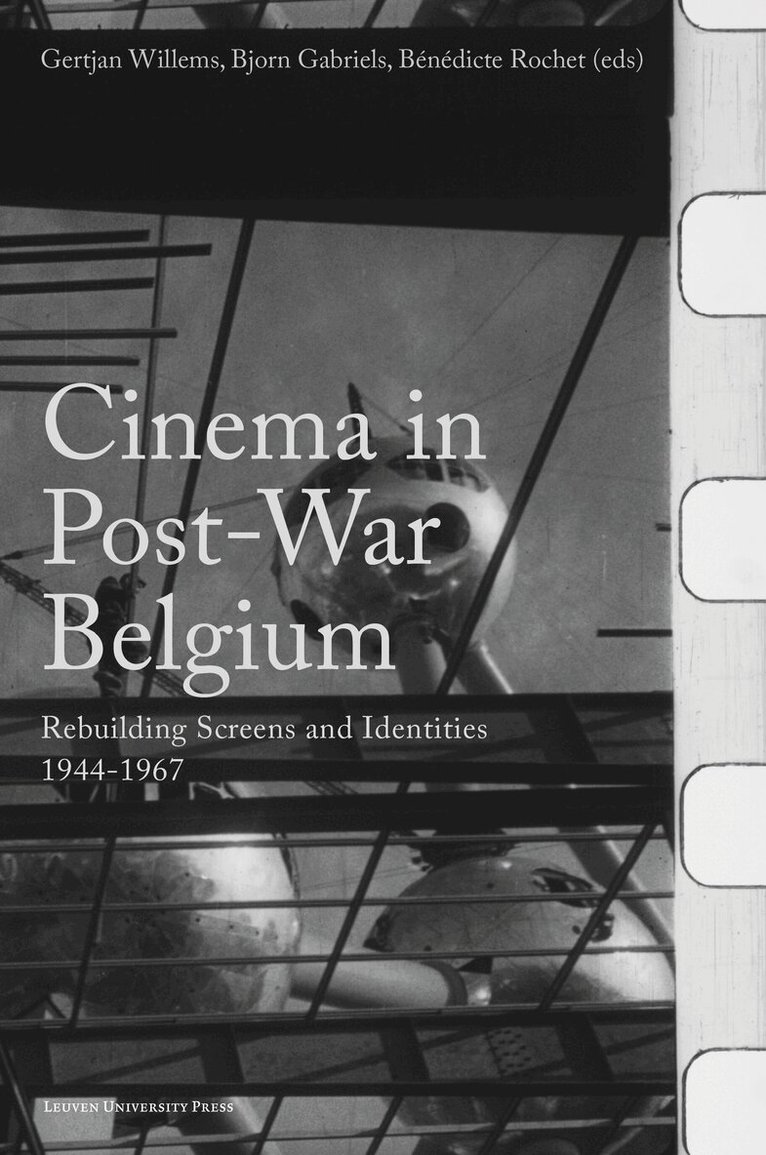
    Cinema in Post-War Belgium

    Rebuilding Screens and Identities, 1944-1967

    AvGertjan Willems,Bjorn Gabriels

    Häftad, Engelska, 2026

    568 kr

    Beställningsvara. Skickas inom 5-8 vardagar. Fri frakt över 249 kr.

    Beskrivning

    First comprehensive history of Belgian cinema in the post-war decades.Between the liberation of 1944 and the mid-1960s, cinema in Belgium was both booming and fragile. Film theatres across the country attracted record audiences and were rebuilt into dazzling spaces, while local film production remained a precarious enterprise. This book brings that paradoxical landscape to life. It explores cinephile culture and institutional developments alongside popular comedies, art documentaries, colonial films, industrial productions and experimental shorts. Sixteen chapters show how cinema related to Belgium’s shifting identities in a period of reconstruction and transition. The book also challenges long-standing notions of a linguistic divide within Belgian cinema, showing that in the decades before regional film policies emerged, filmmakers and audiences largely operated within a shared national film culture. Generously illustrated and grounded in fresh archival research, this is the first comprehensive history of Belgian cinema in the post-war decades. Situating Belgian cinema within wider cultural, political and international contexts, it offers a compelling resource for film historians, cultural scholars, and heritage institutions.

    Produktinformation

    • Utgivningsdatum:2026-05-20
    • Mått:155 x 233 x 27 mm
    • Vikt:454 g
    • Format:Häftad
    • Språk:Engelska
    • Antal sidor:386
    • Förlag:Leuven University Press
    • ISBN:9789462705173

    Utforska kategorier

    • Medievetenskap inom Samhälle och politik
    • Europas historia inom Historia och arkeologi
    • Film inom Kultur

    Mer om författaren

    Gertjan Willems is Associate Professor in Film Studies at the University of Antwerp and Visiting Professor at Ghent University. Bjorn Gabriels is a film critic and researcher at the Universities of Antwerp and Namur. Bénédicte Rochet is Professor of History at the University of Namur.

    Recensioner i media

    The contributions depict a vivid cinephilic culture in Belgium regarding art documentaries, industrial films, shorts, educational films, colonial movies. Moreover, the volume sheds a surprising light on the reigning assumption that the film climate in Belgium has been marked by a ‘split screen’ between Flemish and Francophone cinema. - Peter Verstraten, Leiden University

    Innehållsförteckning

    • Foreword Tomas LeyersAcknowledgementsIntroduction: Cinema in post-war Belgium Bjorn Gabriels, Gertjan Willems, & Bénédicte RochetPART I: Setting the Stage: Contextualising Post-War Belgian CinemaChapter 1. From national to regional film support: Belgian film production policy in the post-war era (1945–1967) Gertjan Willems & Alexander De Man Chapter 2. Concentric spheres of control: On film censorship and discipline during the Belgian Trente Glorieuses Daniel BiltereystChapter 3. Reel power: Belgian colonial filmmaking after 1945 Matthew G. StanardChapter 4. Mechanics of the industrial image at Sofidoc, the Société du Film Documentaire: Where aesthetic ambitions meet the demands of commissioned films (1947–1960) Bénédicte RochetChapter 5. From film club to film archive: The 1947 Brussels 1st Festival Mondial du Film et des Beaux-Arts and the making of the Cinémathèque de Belgique Xavier García BardónChapter 6. From cinephilia to cinéma critique: The Haesaerts brothers’ impact on post-war Belgian film culture, non-fiction networks, and art documentaries Joséphine VandekerckhovePART II: Behind the Camera: Key Figures and Filmmaking PracticesChapter 7. Flemish popular comedies: Edith Kiel, Jan Vanderheyden, and the Antwerp Film Company AFO, 1952–1961 Dirk Van Engeland, Roel Vande Winkel, & Gertjan WillemsChapter 8. Towards the myth of the industrial hero: Charles Dekeukeleire’s theories on fiction films Mathilde LejeuneChapter 9. Marcel Broodthaers: Documentary filmmaker (1957–1964) Margaux Van Uytvanck & Raf WollaertChapter 10. Red searching for form: The early works of Harry Kümel Ernest MathijsChapter 11. Tracing the origins of Fugitive Cinema Liesje Baltussen & Gertjan WillemsPART III: On Screen: Identities, Politics and ModernismChapter 12. Ceci est un cinéma d’auteur belge: Belgian auteur cinema inspired by Italian, French, and Belgian modernist cinema Wouter HesselsChapter 13. Meeting another Waterloo: Edmond Bernhard and the “metaphysical subversion of the tourist film” Bjorn Gabriels Chapter 14. Henri Storck’s The Smugglers’ Banquet (1952): Blurring the borders between commission and reality Christoph Brüll & Jeremy Hamers Chapter 15. Silver screens, gendered lenses: Age and gender in post-war Belgian fiction films Femke De SutterChapter 16. A royal zero hour? Belgian King Leopold III and SS officer Ernst Schäfer making Masters of the Congo Jungle (1958) Matthias De Groof, Bjorn Gabriels, & Koen AertsContributors Index